



Digital night vision has come a long way fast, and the ADNV G14 SE might be the unit that finally makes analog defenders sweat. In this review we're breaking down everything — specs, mounting hardware, real-world field testing, and a direct side-by-side with a Gen 2+ white phosphor PVS14 — so you can see exactly where this thing stands. This is one of the most exciting releases in digital night vision right now.
What Makes the ADNV G14 SE Different?
Before we get into the build, it's worth understanding why this unit has people in the night vision community paying attention. Digital NV has historically lagged behind analog in low-light sensitivity, but the gap has been closing fast. The ADNV G14 SE brings several features to the table that were either exclusive to much more expensive analog systems or simply didn't exist in digital until recently:
- 100 FPS frame rate — essentially latency-free operation, which matters a lot for movement and target acquisition
- IR laser detection — you can pick up IR aiming lasers and see through scope reticles, which opens up serious tactical use cases
- Wide 40° x 30° field of view — wider than most analog monoculars, making navigation and situational awareness noticeably better
- Exceptional passive low-light performance — strong enough in many environments to avoid running supplemental IR, keeping your signature low
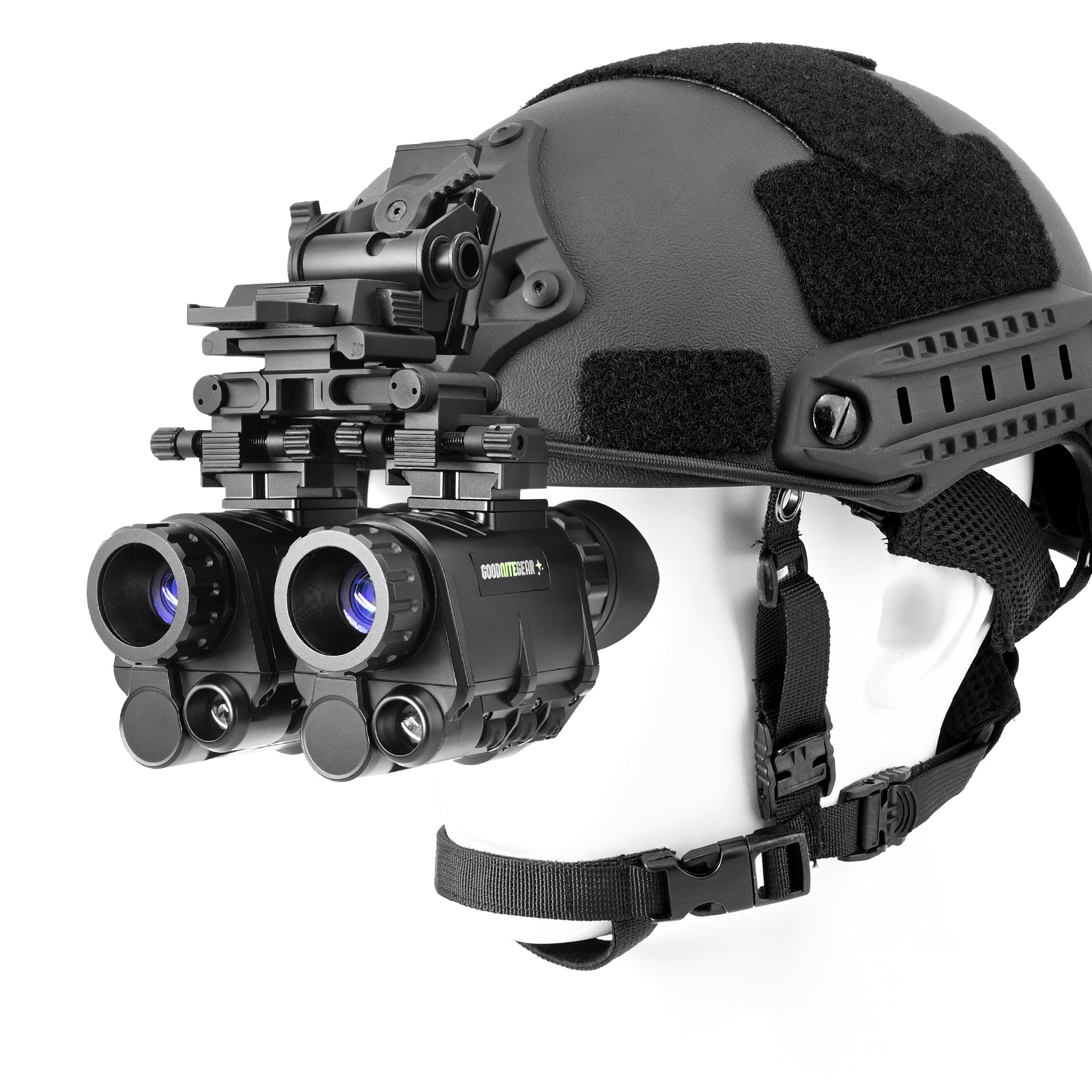
- Bridging capability — two units can be joined together for a fully immersive binocular experience using the included hardware
-
Competitive price point — significantly cheaper than analog equivalents with comparable performance

ADNV G14 SE Build and Specs
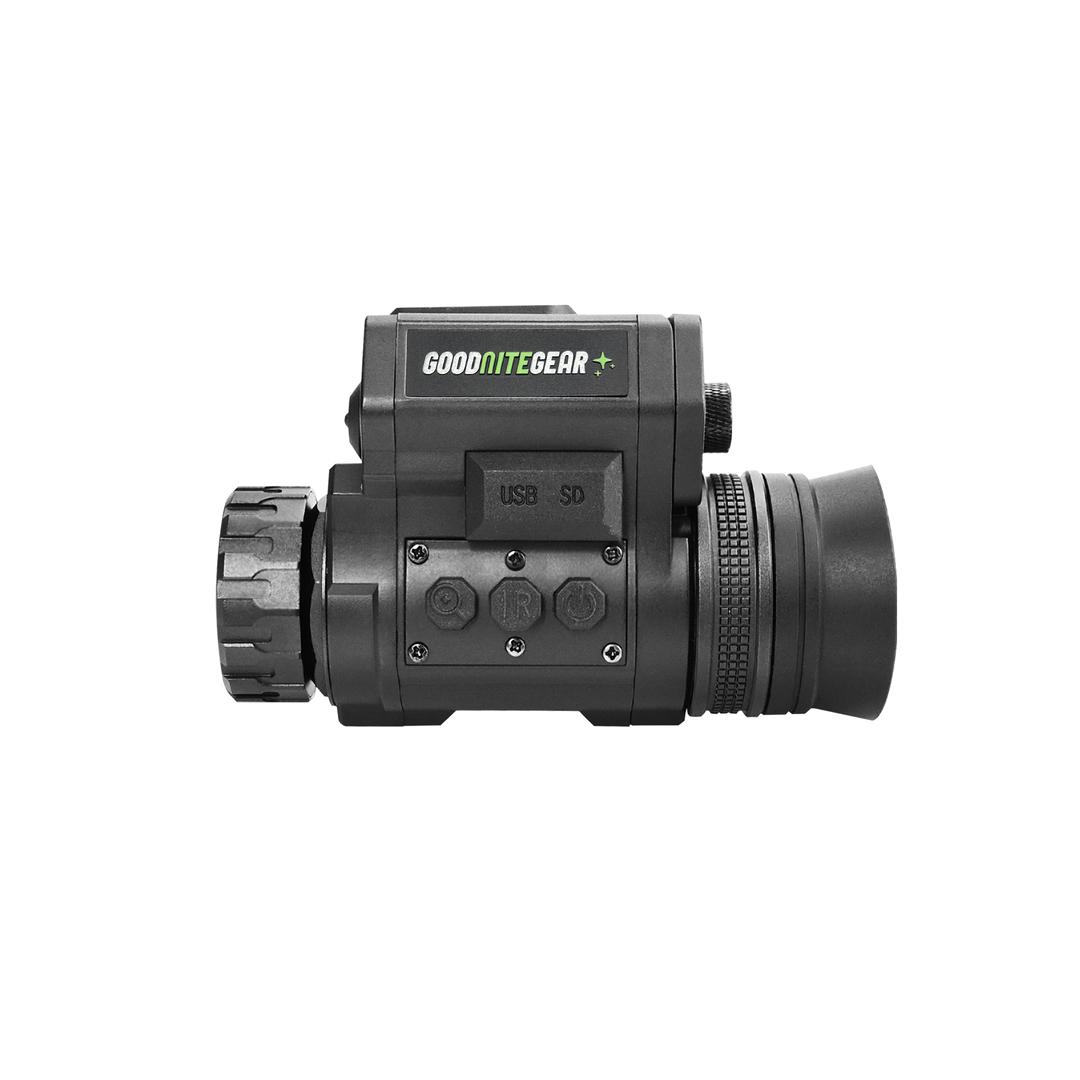
The body is mostly hard polymer but it feels premium — dense, well-fitted, and similar in hand feel to the Sionyx Opsin. It's IP67 rated, meaning it'll handle rain and dust without issue. Up front is the objective lens with a rotatable focus ring. Behind it sits a ⅔-inch second-generation high-performance CMOS solid-state image sensor — the core of what makes this unit perform the way it does. Beneath the lens is the onboard IR illuminator, which can be toggled on or off as needed.
There's a small port on the body for connecting the ADNV RS2 digital recording box, an optional add-on that lets you capture photos and video directly through the device — handy for documentation, training review, or content creation.
Battery configuration out of the box uses a 16340 cell, but an extended battery cap is included that accepts an 18650, which meaningfully extends runtime for longer operations. On one side you'll find a PVS14-style threaded mounting hole; on the other, the power and control knob plus the eyepiece leading to the 800x600 OLED display.
The display sits close to the eyepiece lens, which gives the image a genuinely immersive quality rather than the feeling of looking through a tube. Battery level and frame rate are visible in the top right corner at all times. The control knob handles: IR on/off, display brightness (variable), luminance, frame rate (100 or 50 FPS), photo/video capture, contrast, and sharpness.
The UI is straightforward — not quite as feature-rich as some other digital units like the NVG30, but it covers everything you actually need and is easy to learn quickly.
Mounting Hardware: Better Than Anything Else in the Box
The included mounting hardware deserves a callout because it's genuinely impressive for a unit at this price. In the box you get:
- Ultralight aluminum alloy dovetail-compatible bridge — left or right eye mounting
- Two mounting arm styles for flexible configuration options
- Flip-up design for fast transition between use and stowed positions
- Bridging hardware to connect two units into a binocular setup
Out of the box it connects with an L4 mount compatible with FAST helmets. The flip-up mechanism is smooth and easy to work with gloves on. This is the best included mounting kit we've seen ship with any night vision monocular purchase — no extra accessories needed to get into a solid helmet setup.
Field Testing: Real-World Performance
All field test footage was recorded using the ADNV RS2 recorder. Testing was conducted under a waxing gibbous moon at 55% illumination with no supplemental IR lighting used for the majority of testing — an important detail, because passive low-light performance is where you really learn what a sensor can do.
IR laser and optic detection was immediately apparent during testing. IR aiming lasers and illuminators are easy to pick up, and scope reticles are clearly visible — making this a viable option for weapon-mounted setups where you need to rapidly acquire targets with both passive and active aiming.
Passive low-light image quality is crisp and detailed across a wide focal range. In most conditions, focus rarely needed adjustment as subjects moved through the scene — a big practical advantage in real movement scenarios. Glare from ambient light sources is notably controlled, which makes this unit a strong option for mixed lighting environments like suburban or urban settings where you're transitioning between lit and dark areas.
Field of view at 40° wide by 30° tall is wide enough to give you real situational awareness. Whether running at 100 FPS or dialing back to 50 FPS for battery efficiency, movement and navigation feel confident and natural — noticeably better than units with narrower FOV or slower frame rates.
One gap worth noting: the ADNV G14 SE does not include digital zoom. Most digital night vision devices offer at least some level of digital magnification, and its absence here is a mild disappointment. It's not a dealbreaker given the performance elsewhere, but worth knowing before you buy.
ADNV G14 SE vs. Gen 2+ Analog PVS14
This is the comparison most buyers want to see, and the results are genuinely close. Testing was done in an area with no ambient light sources and significant tree canopy blocking moonlight — a legitimately dark environment where only the treeline silhouette was visible to the naked eye.
Passive low-light performance is comparable between the two devices. There's no meaningful advantage to either unit in terms of seeing into dark areas — the ADNV G14 SE holds its own against the PVS14 in conditions where analog has traditionally dominated.
Field of view is similar, though the G14 SE's rectangular display gives it a slight edge in the corners compared to the circular tube view on the PVS14.
Latency on the G14 SE is not noticeable in real use. The theoretical zero-latency advantage of analog simply doesn't translate into a practical edge in the field at this frame rate.
Where analog still holds advantages:
- Battery options — analog systems generally offer better battery flexibility and runtime
- Thermal overlay capability — some analog setups support thermal clip-ons, which digital currently handles differently
- No tube damage risk — actually a point for digital: analog tubes can be permanently damaged by sunlight exposure, digital can't
The bottom line: at a fraction of the cost of a comparable Gen 2+ analog setup, the ADNV G14 SE delivers performance that will genuinely surprise anyone who hasn't kept up with how fast digital NV has progressed.
Who Should Buy the ADNV G14 SE?
The ADNV G14 SE is a strong choice for anyone who wants serious night vision performance without the serious analog price tag. It's well-suited for:
- Law enforcement and military looking for a capable backup or training unit
- Outdoorsmen and hunters who want passive performance in open terrain without running IR
- Airsoft and mil-sim players who need IR laser compatibility and wide FOV for movement
- Security professionals who need a durable, waterproof unit with recording capability
- First-time buyers stepping up from budget digital NV and wanting near-analog performance
If you need to go further — particularly in the darkest environments where you want maximum passive sensitivity — the ADNV G14 P2 (NVG90 Pro) steps up to a 1-inch sensor and pushes even closer to Gen 3 analog performance. And if you're still working out what fits your budget, the NVG30 is a solid entry point worth comparing.
Final Verdict
The ADNV G14 SE is the best digital night vision monocular under $2,000 on the market right now. The ⅔-inch CMOS sensor delivers passive performance that matches a Gen 2+ PVS14, the 100 FPS frame rate removes any real latency concern, and the included mounting hardware is better than anything else at this price point. The lack of digital zoom is worth noting, but it doesn't change the overall picture — this is a genuinely impressive unit that makes analog pricing hard to justify for a lot of buyers.
Pick it up at Good Nite Gear under the ADNV G14 SE or the NVG90 SE and use code US10 at checkout to save 10% sitewide.

