
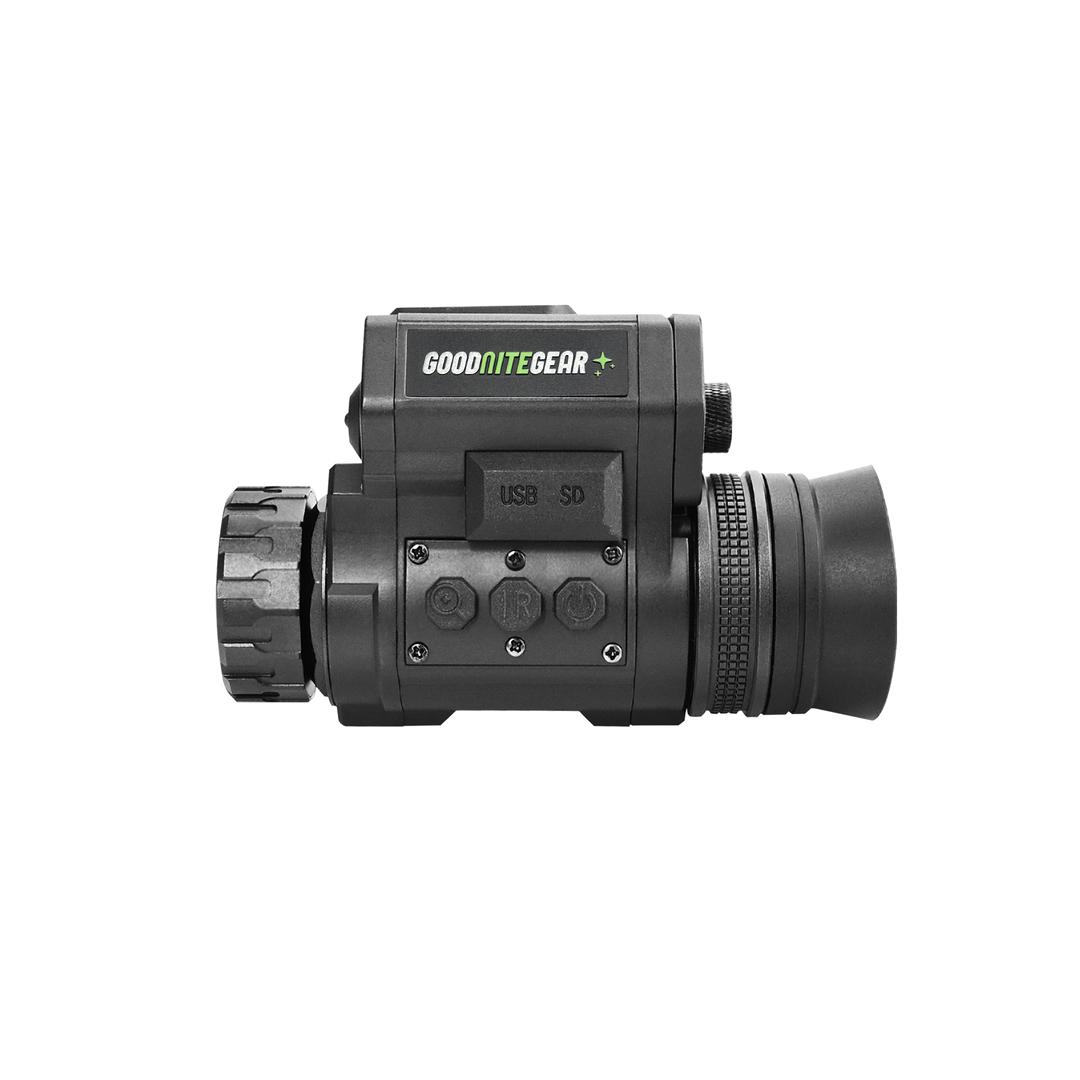

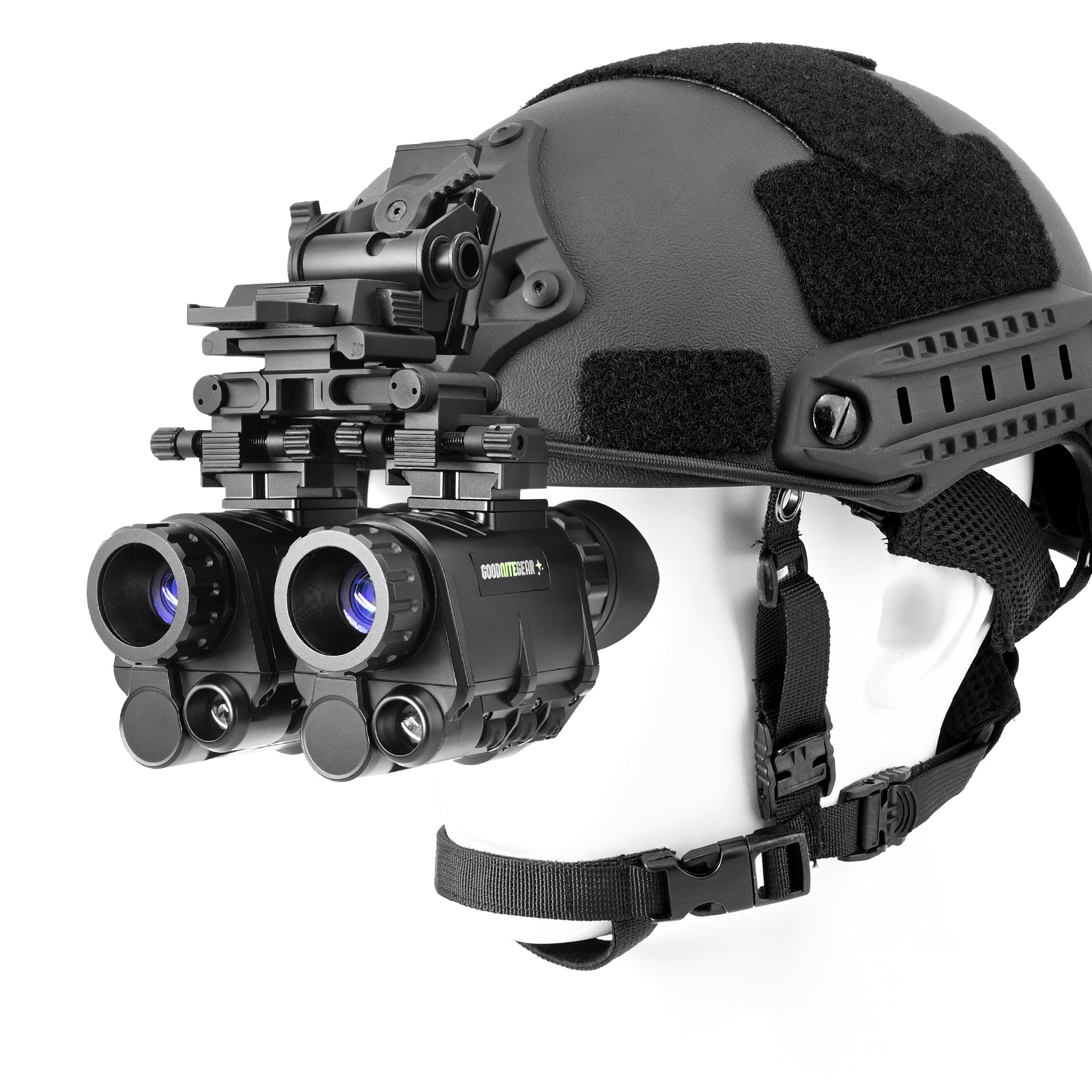


GNG G18 Quad Night Vision Goggles — 120° Panoramic Digital NV Reviewed
Quad night vision goggles have always been the gear you see in special operations footage and think — yeah, I'll never afford that. The L3Harris GPNVG-18 runs $40,000 to $50,000. For most operators, law enforcement units, and serious NV enthusiasts, panoramic quad capability has simply been off the table. The GNG G18 changes that. Here's what it does, how it performs, and who it's actually built for.
What Are Quad Night Vision Goggles?
Before getting into the G18 specifically, it's worth making sure we're talking about the same thing — because "quad nods" get thrown around a lot.
Standard night vision binoculars use two tubes, both pointing forward. You get stereoscopic depth perception and roughly 40° of horizontal field of view. That's plenty for most situations. But the moment you're in a fast-moving vehicle, clearing a structure, or need to track multiple points of activity at once, 40° becomes a real limitation.
Quad night vision solves it with four sensors. The two center tubes point forward and handle depth perception and detail — same as your standard binos. The two outer tubes angle outward, capturing your peripheral field and blending it into one continuous image. The result is up to 120° of panoramic coverage. You're not moving your head constantly to track what's happening around you. You just see it.
That's the tactical advantage that made quad nods standard kit for Tier 1 units. The problem has always been cost. Until now, that capability required analog image intensifier tubes — and four of them adds up fast.
The GNG G18 — Digital Quad Nods at an Accessible Price
The G18 takes the quad architecture and builds it around a high-performance 1-inch solid-state digital sensor instead of analog tubes. That's the fundamental difference between a $40,000 system and an $8,950 one — and the performance gap is smaller than you'd expect.

Sensor and Image Performance
The heart of the G18 is its 1-inch imaging sensor with a spectral response range of 400nm to 1100nm and a minimum illumination rating of 0.00005 lux. In plain terms: this sensor pulls a usable image under pure starlight with no IR illuminator running. That's the threshold where budget digital NV falls apart and quality systems separate themselves.
Resolution comes in at 800×600 on both the sensor and the OLED display — matched perfectly so you're not losing detail between capture and display. Frame rate runs at 50Hz or 100Hz standard, with 60Hz/120Hz available as a custom configuration. At 100Hz, the image is smooth and genuinely low latency — no motion blur, no nauseating lag when you turn your head.
The 120° horizontal FOV is the headline spec, and it delivers what it promises. The F/1.2 aperture on the 19.8mm objective lens keeps light gathering strong even as the field widens. Exit pupil is 8mm with 21mm of eye relief — comfortable for extended wear, and accommodating for users with glasses.

Build and Durability
The G18 is built from magnesium-aluminum alloy, aluminum alloy, and composite resin. Goggle-only weight comes in under 640g. Full system weight including four 18650 batteries stays under 1,200g — substantial, but manageable for a quad system. If you've run analog quads, you know they're heavy. The G18 is competitive.
IP67 protection means it's fully dust-tight and handles submersion up to 1 meter. Operating temperature range runs from -20°C to 55°C standard, with an expanded range of -40°C to 60°C available — which covers virtually every operational environment you're likely to encounter.
Boot time is under 4 seconds. That matters more than people think. In the dark, waiting for your gear to initialize is not where you want to be.
Battery Life
Four 18650 rechargeable lithium batteries give the G18 over 22 hours of continuous operation. That's a full extended mission on a single charge — no battery anxiety, no mid-op swap. The system charges via USB-C.
Detection, Recognition, and Identification Ranges
The G18 publishes its DRI ranges, which most digital NV manufacturers don't bother with. Here's what that means in real numbers:
For a human target:
- Detection: 935m
- Recognition: 468m
- Identification: 234m
For a vehicle:
- Detection: 1,265m
- Recognition: 633m
- Identification: 316m
Detection means you know something is there. Recognition means you can tell what it is. Identification means you can make a positive ID. These are honest, meaningful specs — and they hold up.
Mounting and Compatibility
The G18 uses a standard Wilcox interface, which means it's compatible with the same helmet mounting ecosystem as professional-grade analog quads. It's a real mounting solution, not a proprietary adapter that limits your options. If you're already running a Wilcox-compatible helmet, the G18 drops straight in.
Who the G18 Is For
Let's be direct about this: quad night vision is not a first purchase. If you've never run NV before — or if you're still on your first monocular — start with something like the NVG50 or NVG90 and build up. Quad adds complexity and weight that only makes sense once you know what you need and why.
The G18 is the right call if you're:
A tactical operator or trainer who needs real panoramic FOV for vehicle operations, CQB training, or any environment where 40° simply isn't cutting it — but $40,000 isn't in the budget or justifiable for a digital-grade mission.
A law enforcement unit looking to equip personnel with panoramic NV capability. At $8,950 per unit versus $40,000+, the math on equipping a team changes completely.
An experienced NV user who's already maxed out a binocular setup and knows the next logical step is quad. You've been running binos long enough to hit the ceiling — this is what's on the other side.
A high-end MilSim or airsoft operator running professional-grade kit who wants the real quad experience, not an airsoft toy.
Final Verdict
The GNG G18 is the only serious digital quad night vision goggle at this price point. It delivers 120° panoramic FOV, genuine starlight performance at 0.00005 lux, 22+ hours of battery life, IP67 weatherproofing, and a Wilcox-compatible mount system — everything you need to run quad capability without the analog price tag that's kept it out of reach for most buyers.
If you've been watching quad nod footage for years thinking it wasn't an option, the G18 is worth a serious look.
Questions about whether the G18 is the right fit for your setup? Reach out — we'll give you a straight answer.

