



Night Vision for Law Enforcement: A Buyer's Guide
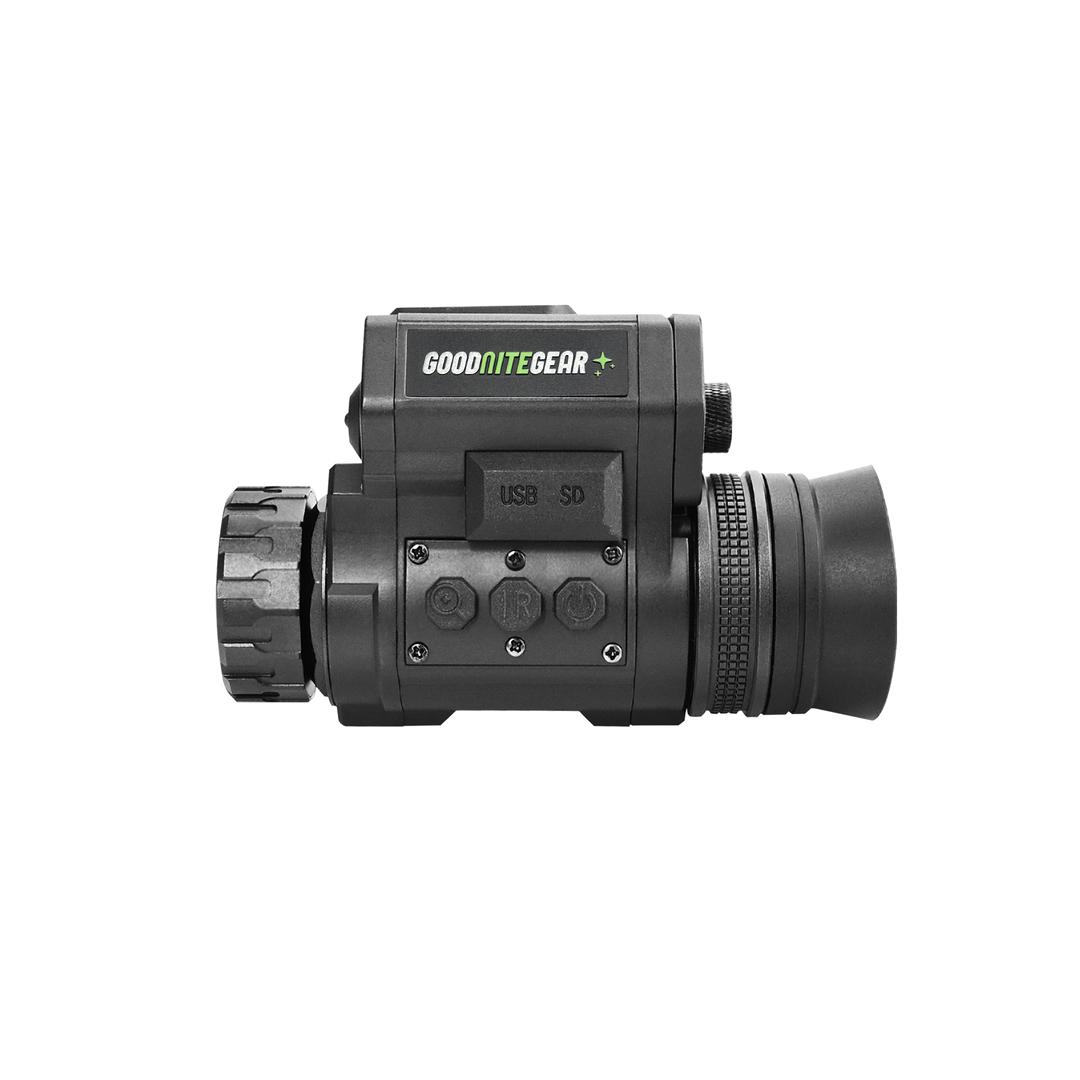
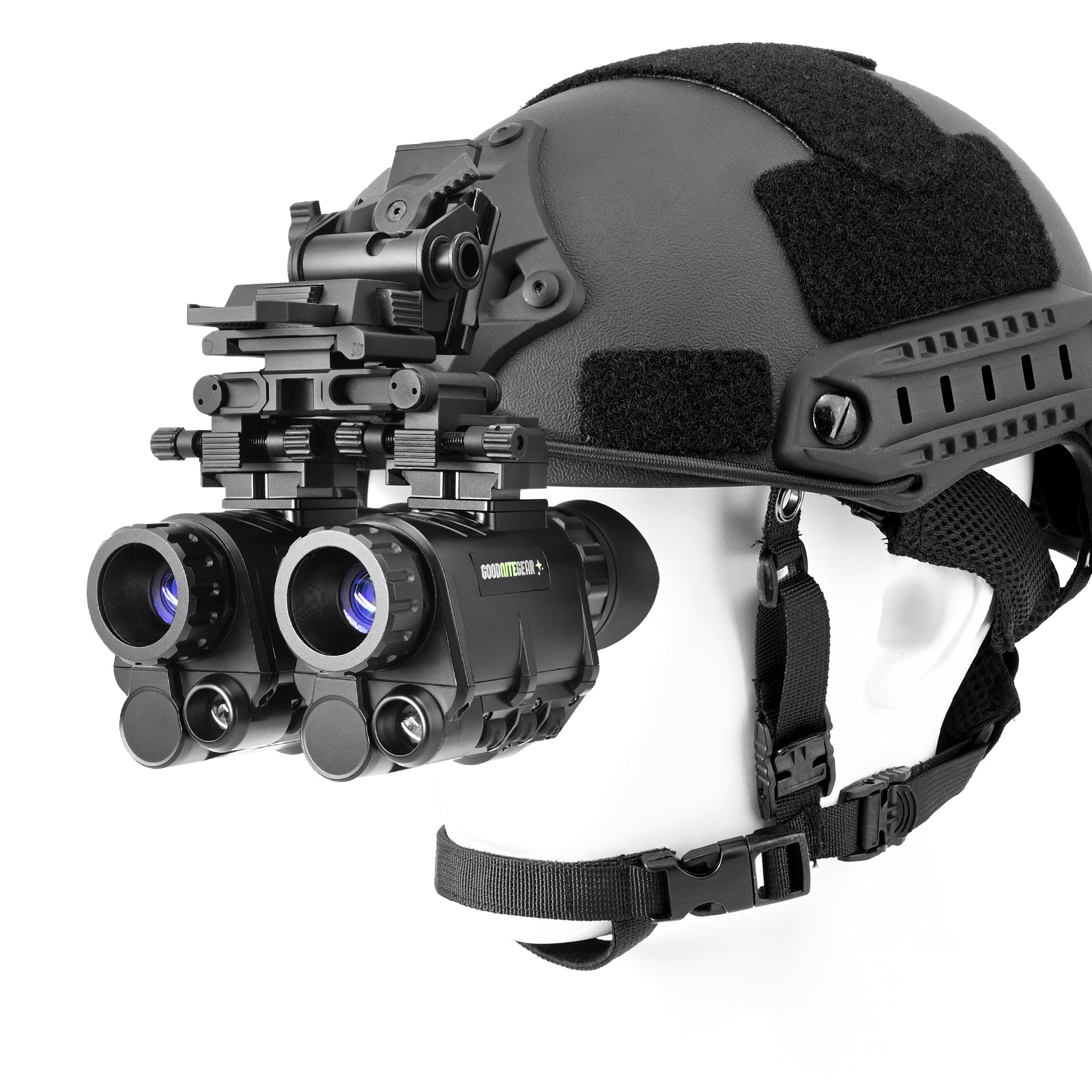
Modern patrol work doesn't stop when the sun goes down — and neither should visibility. Whether it's a perimeter search, a surveillance detail, or a K9 unit clearing a structure, officers who can see clearly in the dark have a real operational advantage. That's why more departments are turning to digital night vision goggles for police work: they close the gap with traditional Gen 2/Gen 3 tube systems at a fraction of the cost, and they bring capabilities analog tubes simply can't match.
This guide breaks down what digital night vision brings to law enforcement, how to think about matching a device to your department's mission and budget, and what to know before you buy.
Why Digital Night Vision Fits Modern LE Budgets and Workflows
Traditional image-intensifier tubes — the Gen 2+ and Gen 3 night vision that's been the law enforcement standard for decades — deliver excellent low-light performance, but at a steep price. A single Gen 3 PVS-14-style monocular commonly runs $3,000–$4,500 or more, before mounts, batteries, or training. For departments equipping a patrol fleet, a K9 unit, or a full SWAT team, that adds up fast.
Digital night vision equipment has changed that math. Here's what departments are gaining by moving digital:
Lower cost per unit. Departments can often outfit two or three officers with digital night vision for the price of a single Gen 3 tube — without giving up the field performance that matters for real operations.
Built-in recording. This is one of the biggest practical differences. Analog tubes show an image — they don't capture it. Digital night vision equipment for police and security use typically includes onboard photo and video recording, which matters for use-of-force documentation, surveillance evidence, and after-action review. An image intensifier tube can't do this on its own.
Significantly less maintenance. This is one of the most underrated advantages for departments. Analog image-intensifier tubes are delicate — they degrade over time, are vulnerable to bright-light damage from headlights, muzzle flash, or streetlights, and eventually need tube replacement, which is a real recurring cost most departments don't budget for. Digital sensors don't have that failure point. There's no tube to burn out, no gradual image degradation to track, and no specialized repair pipeline required. For a department managing gear across a full patrol fleet, that means fewer units out of service for repair, lower long-term cost of ownership, and less time spent on equipment upkeep instead of training and deployment.
Durability. Digital units generally hold up better to the day-to-day wear of patrol use — drops, weather, and vehicle storage — without the fragility concerns that come with an internal image-intensifier tube.
Flexibility. Many digital units support adjustable brightness, digital zoom, and multiple power configurations — features that let one device flex across surveillance, patrol, and training use rather than requiring specialized hardware for each.
None of this means digital has fully caught up to top-tier Gen 3 analog in raw low-light performance — it hasn't, quite. But for the majority of law enforcement use cases, the performance gap is small enough that the cost, feature, and durability advantages make digital the more practical choice for most departments equipping teams beyond a handful of specialized operators.
Matching the Right Night Vision Device to Your Department's Mission and Budget
Not every unit in a department needs the same gear. A patrol officer doing a building perimeter check has different needs than a surveillance team on a multi-hour stakeout, or a K9 handler working a night search. Here's how to think about tiering night vision and thermal imaging equipment for law enforcement across a range of budgets.
Entry-Level / Patrol Fleet Budget
Ideal for departments equipping larger groups of patrol officers, or agencies testing digital night vision for the first time before a bigger investment.
- NVG50 Digital Night Vision Monocular — From $500. A genuinely solid entry-level performer; low-light performance holds up well against devices costing significantly more.
- Nightfox Prowl 2 + Arctic Thermal Kit — $700. Pairs digital night vision with a thermal monocular for departments that want both capabilities without a large budget commitment.
- Nightfox Arctic 256x192 Helmet-Mounted Thermal Monocular — From $450. A low-cost entry point into thermal imaging for law enforcement, useful for heat-signature detection in searches and perimeter work.
Mid-Range
A step up in low-light performance and image quality — a strong fit for standard surveillance work, extended patrol shifts, or departments that want headroom over entry-level gear.
- NVG90 Digital Night Vision Monocular — $1,250. Competitive low-light performance with a wide field of view, well-suited to general patrol and surveillance use.
- NVG90 SE Digital Night Vision Monocular — $1,699. A noticeable step up from the base NVG90 in low-light output — Gen 2+ competitive performance at well under the cost of a comparable analog tube.
Higher-End / Specialized
For units with more demanding low-light requirements, thermal fusion needs, or specialized situational-awareness roles.
- NVG90 Pro Digital Night Vision Monocular — $2,795. The top of the NVG90 line, with performance that gets into Gen 3 analog territory while still coming in well under Gen 3 pricing.
- GNG G31 Advanced Digital Low Light Binocular — $5,250. A purpose-built binocular (not two bridged monoculars) with dual 1" sensors, delivering true depth perception and reduced eye strain for extended surveillance shifts.
- GF20 Thermal Fusion Digital Night Vision Monocular — $5,500. Combines digital night vision and thermal imaging in a single device — useful for units that need both detail resolution and heat-signature detection without carrying two separate tools.
- GF31 Thermal Fusion Digital Night Vision Binocular — $7,500. A binocular thermal fusion platform for teams that need sustained situational awareness in low-light and no-light environments.
- G18 Digital Quad Sensor 120° Panoramic Night Vision — $8,950. Quad-tube panoramic night vision goggles deliver a 120° field of view — more than double a standard binocular's — for full situational awareness without turning your head. This is the kind of capability that traditionally required $40,000+ analog quad systems.
Night Vision for SWAT and Tactical Teams
SWAT and tactical units have different priorities than general patrol — speed, hands-free operation, and full situational awareness in structure-clearing and high-risk entry scenarios matter more than raw budget efficiency. Among the departments we work with, tactical and SWAT teams are primarily equipping with thermal fusion devices and the G18 — these two categories address the specific demands of dynamic entries and high-risk operations in a way that standard monoculars don't.
Field of view matters more here than almost anywhere else. Standard monoculars give roughly a 40°–50° field of view — workable, but it means turning your head more to maintain awareness in a room-clearing or perimeter scenario. This is where the G18 Digital Quad Sensor earns its place: a 120° panoramic field of view lets an operator maintain situational awareness without the constant head-turning a single-tube setup requires, which matters when seconds and peripheral awareness both count. It's the device of choice for point and breach positions on tactical teams.
Thermal fusion adds detection capability tube-based systems can't match. For dynamic entries or searches where locating a person matters as much as navigating the space, thermal fusion devices like the GF31 Thermal Fusion Binocular and GF20 Thermal Fusion Monocular layer thermal detection on top of digital night vision navigation — useful for confirming a room is clear or locating a suspect through smoke, foliage, or low-visibility conditions where image intensification alone comes up short. This combination of navigation and detection in a single device is a major reason thermal fusion has become the standard choice for tactical operations, rather than standard digital night vision alone.
Binocular setups reduce fatigue on longer operations. For teams that want binocular depth perception without moving to thermal fusion, the GNG G31 or a bridged NVG90 Pro pair are solid options, though these see less use among tactical teams specifically compared to thermal fusion and quad systems.
Weight and helmet compatibility are non-negotiable. Tactical teams are already carrying significant kit — armor, weapons, comms. Every device in the tiers above is helmet-mountable, but confirm Wilcox or dovetail compatibility with your team's existing helmet setup before ordering across multiple units.
For departments equipping a SWAT or tactical unit, most teams land on a combination of thermal fusion devices (GF20 or GF31) for detection-critical roles and the G18 for point/breach positions where field of view is the priority.
Practical Considerations Before You Buy
A few things worth thinking through beyond price and image quality:
Battery life and logistics. Shift-based patrol work means devices need to reliably last a full shift, or units need a straightforward battery-swap or charging routine that fits into daily operations.
IR range for typical patrol distances. Match the device's effective range to how it'll actually be used — perimeter and building-clearing work has different range needs than open-field surveillance.
Ruggedness and weatherproofing. Gear needs to hold up to being dropped, exposed to rain, and used in vehicles — not just perform well in a controlled test.
Mount compatibility. Confirm helmet and rail mount compatibility with your department's existing equipment before purchasing across multiple units.
Procurement Details
Good Nite Gear works directly with law enforcement agencies on equipment purchases and quotes.
- CAGE Code: 9YK62
- Business contact: kyle@goodnitegearshop.com
- Departments interested in a quote or unit comparison for a specific use case can reach out directly — we're happy to walk through which device fits your budget and mission.
- Browse the full digital night vision lineup or the thermal fusion collection to compare all current models side by side.
Frequently Asked Questions
How much does night vision cost for police departments?
Digital night vision for law enforcement ranges from around $450 for entry-level thermal monoculars up to roughly $9,000 for specialized quad-sensor panoramic systems. Most departments equipping patrol officers land in the $500–$1,700 range, while surveillance, K9, and specialized units often invest in $2,500–$8,000 devices with thermal fusion or panoramic capability.
What's the difference between digital night vision and analog night vision for law enforcement?
Analog (Gen 2/Gen 3) night vision uses an image-intensifier tube to amplify ambient light directly into a viewable image, with no lag and typically strong raw low-light performance — but at a higher cost, no built-in recording, and more fragility. Digital night vision uses an image sensor and screen, which allows for onboard recording, digital zoom, adjustable brightness, and generally lower cost, with performance that's closed the gap significantly with analog in recent years.
What night vision do SWAT teams use?
Tactical and SWAT units primarily equip with thermal fusion devices and the G18 quad panoramic system. Thermal fusion devices like the GF20 and GF31 combine detection and navigation in one unit — critical for dynamic entries where locating a person matters as much as moving through a space — while the G18's 120° field of view suits point and breach positions where full situational awareness is the priority. Standard monoculars and binoculars still see use, but thermal fusion and quad systems have become the standard choice for tactical operations specifically.
Is digital night vision good enough for law enforcement use?
For the majority of law enforcement applications — patrol, perimeter security, general surveillance, and search operations — modern digital night vision equipment performs at a level that's fully field-usable, with practical advantages like recording and lower replacement cost that analog can't match. Only the most demanding low-light, zero-illumination scenarios still show a meaningful edge for top-tier Gen 3 analog tubes.
Good Nite Gear provides digital night vision and thermal imaging equipment to law enforcement agencies, outdoor professionals, and security teams nationwide. For departments evaluating night vision options, contact us at kyle@goodnitegearshop.com.

