



If you've been looking to add helmet mounted thermal capability without blowing your whole budget, the Nightfox Arctic deserves a hard look. At $450, it sits in a category that doesn't have many serious contenders — and it brings a surprisingly capable spec sheet to that price point. Here's everything you need to know before you buy.
What Is the Nightfox Arctic?
The Nightfox Arctic is a budget helmet mounted thermal monocular designed for real-world use. It's lightweight, runs on a common battery format, records video, and can even pair with a night vision monocular for a full thermal fusion setup. For anyone getting into helmet-mounted thermal for the first time, it's one of the most accessible entry points on the market right now.
Build Quality and Hardware Overview
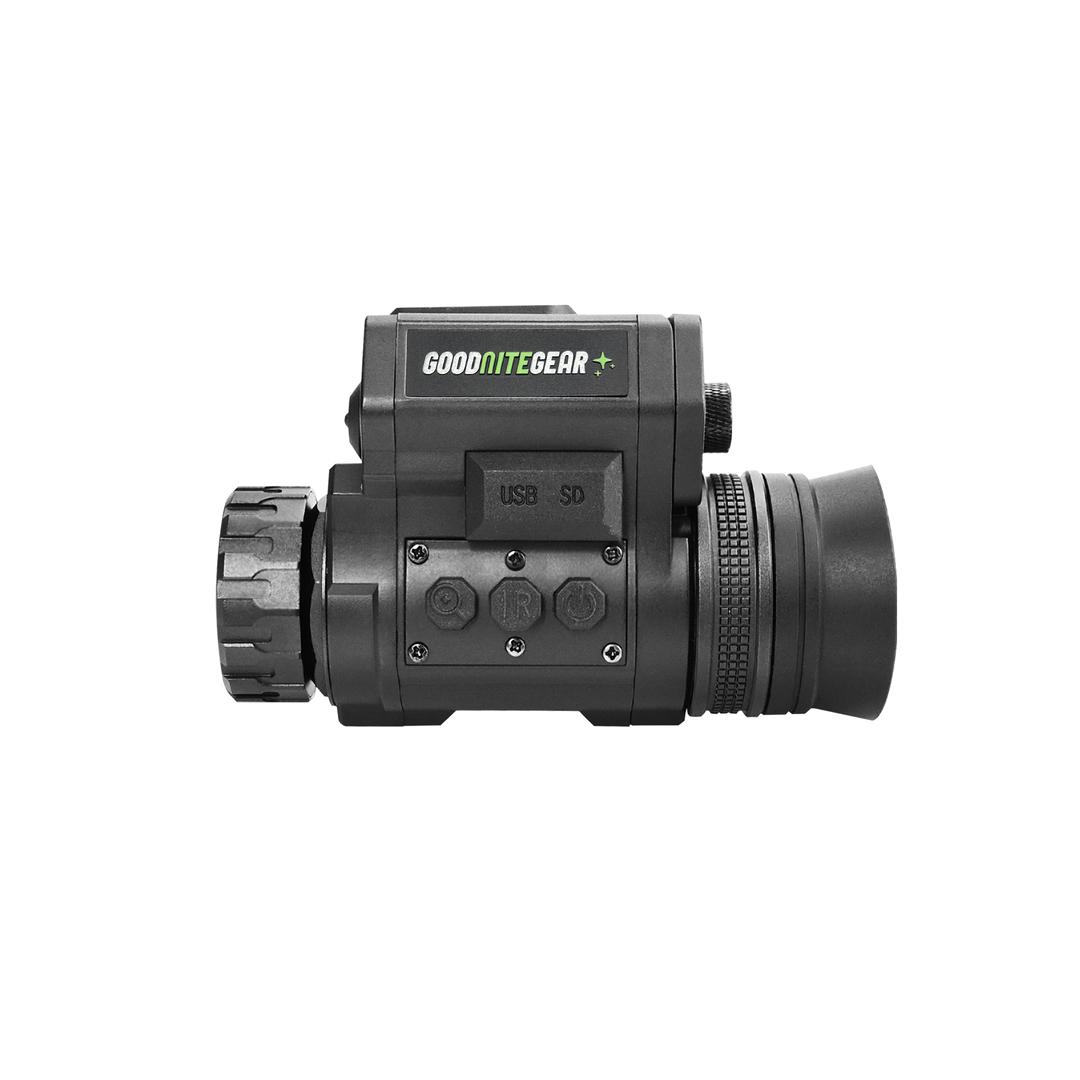
Coming in at 280g with the battery installed, the Arctic is easy to forget it's on your head during extended use. It carries an IP65 weather resistance rating, so light rain and dust aren't going to be a problem in the field.
On the front is the 256x192 thermal sensor — an entry-level resolution, but more on actual performance in a moment. Flip it around and you've got a 2.06-inch AMOLED display running at 410x502 resolution. The eyepiece rotates to let you dial in diopter adjustment, which is a small detail that makes a real difference when you're wearing this for hours at a time.
The battery compartment is at the bottom — unscrew the cap, drop in a single 18650 cell, and you're good for up to 9 hours of runtime. That's legitimately impressive for a thermal at this price. A covered USB-C port sits on the side alongside a microSD card slot for video recording, and the unit comes with a 32GB card included in the box.
One honest callout: the six-button control layout on top is functional but a little cluttered. It gets the job done, but there's room for Nightfox to simplify the interface in future iterations.
Mounting and Helmet Compatibility
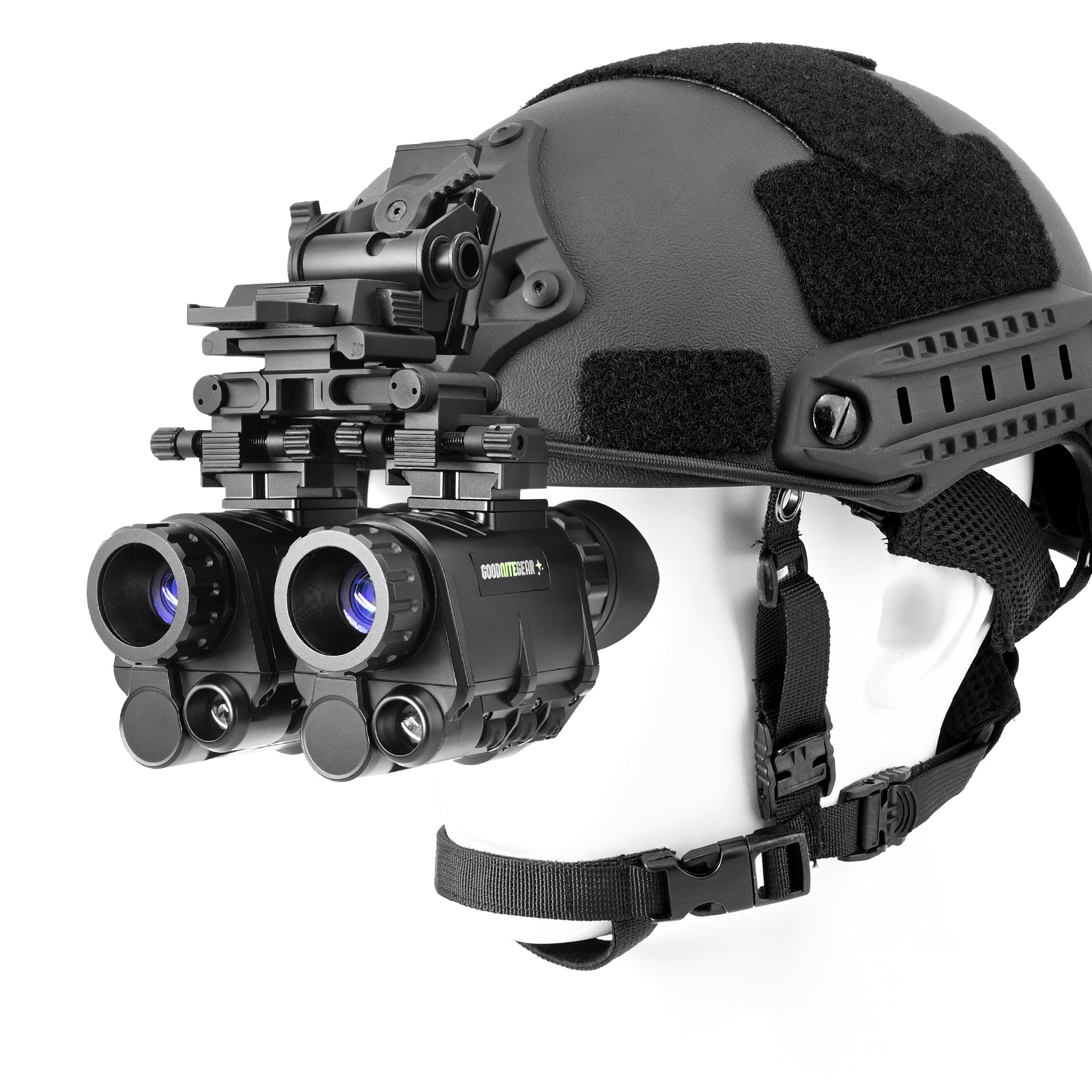
The Arctic uses a dovetail adapter that screws into the top of the monocular, which then interfaces with your helmet mount system. The dovetail is plastic — not ideal, but completely standard for this price tier. Just be deliberate when you're mounting and dismounting it, and it'll hold up fine.

Thermal Sensor Performance: What the Specs Actually Mean
Let's dig into what matters for real-world use. The Arctic's 256x192 sensor at 50FPS gives you a smooth, responsive image — no choppy or laggy feel when you're scanning. The field of view comes in at 23.8° horizontal and 17.4° vertical, or roughly 29.4° combined. For reference, a standard PVS-14 analog night vision device runs about 40°, so you are giving up some situational awareness compared to white phosphor NVGs. That's a real tradeoff to understand going in, but for a dedicated thermal device at this price, it's acceptable.
The sub-30 millikelvin NETD rating is where the Arctic quietly punches above its weight. NETD measures the smallest temperature difference the sensor can distinguish — anything under 30mK is considered solid performance, and you typically see this spec on higher-priced units. In practice, it means the image holds up well even when the temperature differential between a target and its background is small.
Detection range for a human-sized target sits around 150 meters, with identification closer to 100 meters. This is a short-to-medium range setup — not something you're running for long-distance observation, but plenty capable for patrol, security, airsoft, or hunting applications where targets are within that envelope.
Digital zoom goes up to 4x, though the image quality degrades significantly at maximum magnification. It's there if you need it, but don't expect it to extend your effective detection range.
Color Palettes and Viewing Modes
The Arctic ships with five palette options, each suited to different conditions:
White Hot — The closest to how our eyes naturally process contrast. Fast for target detection and threat identification. Most users default here.
Black Hot — The inverse of white hot. Easier on the eyes in bright ambient conditions or when scanning light backgrounds like snow, sand, or concrete where white-hot signatures can wash out.
Iron — A middle ground between white hot and rainbow. Hottest objects glow bright white while cooler objects shade toward darker tones.
Rainbow — Assigns a broad spectrum of colors across the temperature range, making it easier to distinguish objects that are close in temperature to each other.
Tint Mode — Primarily black and white with red highlighting for hotspots. Clean and easy to read at a glance.
Having all five modes available means you can adapt to whatever environment you're operating in rather than being locked into one look.
Nightfox Arctic + Prowl 2: The Thermal Fusion Setup
One of the Arctic's most compelling selling points is how it integrates with the Nightfox Prowl 2 digital night vision monocular. Both units share the same body platform, which means they can be bridged together — thermal in one eye, digital night vision in the other. Your brain naturally combines both images in real time, giving you the navigation and observation capability of digital NVGs alongside the detection advantage of thermal.
Paired together, the Arctic and Prowl 2 make up one of the most affordable thermal fusion setups available anywhere. If that's a setup you're building toward, check out the thermal fusion bundle on goodnitegearshop.com — it's worth running the numbers on the bundle vs. buying each unit separately.
How It Compares: Nightfox Arctic vs. Night Operators HEAT
If you're shopping in this category, the Night Operators HEAT is probably the other unit on your radar. Here's how they stack up directly:
| Feature | Nightfox Arctic | Night Operators HEAT |
|---|---|---|
| Price | $450 | $649 |
| Sensor Resolution | 256x192 | 296x192 |
| NETD | sub-30mK | 25mK |
| Field of View | ~29.4° | 45° |
| Battery | 18650, ~9 hrs | 18650 |
| Video Recording | Yes (32GB card included) | — |
| Weight | 280g | — |
| Fusion Capable | Yes (Prowl 2 bridge) | Yes (VIPER bridge kit, ~$750) |
The HEAT's 45° field of view is a meaningful upgrade — wider situational awareness is genuinely useful when you're moving. Its 25mK NETD is also slightly better than the Arctic's sub-30mK, though both will perform well in most real-world conditions.
Where the Arctic wins is value density. The Arctic's 9-hour battery life, included 32GB SD card, lighter form factor, and lower entry price add up to a more budget-friendly package. The comparable fusion kits for each platform end up at similar total prices, which makes the Arctic the easier starting point if you're not sure yet whether you'll go full fusion.
If the HEAT's wider FOV is a priority, it earns its price premium. But if you're trying to get capable helmet-mounted thermal into your kit without a painful outlay, the Arctic is the call.
Who Should Buy the Nightfox Arctic?
The Arctic makes sense for:
- First-time thermal buyers who want to understand how helmet-mounted thermal works before spending more
- Airsoft and mil-sim players running helmet rigs who want real thermal detection capability
- Security professionals working close-to-medium range environments
- Hunters and outdoorsmen who need thermal at reasonable range and want recording capability
- Anyone building toward a fusion setup with the Prowl 2 at an accessible entry price
It's not the right tool if you need long-range detection or the widest possible field of view — those requirements push you toward higher-tier hardware. But for short-to-medium range use cases with a tight budget, it delivers.
Bottom Line
The Nightfox Arctic checks the boxes that matter for budget helmet mounted thermal: a capable sub-30mK sensor, 9-hour runtime, video recording, and a clear upgrade path to a full fusion kit with the Prowl 2. The 256x192 sensor limits your range ceiling, and the controls could be cleaner, but at $450 you're getting real capability for the money.
Ready to pick one up? Shop the Nightfox Arctic at Good Nite Gear — and if you're thinking about the full fusion setup, check out the Prowl 2 bundle while you're there.

