




Military Grade Night Vision Goggles: What "Military Grade" Actually Means
"Military grade" gets thrown around a lot in night vision marketing, but it's not always clear what it actually means — or whether civilians can even access that level of performance. Here's an honest breakdown of what military-grade night vision really involves, what it costs, and how close civilian-accessible options can actually get.
What Does "Military Grade" Actually Mean?
There's no single, universally regulated definition of "military grade" in night vision — but genuine military-issue equipment shares a few defining traits:
- Rugged, mil-spec construction — built to survive drops, moisture, extreme temperatures, and heavy field use
- Top-tier optical performance — typically Gen 3 image intensification or equivalent digital sensor performance
- Purpose-built reliability — designed for missions where equipment failure has real consequences
- Restricted availability — true military-issue systems like the GPNVG-18 quad-tube aren't sold commercially at all; they're procured directly by the DoD
That last point matters: the specific hardware militaries run generally isn't available to civilians at any price, regardless of budget. What civilians can access is technology built around the same core principles — premium sensors, rugged construction, and performance that closes in on or, in some cases, matches military-grade benchmarks.
How Much Does Military-Grade Night Vision Cost?
Genuine Gen 3 analog tubes — the closest thing civilians can legally buy to what the military runs — typically cost $3,000 to $4,500+ per unit, with premium binocular and panoramic configurations running well beyond that. Real GPNVG-18-style quad systems aren't commercially available at any price, since they're a military procurement item rather than a retail product.
For a deeper breakdown of what drives night vision pricing generally, see our guide on why night vision goggles are so expensive.
The Closest Civilian-Accessible Equivalents
Here's where premium digital technology has genuinely closed the gap — not by replicating military hardware, but by delivering comparable real-world performance at a civilian-accessible price.
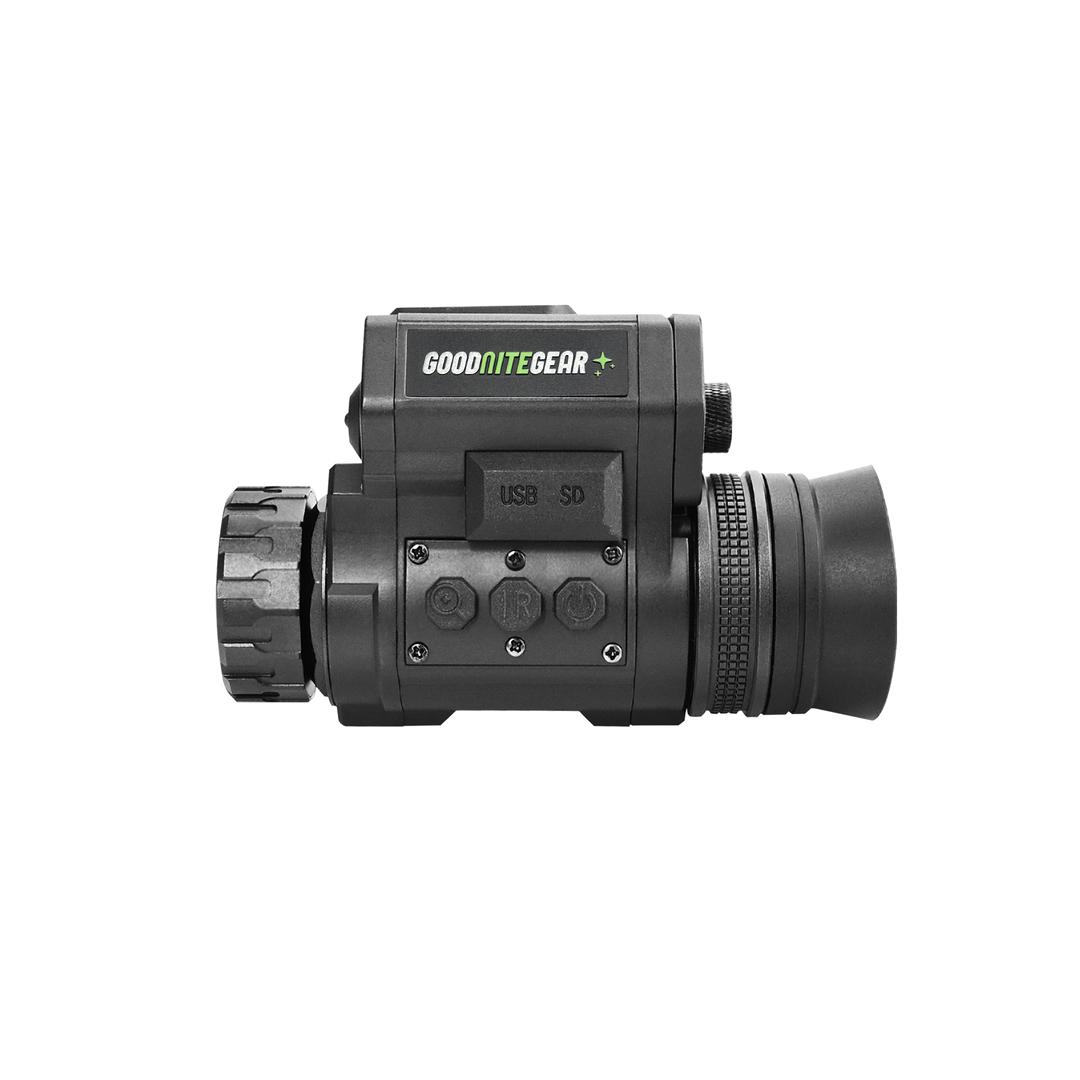
NVG90 — Entry Into Serious Performance
~$1,250

A 940nm high-sensitivity IR system running up to 100FPS with a 43° field of view. Not military-grade in construction or price, but it's the natural starting point if you want to work your way up toward genuinely premium performance without a five-figure commitment.
NVG90 SE — Approaching Gen 2+ Analog
~$1,699

Running a 2/3" 2nd-generation high-performance sensor at 50/100Hz, the NVG90 SE has the lowest latency in our lineup and, in direct side-by-side testing against a Gen 2+ PVS-14, performs close enough to go toe-to-toe with real analog tube performance — at a fraction of Gen 2+ pricing.
NVG90 Pro — Outperforming Gen 3
~$2,795

Our top-performing digital monocular. At 50FPS, the NVG90 Pro doesn't just match analog — in testing, it clearly outperforms Gen 3 tubes that cost $4,000+ on their own. This is the clearest example we have of digital genuinely closing, and in some respects exceeding, the military-grade performance benchmark.
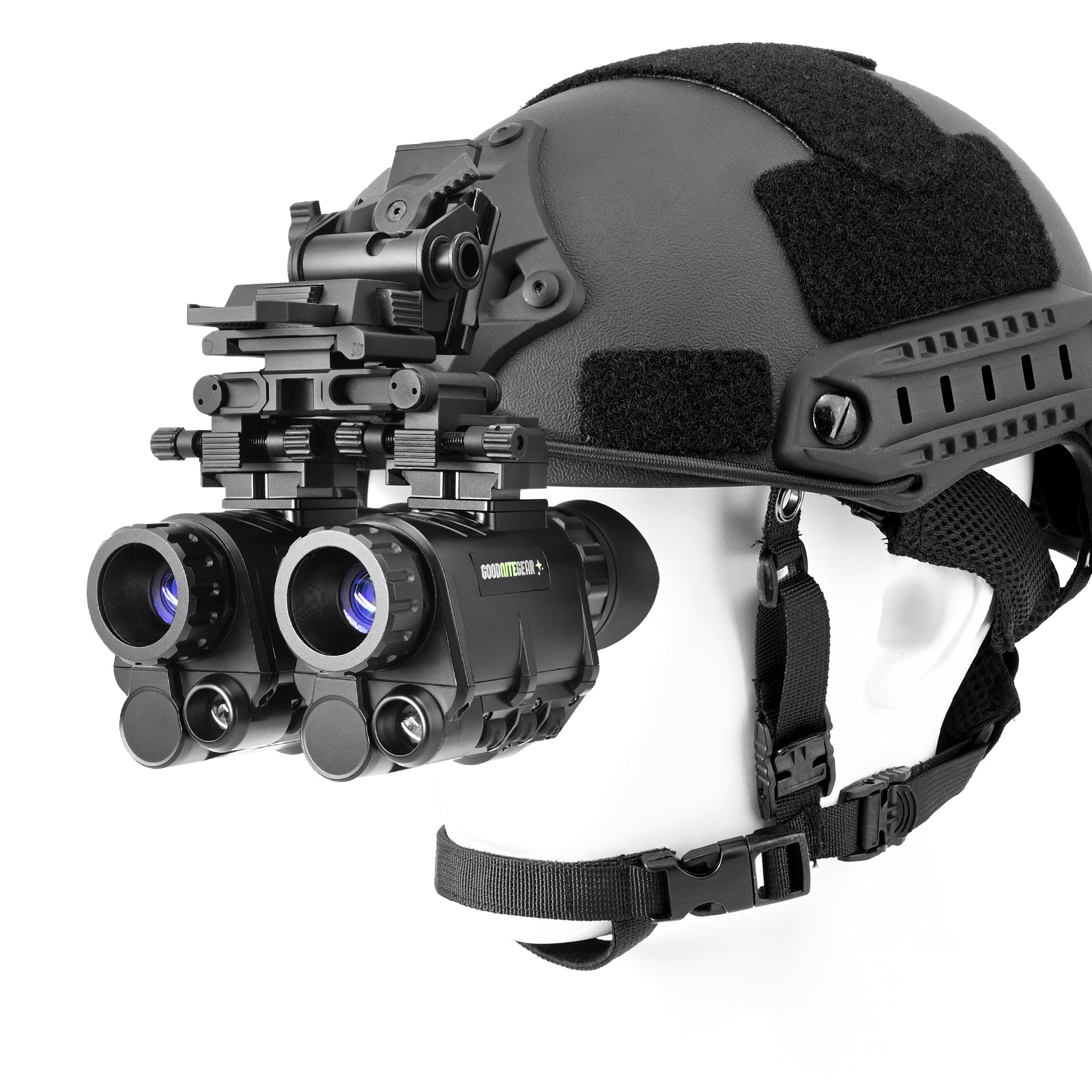
GNG G31 — Binocular NVG
~$5,250

A true single-body binocular built around a 1" BSI CMOS sensor with 0.00005 lux minimum illumination. Real detection, recognition, and identification ranges with IP67 weatherproofing and a standard Wilcox interface.
GNG G18 Quad Pano — Closest to a GPNVG-18
~$8,950

If you want the closest civilian-accessible equivalent to genuine quad-tube panoramic night vision, this is it. Four sensors deliver 120° of panoramic field of view — more than double a standard binocular's ~40° — built on the same 1" high-performance low-light sensor as our other premium devices. A real analog quad system, if you could even source one, runs $40,000+; the G18 brings that category of situational awareness down to a fraction of that cost.
GNG GF20 — Military-Style Fused Detection
~$5,500

Fused thermal and low-light sensing in a single monocular — the same fundamental approach behind military systems like the ENVG-B, which combines thermal imaging with image intensification. The GF20 pairs a 1" low-light sensor with a 640×512 thermal core for genuine detection-plus-navigation capability in one device.
GNG GF31 — Premium Fused Binocular
~$7,500

The binocular version of the same fused approach, with dual sensors for true stereoscopic depth perception alongside 640×512 thermal detection. 100Hz refresh, 50° FOV, IP67 weatherproofing, and 75+ hours of battery life in low-power mode — built for the kind of extended field use military-grade equipment is expected to handle.
So, Should You Buy "Military Grade," or the Civilian Equivalent?
If you're a civilian buyer — hunting, property security, serious training, or general preparedness — genuine military-issue hardware isn't something you can access regardless of budget, and true Gen 3 analog comes with a steep price and real fragility. The premium digital options above deliver comparable, and in the NVG90 Pro's case, sometimes superior real-world performance, without either limitation.
For law enforcement agencies specifically evaluating this tier of equipment, we also offer Testing & Evaluation units so your department can assess real-world performance before committing to a purchase.
Frequently Asked Questions
Can civilians buy military-grade night vision? Genuine military-issue systems like the GPNVG-18 aren't sold commercially at all. Civilians can legally buy Gen 3 analog tubes, which represent the closest analog equivalent, along with premium digital devices that increasingly match or exceed Gen 3 performance in real-world testing.
What's the difference between military-grade and civilian night vision? Beyond raw optical performance, military-grade equipment typically features more rugged mil-spec construction and undergoes more rigorous durability testing. Premium civilian digital devices can match or exceed the optical performance while trading some of that ruggedness for a dramatically lower price point.
Is digital night vision as good as military-grade analog? It depends on the tier. Budget digital falls well short. Our premium tier — the NVG90 SE and NVG90 Pro specifically — has demonstrated performance that matches or exceeds Gen 2+ and Gen 3 analog tubes in direct side-by-side testing.
What's the most "military-grade" option in your lineup? The G18 Quad Pano is the closest thing we offer to true military-style panoramic capability, while the NVG90 Pro is our strongest performer against Gen 3 analog specifically.

