



There's a lot of digital night vision in the $500–$700 range, and there's serious gear pushing $3,000 and up. The NVG90 sits right in the middle — and the question worth asking is whether it actually earns that middle ground or just costs more than the budget options without delivering meaningfully better performance. After running it head-to-head against the Sionyx Opsin, the NVG50, the NVG90 SE and NVG90 Pro, and a Gen 3 analog PVS14, here's the full breakdown.
Build Quality and Hardware
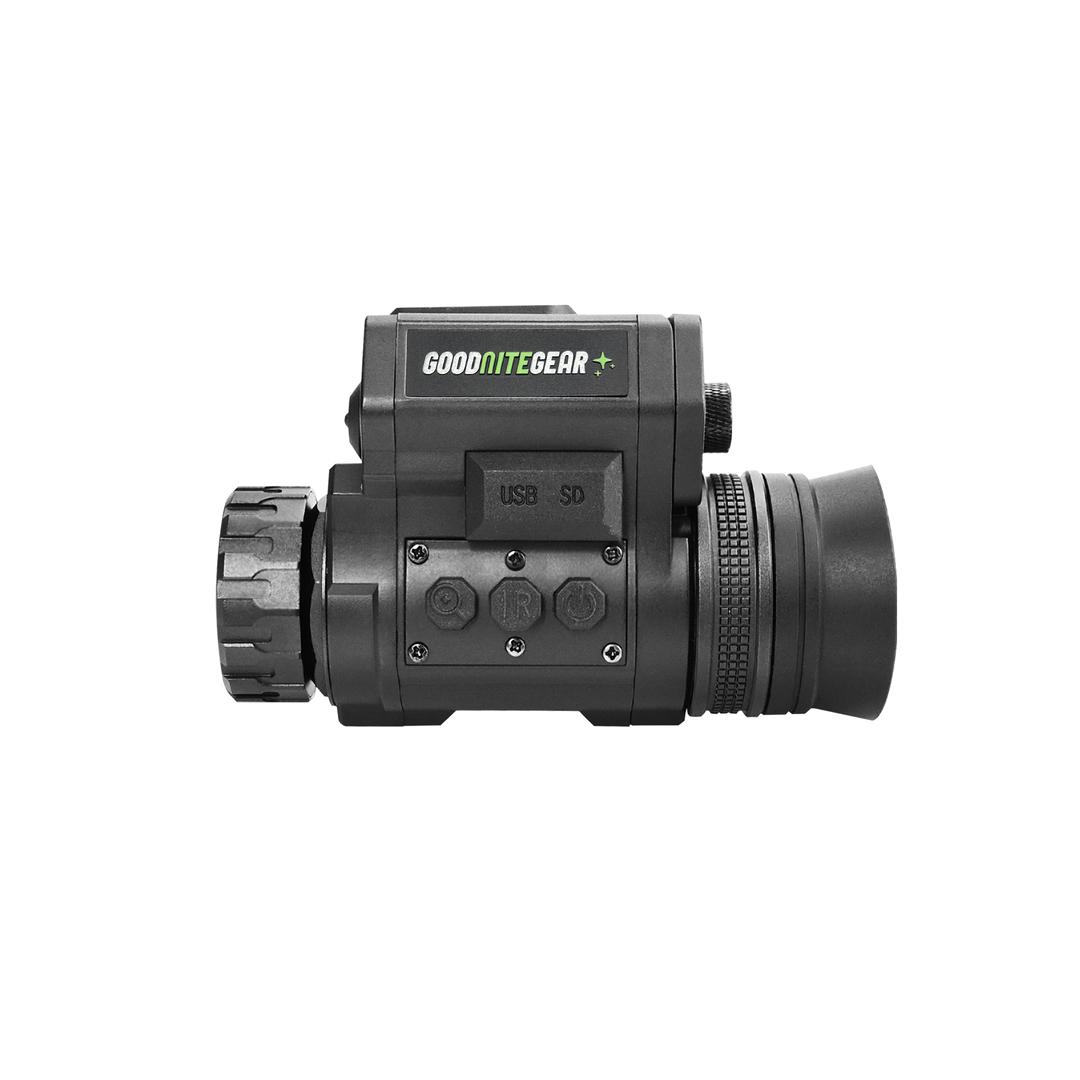
The NVG90 body is hard polymer construction — similar to the NVG50 — with an IP54 rating for solid dust protection and splash resistance from any angle. Total weight with the battery and mounting arm attached is about 13.1 ounces, which is comfortable for extended wear.

Focus is adjusted by rotating the front lens, and there's a diopter adjustment as well. A built-in 940nm IR illuminator is included and can be toggled on or off as needed.
The display is a 1280x960 screen running at either 50 or 100FPS. At 100FPS the image is genuinely smooth with no noticeable latency — and importantly, there's very little of the fisheye distortion that shows up on devices like the NVG50 and NVG30, where small internal screens magnified for viewing tend to curve and distort unless you're looking straight on. The NVG90 doesn't have that problem.
The Zoom — A Genuine Advantage Over Analog
One of the standout features on the NVG90 is the digital zoom knob. Rotate it to move from 1x all the way to 5x magnification — and the image stays clean throughout the range. Most digital devices degrade noticeably when zoomed; the NVG90 holds its quality in a way that makes the zoom actually useful for identifying distant targets, not just technically available. This is one area where digital has a clear and undeniable edge over analog systems.
Battery and Charging
The NVG90 runs on a single 18650 cell via USB-C charging, with runtime estimated between 6–8 hours depending on screen brightness, IR use, and whether you're recording. It also has an internal memory for recording rather than the Micro SD card configuration more common on other devices — transferring footage to a computer is straightforward via USB-C.
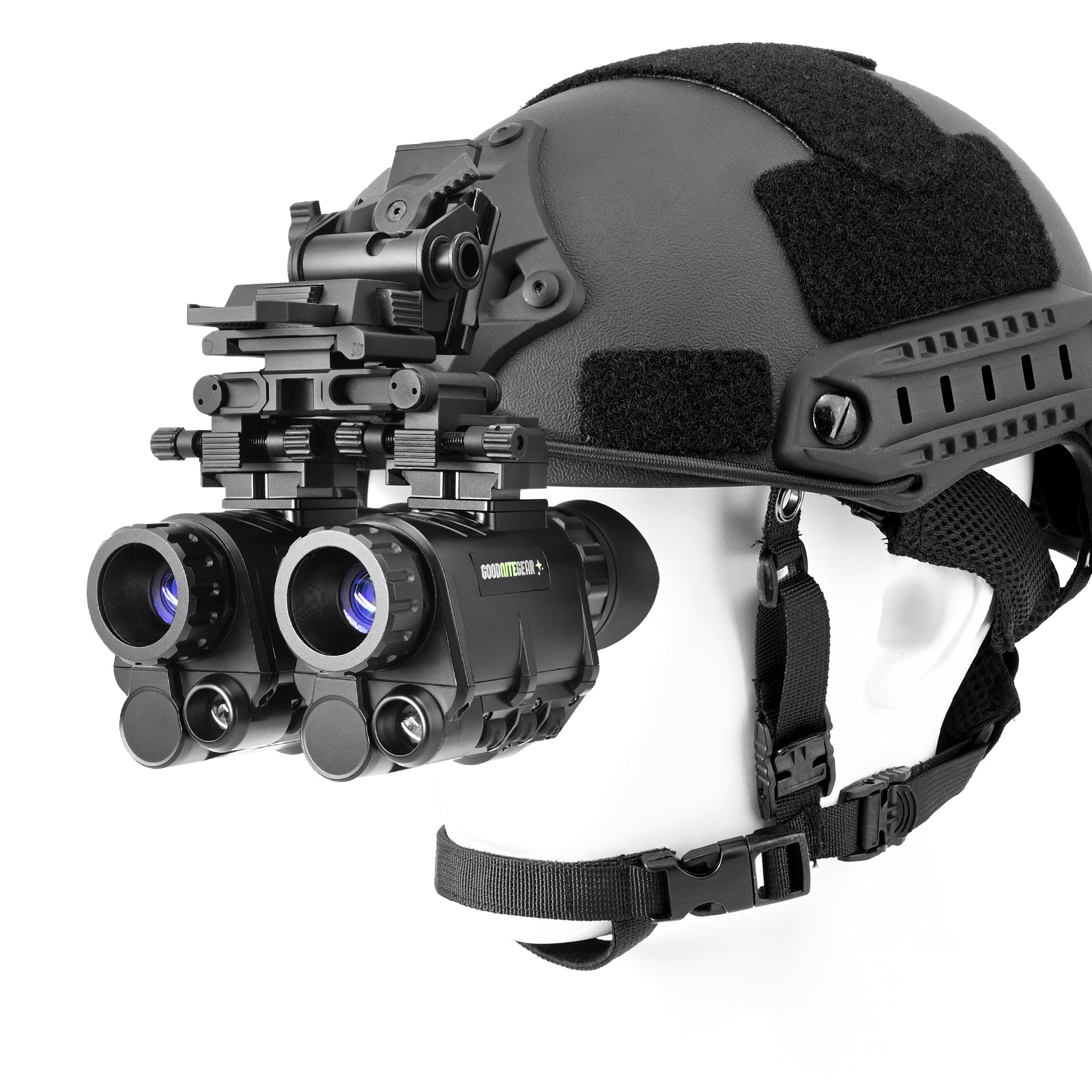
For extended use, the NVG90 can be powered externally and ships with a helmet-mounted battery pack running dual 18650s. Combined with the internal battery, that pushes runtime to around 18–20 hours — enough for multiple nights of operation. The external pack also functions as a counterweight that meaningfully reduces neck fatigue during long helmet-mounted sessions.
Mounting Options
The NVG90 comes with a Z04 mounting arm — all-metal construction with a dovetail end that connects to G24 mounts. You'll need to pick up your own mount separately for a FAST helmet shroud, but the arm itself is significantly more robust than what ships with the NVG50 or NVG30. It's a stable, reliable setup.

For those who want a more immersive binocular experience, two NVG90 units can be bridged together for a dual-tube setup for around $2,500 — a strong value proposition given the performance level this system delivers.
Low-Light Performance: The Comparisons
NVG90 vs. Sionyx Opsin The Opsin retails for just under $1,900 — nearly $650 more than the NVG90. In stepped lighting comparisons at 100FPS vs. 90FPS, the two devices are close in moderate low-light conditions. As ambient light drops, the NVG90 pulls ahead. By the darkest test condition, the Opsin loses the target entirely while the NVG90 holds on. That's a significant result for a device that's $650 cheaper.

NVG90 vs. NVG50 The NVG50 is a $550 entry-level device and a genuinely solid performer for the price — but the gap to the NVG90 is real and visible as conditions get darker. Interestingly, the NVG50's passive low-light performance sits close to the Sionyx Opsin, which says a lot about the NVG50's value. When you move up to the NVG90 you're getting better low-light performance, higher framerate, and significantly less latency — all of which matter if you're doing anything beyond stationary observation.

NVG90 vs. NVG90 SE and NVG90 Pro All three devices running at 100FPS, the performance ladder is clear — you do get what you pay for as you move up. The NVG90 is competitive and sits just behind the SE in low-light output. The Pro delivers the best performance in the lineup and gets into Gen 3 analog territory. If you're evaluating whether the SE or Pro premium is worth it, the jump from NVG90 to SE is noticeable; the jump from SE to Pro is more meaningful in truly dark environments.

NVG90 vs. Gen 3 Analog PVS14 A Gen 3 Ebit PVS14 tube runs around $3,600 new — nearly triple the NVG90's price. In passive low-light performance, the analog still holds the edge. Zero latency and a slightly wider field of view are also points in the analog column. But the NVG90 closes the gap considerably, and the analog can't zoom, can't record, and costs three times as much. For most buyers, that math works in the NVG90's favor.

Watch this video to see how it compares with a Gen 2+ analog PVS14 tht costs 2x as much:
Field of View and Navigation
The NVG90's field of view comes in at roughly 40 degrees with a true 4:3 aspect ratio display — proportions that closely match what analog users are accustomed to and that are well suited for walking and navigation. Wider rectangular screens common on some digital devices give you more horizontal coverage but sacrifice vertical FOV, making movement less natural. The NVG90's screen geometry is purpose-built for real-world use, not just observation.
Final Verdict
In the $1,000–$1,300 range for digital night vision, the NVG90 is the clear choice. It outperforms devices that cost $650 more, delivers low latency at 100FPS, offers 1x–5x zoom that actually holds image quality, and pairs with a solid mounting system and long-duration external battery option. The NVG90 Pro offers better absolute performance, and Gen 3 analog still leads in passive low-light — but both cost two to three times as much. For hunters, security professionals, and tactical users who want high-end performance without the high-end price, the NVG90 delivers.

