
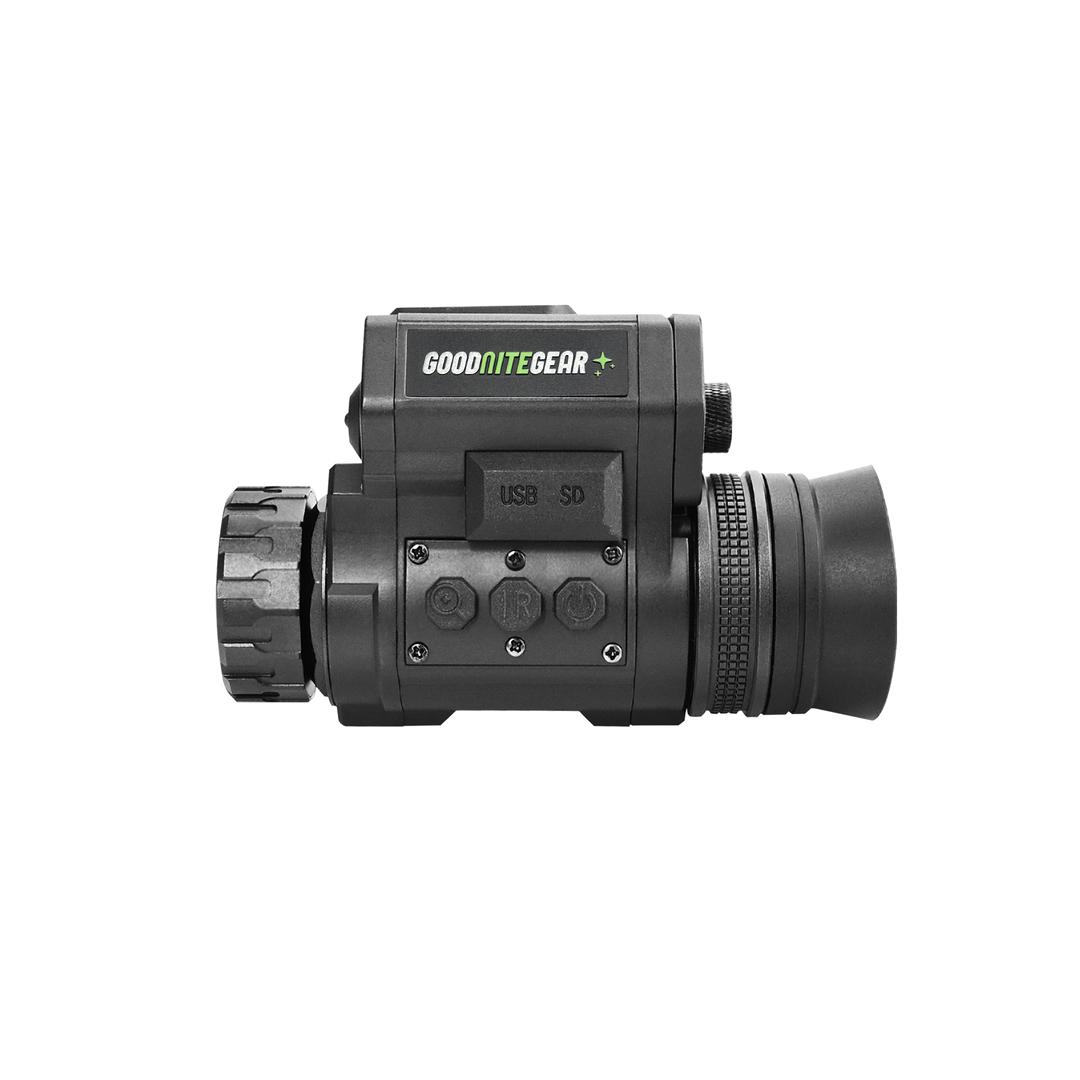

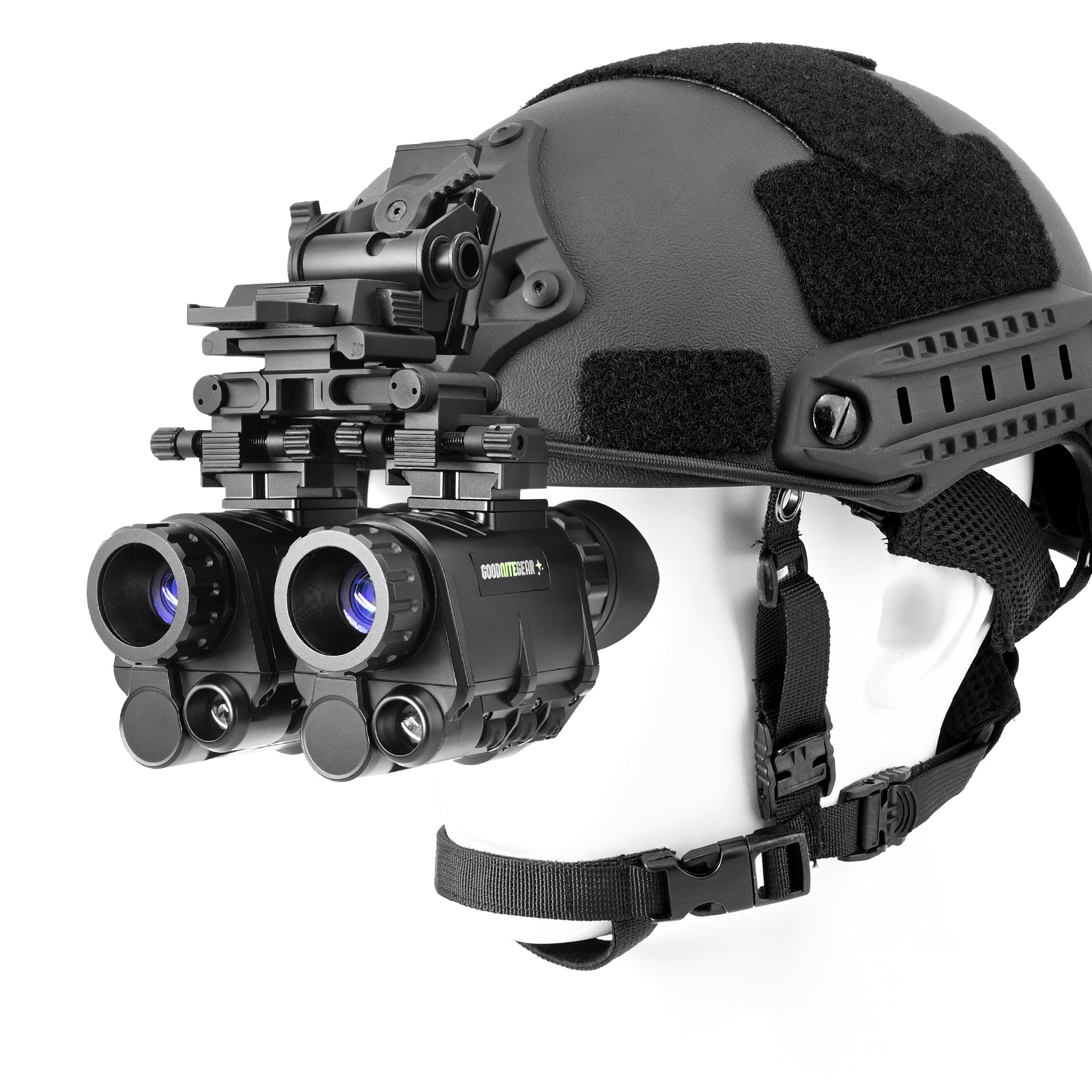


Night vision goggles (NVGs) are essential gear for travelers, adventurers, and military personnel alike. They're great for operating in low-light environments — but do night vision goggles actually work in total darkness?
Law enforcement and military personnel rely heavily on NVGs to improve their vision in dimly lit conditions. To answer the total darkness question properly, Good Nite Gear breaks down the core NVG technologies behind these devices.
What Are the Core Night Vision Technologies?
There are three fundamental technologies behind night vision:
Image Intensification
Conventional NVGs use image intensification to produce a clear picture by amplifying ambient light — moonlight, starlight, or any other available light source.
Traditional image-intensified NVGs work well in low-light conditions, but they lose effectiveness in true total darkness, since there's no ambient light left to amplify.

Infrared (IR) Illumination
Many NVGs pair with infrared illuminators to overcome image intensification's total-darkness limitation. These devices emit infrared light that functions essentially like an invisible flashlight.
IR light is undetectable to the naked human eye, but night vision equipment picks it up clearly. One tradeoff worth knowing: since any other NVG user nearby can also see that same IR light, running an illuminator can compromise your position in tactical situations where staying undetected matters.

Thermal Imaging
Thermal imaging detects heat radiating off objects rather than relying on light at all. That makes it genuinely effective in total darkness, with no light source required whatsoever. Check out our thermal night vision monoculars.

So, Do Night Vision Goggles Work in Total Darkness?
It depends entirely on the technology inside the device.
A quick clarification that trips a lot of buyers up: digital night vision — while genuinely excellent in low ambient light — still needs some light source to function, whether that's faint ambient light or a supplemental IR illuminator. Digital sensors amplify and process available light electronically rather than optically, but they still need light to work with. A digital device in true zero-light conditions, with no IR and no ambient light at all, won't produce an image any more than an analog device would.
The technologies that genuinely work in total darkness, with zero light required, are thermal imaging and thermal fusion (which combines thermal detection with image intensification or digital low-light sensing in one device).
Modern manufacturers increasingly combine multiple technologies into a single unit specifically to solve this problem. The AN/PSQ-20 Enhanced Night Vision Goggle (ENVG), for example, fuses thermal imaging with image intensification to perform reliably across a much wider range of lighting conditions than either technology alone.
These combined systems have meaningfully expanded what NVGs can do — and where they can be used effectively.

How to Choose the Best Night Vision Goggles for Your Needs
A few things worth weighing as you shop:
Operational Environment. Conventional image intensification is perfectly adequate in settings with at least some ambient light. For genuinely total darkness, you'll want a device with thermal imaging, thermal fusion, or a reliable IR illuminator.
Budget. Top-tier night vision performs better across the board, but it costs more. Budget-friendly night vision goggles still perform well for less demanding, less extreme use cases.
Intended Use. Military-grade night vision goggles are built to endure harsh conditions and deliver top-end capability for tactical operations. Most civilian applications don't require that level of ruggedness or performance.
For a genuinely capable all-around pick, take a look at the NVG50 Digital Night Vision Binocular — both strong low-ambient-light performers if total blackout conditions aren't your primary use case.
The Bottom Line
So, do night vision goggles work in total darkness? With the right technology integrated, yes — but not automatically.
Conventional image-intensified NVGs can't function without at least some ambient light. Digital NVGs are excellent in low light but still need some light source to work with. Only thermal imaging and thermal fusion devices are built to operate in genuinely total darkness, with zero light required.

