



What Do Police Use for Night Vision?
Ask "what night vision do police use" and the honest answer is: it depends entirely on the unit. A patrol officer clearing a backyard after a break-in call and a SWAT operator making entry on a warrant are running completely different equipment — different budgets, different missions, different risk tolerance.
Here's how it actually breaks down. Miami Regional SWAT has started using the GF31 thermal fusion monocular on ops.

Patrol-Level Gear
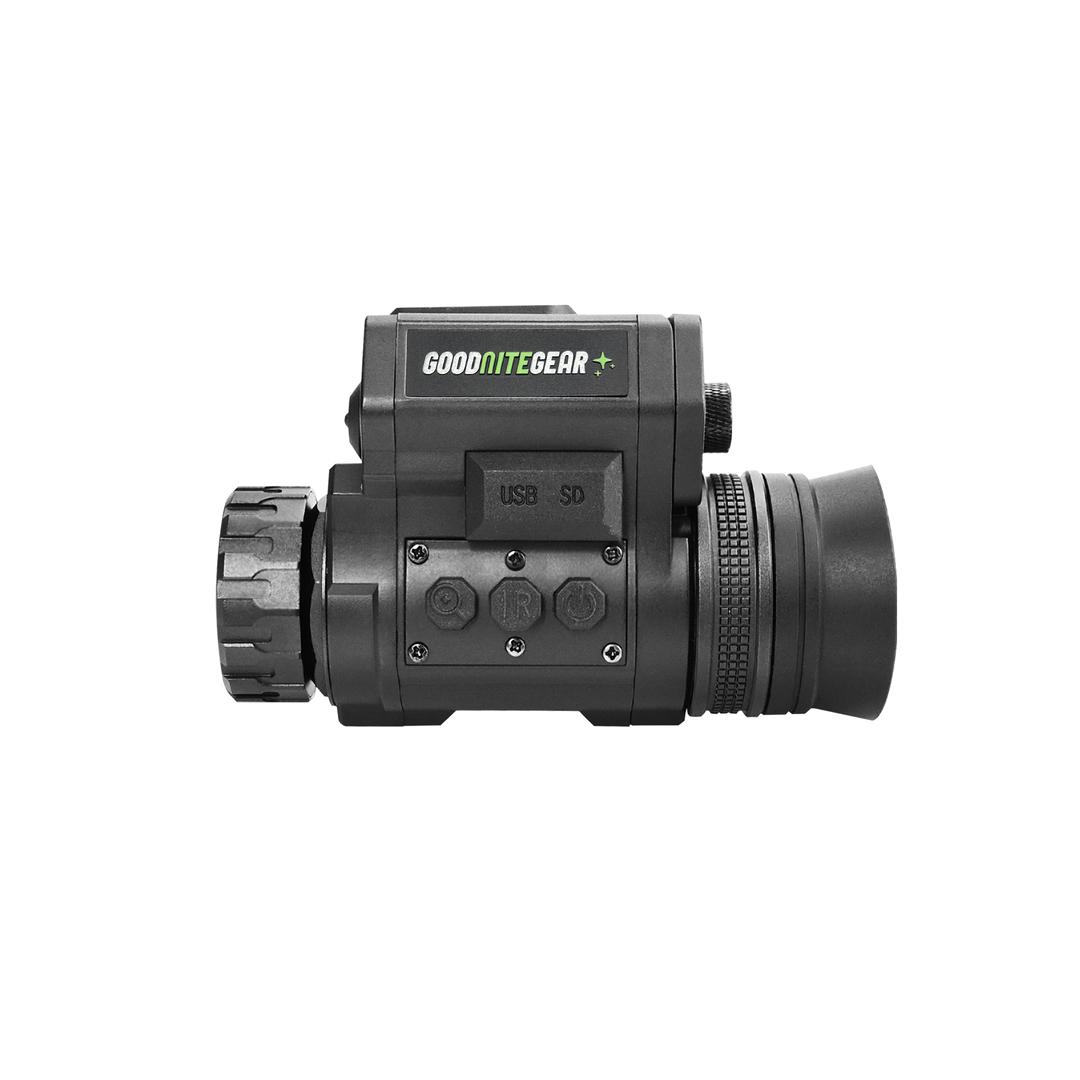
Many patrol officers who carry night vision at all are running compact, handheld monoculars — something that fits in a duty bag, powers on instantly, and doesn't require a dedicated mount or a training cycle to operate. The priorities here are simple: quick deployment, rugged enough to survive being tossed in and out of a patrol vehicle, and clear enough to identify a threat in a dark yard or parking lot without hesitation.
This tier isn't about long-range surveillance. It's about closing the visibility gap in the ten seconds that matter during a foot pursuit or a building check.
SWAT and Tactical Unit Gear
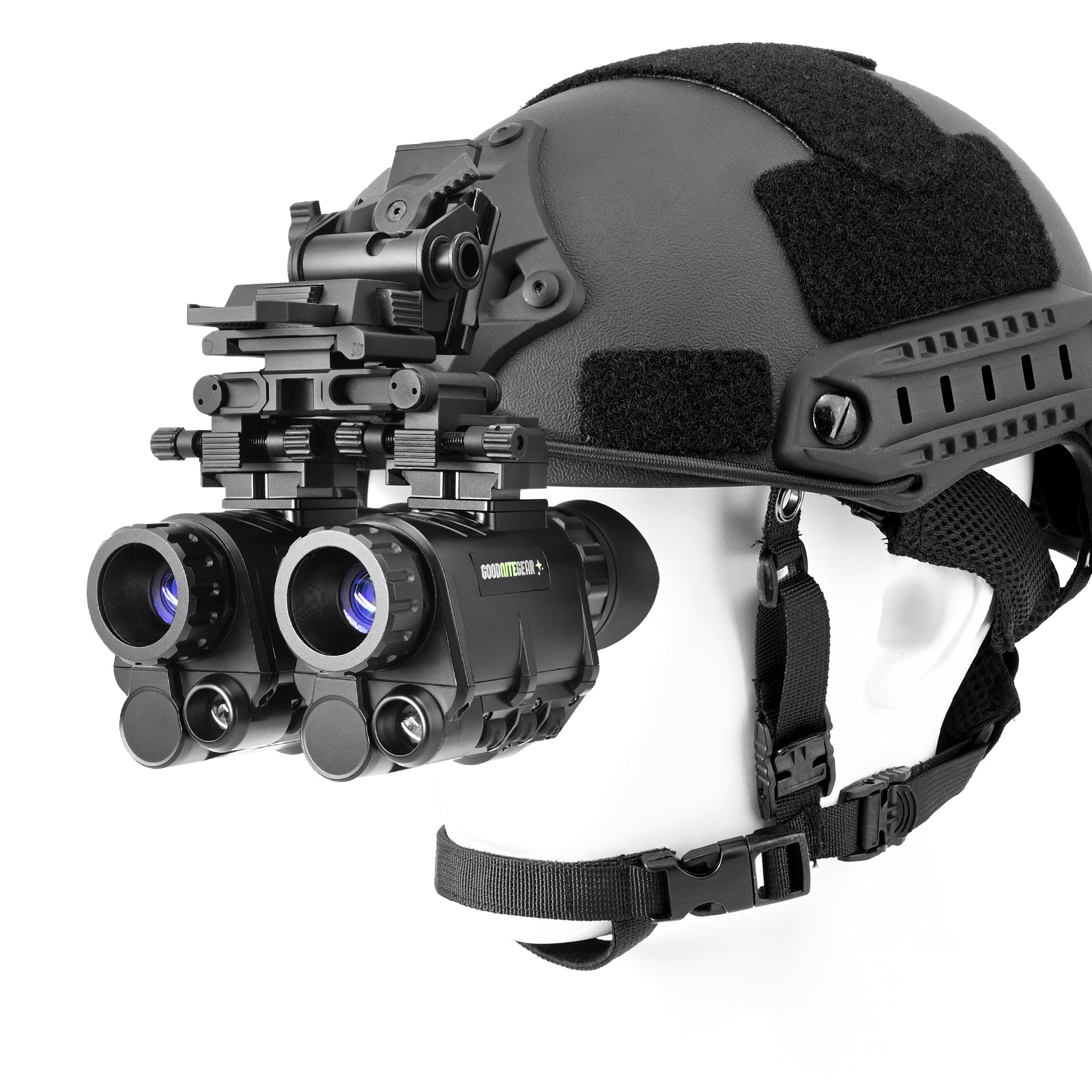
Specialized units operate at a different level entirely. Helmet-mounted binocular setups are standard here — two-eye depth perception matters when you're moving through a structure or holding a position for an extended entry. These are frequently paired with IR lasers and illuminators so team members can communicate target indications to each other without a word spoken and without giving away a position to anyone not wearing NV.

Wide-Area Scanning: Where Quad NVGs Come In
Some tactical units are also moving toward quad-tube panoramic night vision — four image intensifiers instead of the standard one or two, giving a dramatically wider field of view for scanning large areas quickly, like a parking lot, open field, or building perimeter. The tradeoff is cost and weight, so it's typically reserved for units with a specific wide-area surveillance need rather than standard-issue patrol gear.

Why Thermal Fusion Is Becoming Standard, Not Optional
Traditional night vision has one major weakness: it needs some ambient light to work with, and it can't see through cover. A suspect crouched behind a fence, a car, or dense brush is often functionally invisible to standard NV — but not to thermal, which detects heat signatures regardless of ambient light or light concealment.
That's why more agencies are moving toward thermal fusion — a single device that overlays real-time thermal detection onto a standard night vision image. You get the wide situational awareness of NV and the can't-hide detection of thermal, without needing to carry or switch between two separate devices mid-operation.
The Civilian-Accessible Equivalent
This technology used to live exclusively in five- and six-figure military and law enforcement contracts. That's no longer the case. The GNG GF20 ($5,500) delivers thermal fusion in a helmet-mountable monocular, and the GNG GF31 ($7,500) steps up to true binocular depth for teams or individuals who want two-eye situational awareness during extended operations. For agencies or individuals prioritizing maximum field of view, the GNG G18 Quad Pano NVG ($8,950) offers 120° panoramic coverage through quad-sensor digital technology — more than double the field of view of a standard binocular setup.
Good Nite Gear also runs a dedicated Law Enforcement Test & Evaluation program for agencies who want to field-test thermal fusion gear before committing to a purchase — worth a look if you're evaluating equipment for a department rather than personal use.
Want the full breakdown of how the GF20 performs in the field? Read our complete GF20 review.
FAQs
Do police departments use thermal imaging?
Yes, increasingly. Thermal detects heat signatures regardless of ambient light or physical concealment, which makes it effective for scenarios standard night vision struggles with — like a suspect hiding behind cover in a dark yard.
What's the difference between patrol-level and SWAT night vision gear?
Patrol officers typically carry compact, handheld monoculars for quick deployment during traffic stops or building checks. SWAT and tactical units generally use helmet-mounted binocular setups paired with IR lasers, built for extended entries and team coordination.
Can civilians buy the same night vision technology police use?
Largely, yes. Thermal fusion devices like the GNG GF20 and GF31 offer the same detect-and-confirm capability increasingly used by law enforcement, at price points accessible outside of agency procurement budgets.
What is thermal fusion night vision?
Thermal fusion overlays real-time thermal detection onto a standard night vision image in a single device — letting you detect a heat signature and confirm what you're looking at without switching between two separate devices.

