



Night vision technology is a mandatory necessity in military operations, particularly for elite units like the US Navy SEALs. These highly skilled troops often work in little or no light, where top-tier visual aids aren't a luxury — they're the difference between mission success and mission failure. So what do Navy SEALs actually use for night vision?
The Gear Navy SEALs Actually Run
GPNVG-18 (Ground Panoramic Night Vision Goggle). This is the quad-tube system most associated with SEAL teams — four image-intensifier tubes arranged to deliver a dramatically wider field of view (around 97°) than traditional dual-tube systems. It's expensive, heavy, and restricted to military and select government use, but it's become one of the most recognizable pieces of SEAL kit.
PVS-31 and similar dual-tube binoculars. For situations that don't call for the GPNVG-18's extreme field of view, dual-tube analog binoculars like the PVS-31 remain a mainstay — lighter, still offering the depth perception advantage of binocular vision over a single monocular.
Thermal imaging, fused or separate. Thermal monoculars and fusion systems (combining thermal with traditional image intensification) let operators detect heat signatures through smoke, fog, and dense vegetation — conditions where light-amplification alone falls short. Pairing thermal with conventional night vision meaningfully increases situational awareness in the kind of total darkness SEALs regularly operate in.
IR illuminators and lasers. When ambient light isn't sufficient even for high-end tubes, IR illuminators project invisible infrared light to improve the image without giving away the operator's position to anyone without night vision of their own. IR aiming lasers serve a similar purpose for target acquisition.
Why This Gear Matters
High-performance night vision and thermal imaging directly support:
- Target recognition — telling friend from foe, or identifying a threat, in conditions where the naked eye sees nothing
- Navigation — moving through unfamiliar or hostile terrain without exposing a position with a flashlight
- Stealth — operating with minimal IR and visible signature
Genuine military-issue systems like the GPNVG-18 aren't sold commercially — they're procured directly by the DoD and aren't available to civilian buyers at any price. Gen 3 tubes themselves, however, are legal for US civilians to purchase from specialized night vision dealers; the restriction that does apply is on export — taking Gen 3 devices outside the US requires an ITAR license, and non-US citizens can't purchase Gen 3 or above at all.
What Civilians Can Actually Buy
If you want to get as close as possible to what SEAL teams run, Gen 3 analog tubes from a specialized dealer are the real-deal path — genuine image-intensifier performance, just not the exact GPNVG-18 or PVS-31 housing/configuration issued to military units. That said, Gen 3 comes at a steep cost (often $7,000–$10,000+ per tube) and the tubes themselves are more fragile than digital alternatives.
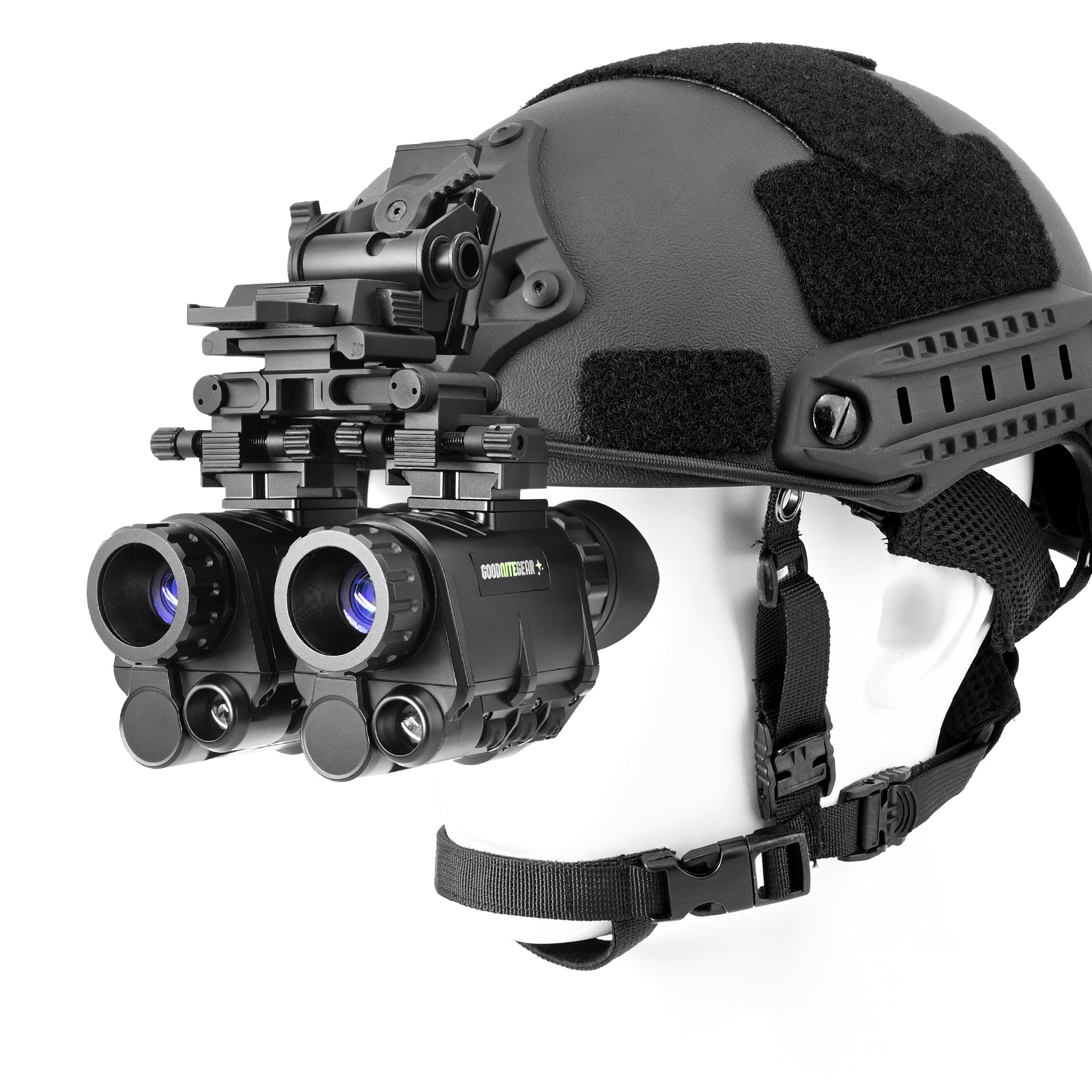
For most people, modern digital night vision has closed much of the performance gap at a fraction of that cost, without the fragility or the price tag. And if you want to get as close as the civilian market allows to the capability SEAL teams run — not the exact hardware, but the same core advantages of panoramic awareness, thermal detection, and premium low-light performance — Good Nite Gear carries three standout options:
GNG G18 — the closest civilian equivalent to a quad-tube system like the GPNVG-18. Four 1-inch sensors deliver a 120° panoramic field of view — more than double what a standard binocular setup offers — at $8,950 instead of $40,000+ for an analog quad system. It's Wilcox-compatible and built for operators who've already maxed out a binocular setup and are ready for full situational awareness without turning their head.

GF31 Thermal Fusion Binocular — the closest equivalent to fused thermal/night vision capability. It combines a 1" low-light digital sensor with a 640×512 thermal sensor in one binocular, fusing both feeds in real time. This mirrors the exact combination SEALs rely on to detect heat signatures through smoke, fog, and dense vegetation — a thermal fusion system at a civilian-accessible ~$7,500.

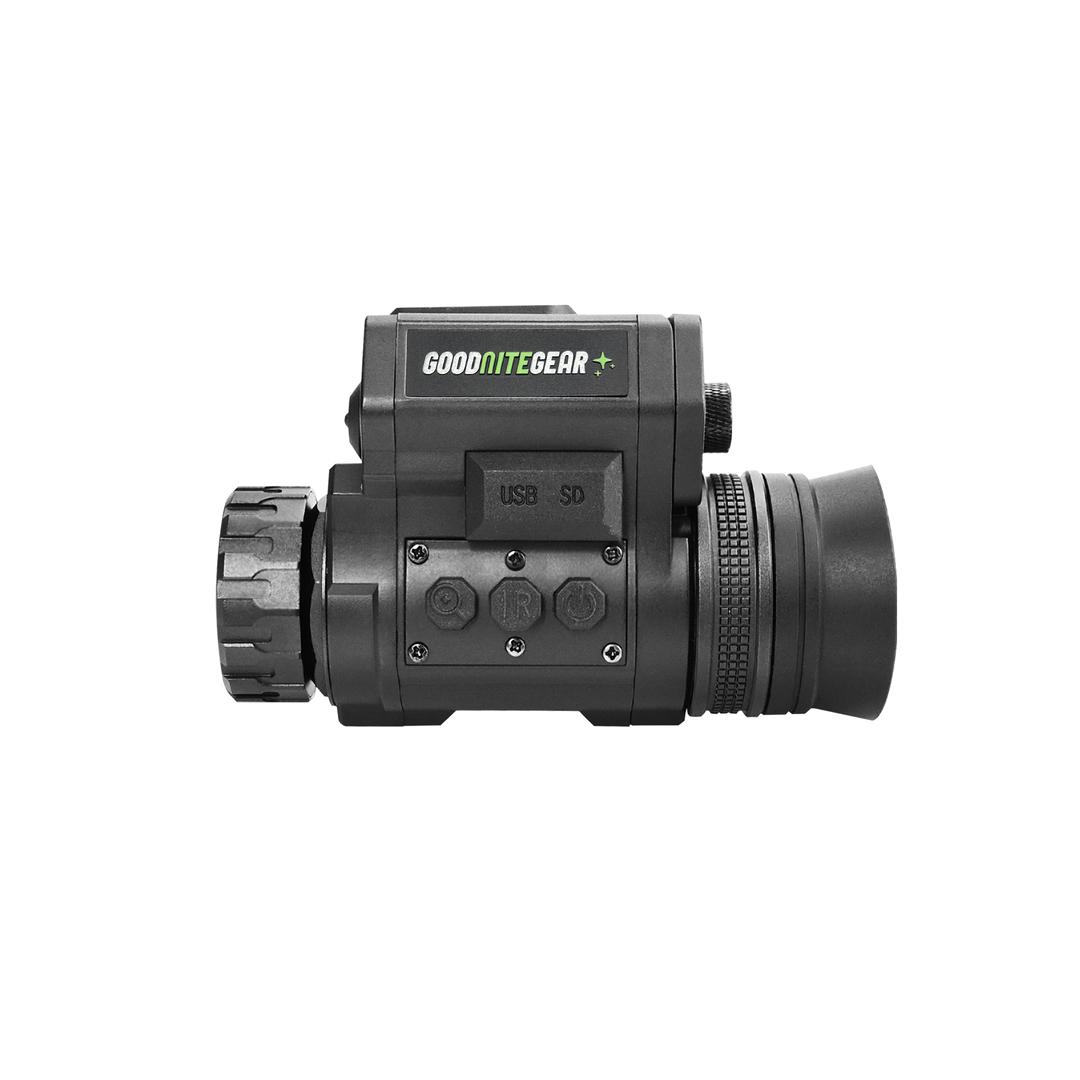
NVG90 — a premium entry point if the G18 or GF31 are more than you need right now. At around $1,250, it delivers a 940nm high-sensitivity IR system, up to 100FPS, and can be bridged into a binocular pair — a serious step up from budget digital night vision without the quad or thermal-fusion price tag.

None of this is the exact hardware SEAL teams run — but it's built around the same core idea: seeing what the enemy, or the dark, doesn't want you to see.
The Bottom Line
Knowing what Navy SEALs use for night vision highlights just how critical advanced equipment is for operating effectively in the dark. While the exact military hardware isn't available to civilians, Good Nite Gear offers dependable digital night vision and thermal equipment built for serious use — whether you need it for security, surveillance, outdoor activities, or tactical training.

