



Night vision devices have transformed the field for professionals across law enforcement, military, and civilian operations alike. But have you ever wondered how it all started? When were night vision goggles actually invented — and how did we get from bulky WWII-era prototypes to the thermal fusion units on the market today?
The Earliest Innovations in Night Vision Technology
The foundations of night vision technology were laid in the early 20th century.
1929 Hungarian physicist Kálmán Tihanyi developed an infrared (IR)-sensitive electronic television camera for anti-aircraft defense in the United Kingdom. This groundbreaking work laid the foundation for everything that followed in night vision technology.

1939 The German Army fielded the first military night vision devices during World War II. These early systems, later referred to as "Generation 0," relied on active infrared light sources and were notably bulky.

Around the same time, the United States developed similar technology of its own, including the M1 and M3 infrared night-sighting devices — both of which saw limited service during the war.
Postwar Progress Toward Modern Night Vision Goggles
After World War II, significant progress was made toward developing and miniaturizing night vision technology.
1945 Vladimir K. Zworykin unveiled the first practical commercial night vision device at the Radio Corporation of America (RCA), marking a shift toward more portable, civilian-usable systems.
1950s The US military experimented extensively with image intensification tubes. Despite the bulk of these early prototypes, the results were promising enough to point toward far more effective night vision solutions down the road. This decade also saw the earliest fielded Generation 1 tubes — the starting point for the generational system still used to classify night vision today.

1960s–1970s The invention of microchannel plate (MCP) image intensification tubes led to systems that were:
- More lightweight
- More compact
- Lower in energy consumption
This breakthrough made the first commercially sold night vision goggles possible, and it set the stage for Generation 2 technology.
Night Vision Generations Explained: Gen 1 Through Gen 3
If you've shopped for night vision, you've run into "Gen 1," "Gen 2," and "Gen 3" labels on nearly every product page. These generations refer to the image intensifier tube (IIT) inside the device — the vacuum-sealed component that takes in ambient light and converts it into the visible image you see through the eyepiece. Each generation represents a real jump in how that tube is built and how well it performs.
Generation 1 The original commercially available night vision tube technology, dating back to the 1950s and 60s. Gen 1 tubes amplify existing light but don't use a microchannel plate, so image quality tends to be dimmer, softer at the edges, and more prone to distortion than later generations. Gen 1 devices are best suited to short-range, budget-friendly applications — think casual property observation rather than long-range identification.

Generation 2 The introduction of the microchannel plate (MCP) is what separates Gen 2 from Gen 1. The MCP multiplies electrons before they hit the phosphor screen, producing a noticeably brighter, cleaner image with far less reliance on external IR illumination. Gen 2 devices offer a meaningfully longer effective range and hold up much better in genuinely low ambient light.

Generation 3 Gen 3 tubes use a gallium arsenide (GaAs) photocathode along with an ion barrier film on the microchannel plate. The result is higher sensitivity, longer tube life, and the sharpest, longest-range image quality available in traditional image intensification. This is the generation most associated with military and professional-grade night vision, and it's priced accordingly.

Digital Night Vision
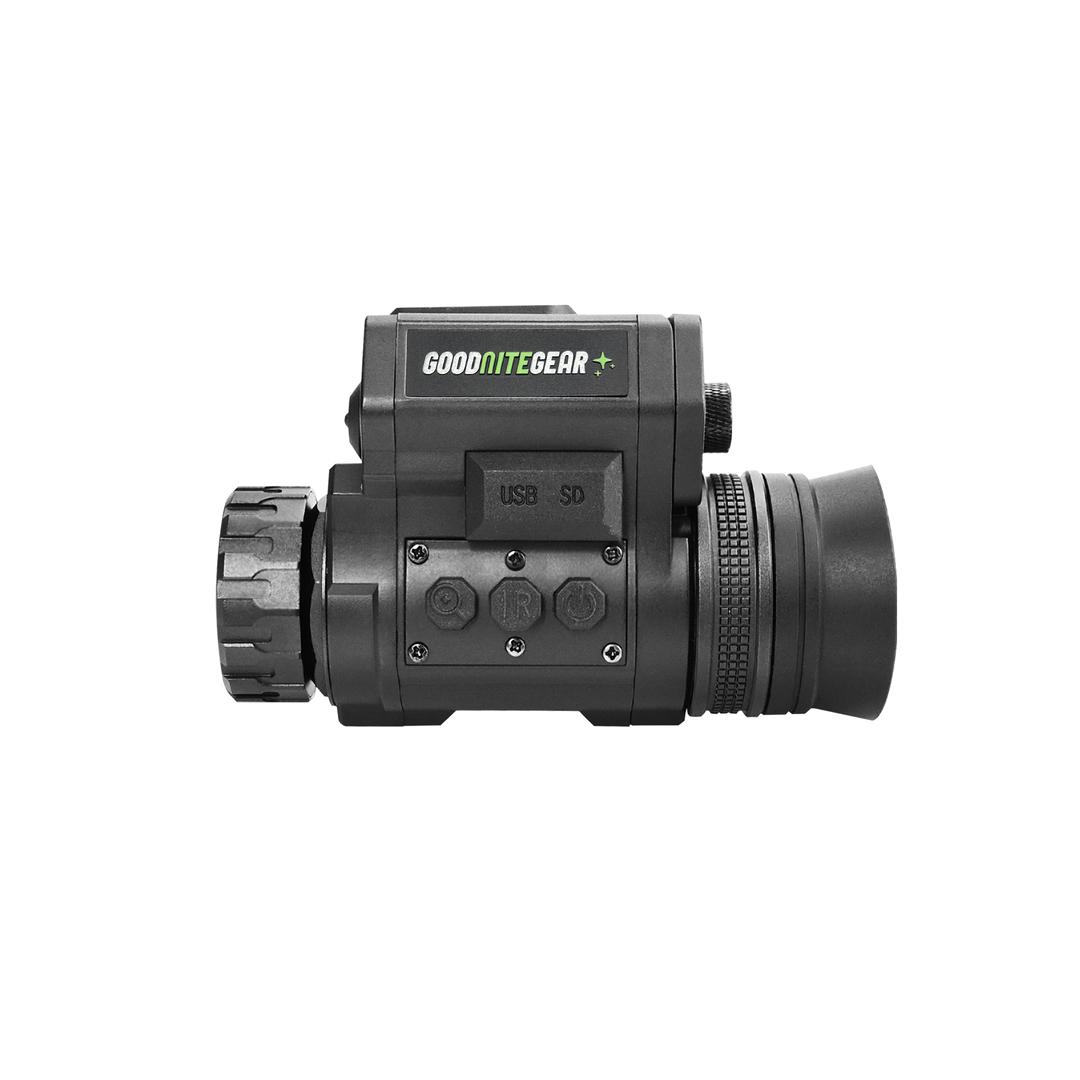
Digital night vision isn't a "generation" in the traditional tube sense — it's a different approach entirely. Instead of a photocathode and phosphor screen, digital units use a low-light-capable digital sensor (similar to what you'd find in a camera) paired with an IR illuminator, and the image is displayed on a small internal screen rather than viewed directly through a tube.
The tradeoff: digital units are generally more affordable and durable than comparable tube-based devices, and — critically — they can record photo and video natively, something analog tubes were never built to do. Where they still lag behind top-tier Gen 3 glass is in extreme low-light resolution, though the gap has narrowed significantly as sensor technology has improved.
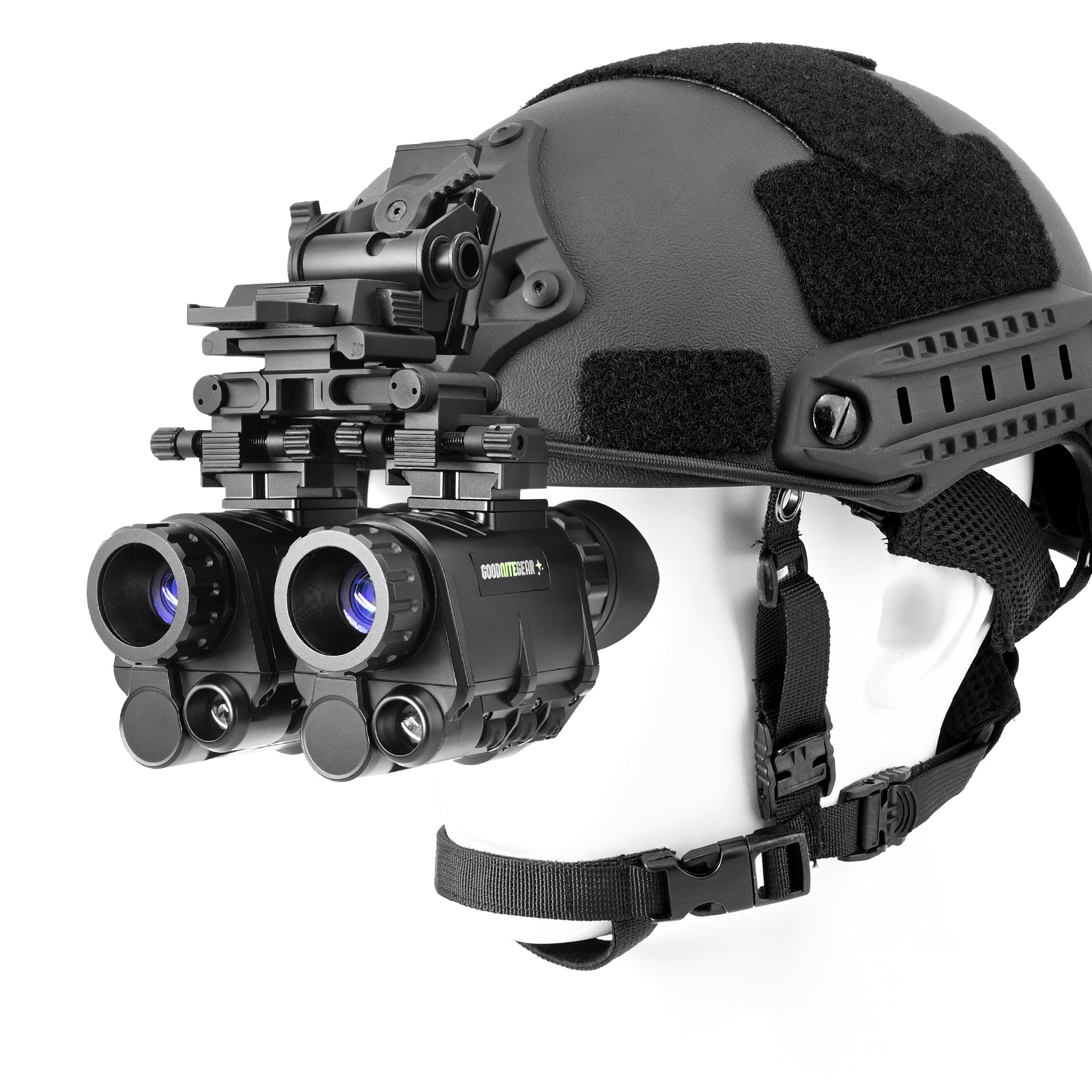
Panoramic (PANO) digital night vision goggles are one of the more notable recent developments in this category, widening the field of view well beyond what traditional binocular-style units offer. Our own G18 is built on this PANO layout, giving users a much broader field of view for situational awareness alongside the standard advantages of digital NV — native recording, durability, and affordability compared to tube-based systems.
Thermal Fusion: Combining Night Vision With Thermal Imaging
The most significant recent leap in the space isn't a new generation of tube — it's the fusion of two entirely different technologies: image intensification and thermal imaging.

Analog Thermal Fusion Analog thermal fusion pairs a traditional image intensifier tube with a thermal sensor, optically overlaying the thermal "hot spot" data onto the natural, high-resolution image produced by the tube. The result blends the contextual detail that tube-based night vision is known for with the heat-detection capability of thermal — useful for quickly telling a person apart from background clutter without losing the crisp scene detail Gen 2/3 users expect.
Digital Thermal Fusion Digital thermal fusion takes the same concept and builds it on a digital sensor stack instead of a glass tube. A digital low-light sensor and a thermal sensor are fused electronically and displayed on an internal screen, which opens the door to features that pure analog systems can't offer — onboard recording, digital zoom, color palette switching, and outline/edge-detection modes that highlight heat signatures without full thermal color overlay. This is the category where a lot of current development is happening, since it combines the versatility of digital night vision with the detection power of thermal in a single unit.
Our own GF20 and GF31 thermal fusion units are built around this approach — blending thermal detection with digital night vision detail in a single device, with full-color fusion, thermal outline, and standalone thermal or NV modes available depending on what a given situation calls for. It's the same principle behind military-grade fusion systems, brought down to a size and price point that works for law enforcement, hunters, and civilian users alike.
Systems like the military's AN/PSQ-42 Enhanced Night Vision Goggle–Binocular (ENVG-B) demonstrate what fusion technology looks like at the high end, combining thermal imaging and image intensification with augmented reality overlays for full situational awareness across a wide range of lighting conditions.
Where Night Vision Stands Today
Today's night vision goggles bear little resemblance to their predecessors. Modern image intensification systems can amplify ambient light up to 50,000 times, while modern thermal fusion units let users switch fluidly between thermal, night vision, and blended modes depending on the conditions and the task at hand.
What used to require choosing one technology and living with its limitations has become a single-device decision: modern fusion units give users the detection power of thermal, the identification detail of night vision, and — on digital platforms — the ability to record and share what they see, all in one unit.
The Bottom Line
The evolution of night vision goggles — from large, IR-dependent Generation 0 devices to today's Gen 3 tubes, digital sensors, and thermal fusion systems — reflects genuinely remarkable progress in optical and electrical engineering. Understanding when night vision goggles were invented, and how each generation built on the last, offers real insight into the technical advancements that continue to expand your ability to see, and act, in the dark.

