
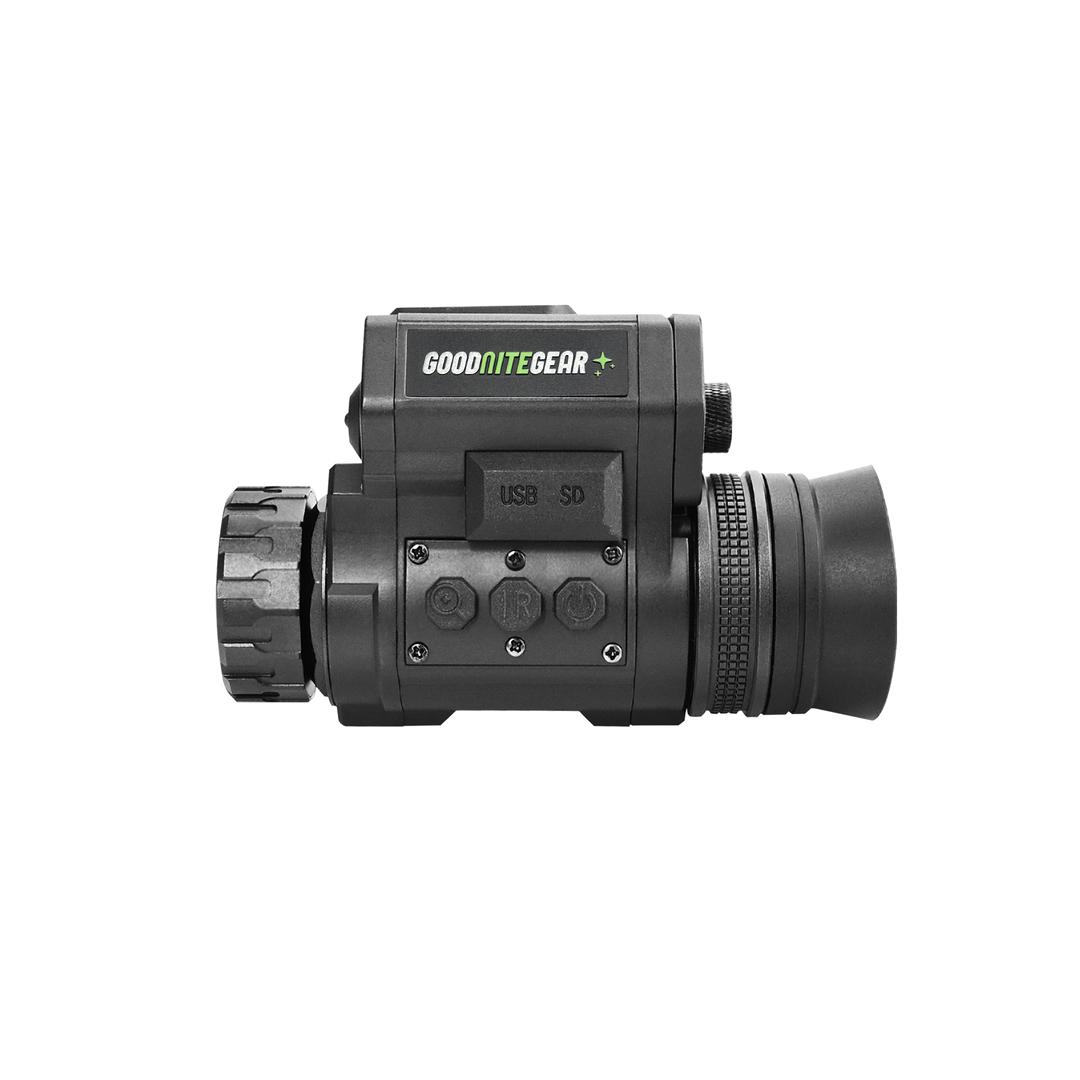

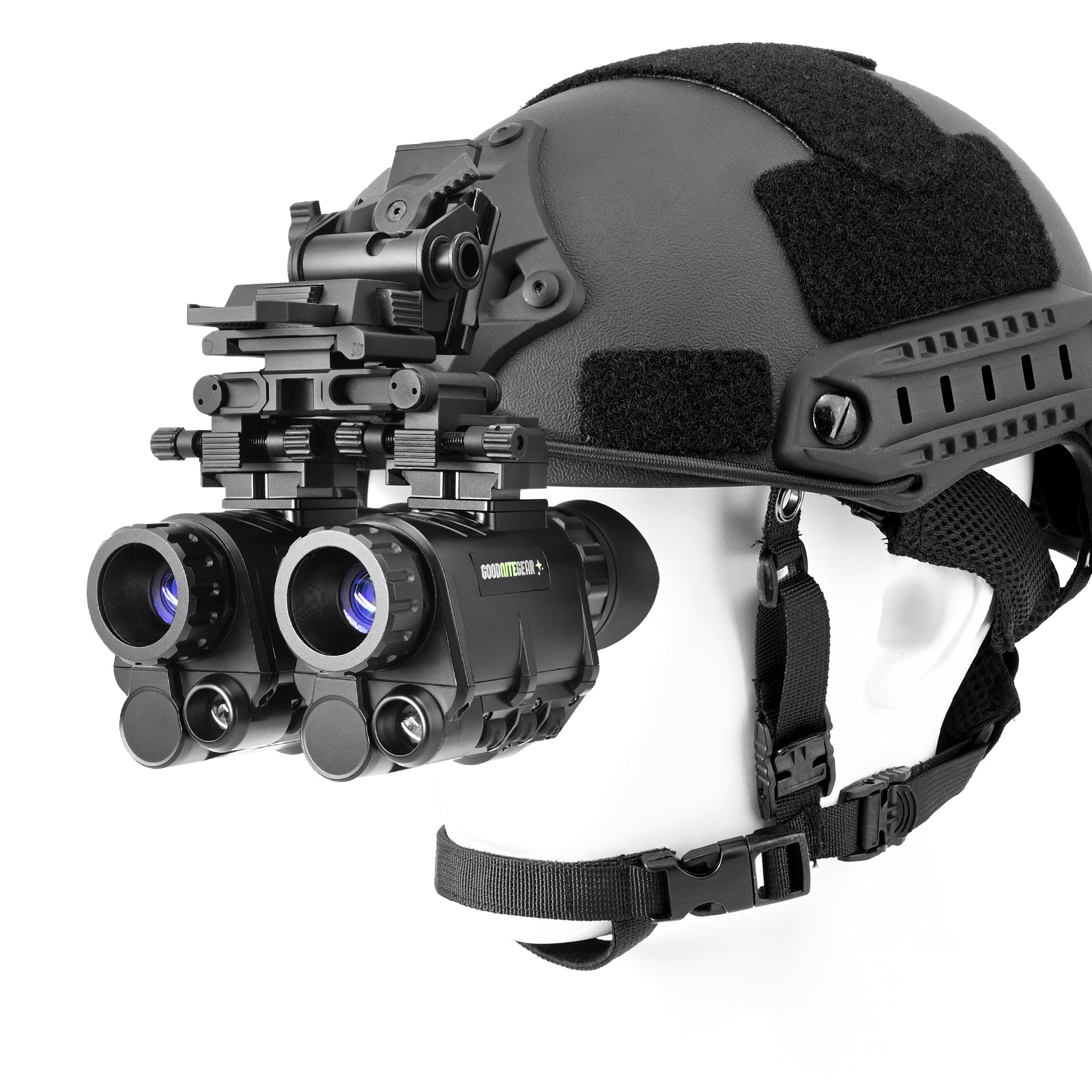


The use of night vision goggles (NVGs) has grown tremendously over the past few decades, with both professionals and recreational users adopting them widely. But there's one aspect that catches a lot of buyers off guard: affordability. Why are night vision goggles so expensive?
Buyers are often surprised by the cost of night vision goggles, especially compared to other optical instruments. Good Nite Gear breaks down the underlying technology behind NVGs so you can understand exactly why they cost what they do — and offers affordable budget night vision monoculars and night vision goggles to help you see in the dark without spending analog-level money.
Today's Technology and Image Enhancement
Advanced technology sits at the core of every NVG. Analog night vision creates a visible picture by intensifying ambient light — moonlight, starlight, whatever's available. Image intensifier tubes convert photons into electrons, amplify them, and convert them back into visible light.
That process requires extremely sensitive components and multiple amplification steps, which is exactly why analog NVG images stay sharp, clear, and usable even in near-total darkness. Achieving that level of performance takes precision engineering, and precision engineering is expensive — which is a major driver of the total cost.
Digital night vision, by contrast, relies on high-performance CMOS sensors and is increasingly delivering performance that rivals analog, often at a meaningfully lower price point.
Premium Optics and Durable Materials
Material quality is another major factor behind cost, whether you're looking at premium or genuinely affordable night vision goggles. Military-grade goggles typically feature:
- Waterproof, impact-resistant housing
- Corrosion-resistant metals
- High-resolution optics
These materials are built to withstand prolonged use in genuinely challenging conditions. Even reasonably priced night vision goggles use durable lenses and advanced coatings to hold up in harsh environments. The need for reliability and consistent low-light performance justifies the higher price point across the board.
Manufacturing Standards and Regulation
Producing NVGs — especially for military or law enforcement use — requires strict quality control and adherence to international standards.
Manufacturing at this level requires specialized machinery and experienced technicians. Because of their military applications, several high-end models are also restricted from export entirely, which further limits supply and drives prices up.
Demand, Supply Scarcity, and R&D Costs
Demand for night vision technology is still driven primarily by professionals rather than casual consumers, which keeps it a relatively niche market. That smaller customer base means mass production at scale simply isn't as practical as it is for more mainstream optics.
On top of that, the extensive research and development required to keep pushing devices forward adds real cost. That R&D delivers real gains, including:
- Better image quality
- Lower power consumption
- Extended detection range
Even as budget night vision grows more popular, the best cheap night vision goggles still can't always match premium devices on every front — features, raw performance, or longevity.
Are Budget Options Worth Considering?
Even though high-end devices still dominate the professional side of the industry, plenty of buyers now look specifically for the best budget night vision goggles for recreational use. These options offer solid clarity for activities like:
- Airsoft
- Shooting
- Hunting
- Hiking
- Camping
- Wildlife observation
They may not fully match high-end devices, particularly in total darkness or harsh conditions — but that performance gap is genuinely closing as digital sensor technology keeps improving.
The Bottom Line
So, why are night vision goggles so expensive? Complex technology, premium materials, specialized manufacturing, and a relatively small production scale are the honest answers.
Investing in quality night vision means better performance and a longer usable lifespan. For anyone who genuinely needs accuracy and clarity in the dark, that value justifies the cost — though as this breakdown shows, "expensive" doesn't have to mean out of reach.

