




Best Night Vision Goggles For The Money — Top 6 Ranked (2026)
Night vision goggles have come a long way. What once cost the military tens of thousands of dollars is now accessible to hunters, security professionals, tactical operators, and serious outdoor enthusiasts at a fraction of that price — and the performance gap has nearly closed.
We've tested and ranked the best night vision goggles across every budget, from under $200 to premium thermal fusion systems, so you know exactly where your money is best spent.
Quick Comparison: Best Night Vision Goggles By Budget
| Pick | Best For | Price |
|---|---|---|
| NVG40 | Best under $200 | ~$165 |
| NVG50 | Best under $500 | ~$550 |
| NVG30 Binocular Kit | Best under $1,000 | ~$1,000 |
| NVG90 | Best under $1,500 | ~$1,250 |
| NVG90 Pro | Best high-end digital | ~$2,795 |
| GNG GF31 | Best thermal fusion | ~$7,500 |
1. NVG40 — Best Night Vision Goggles Under $200
Price: ~$165
For anyone getting into night vision on a tight budget, the NVG40 is the clear winner under $200. We've tested it head-to-head against the Night Operators Max 2.0 and the Nightfox Prowl, and the NVG40 wins on every metric that actually matters in the field.
Its low-light, no-IR performance is noticeably better than both competitors. The Prowl struggled with serious image lag and was borderline unusable in some of our test conditions. The Night Operators Max 2.0 is more reliable but lacks features and feels like a first-generation device. The NVG40 runs at a fast frame rate, includes video recording, and delivers the kind of image quality that makes you actually want to use it after dark.
If you want slightly more features and can stretch a little, the NVG40 Pro is worth considering — though its no-IR low-light performance isn't quite as strong as the base NVG40.
Who it's for: First-time buyers, airsoft, casual outdoor use, budget security setups.
2. NVG50 — Best Night Vision Goggles Under $500
Price: ~$550
Around the $500 mark, digital night vision genuinely starts to surpass the human eye in low-light performance — and the NVG50 is the best representative of that shift.
It edges out its closest competitor, the NVG30, in a few key areas: marginally lower latency, a more compact form factor, and a higher-resolution viewing screen. Those might sound like minor differences on paper, but when you're running drills or tracking movement in the dark, they add up fast.
$500 is a real sweet spot in the market. Below it, you're making meaningful compromises. Above it, you're paying for incremental improvements. The NVG50 threads that needle better than anything else at its price.
Who it's for: Hunters, security professionals, serious hobbyists who want a significant step up from budget gear without spending four figures.
3. NVG30 Night Vision Binocular Kit — Best Under $1,000
Price: ~$1,000
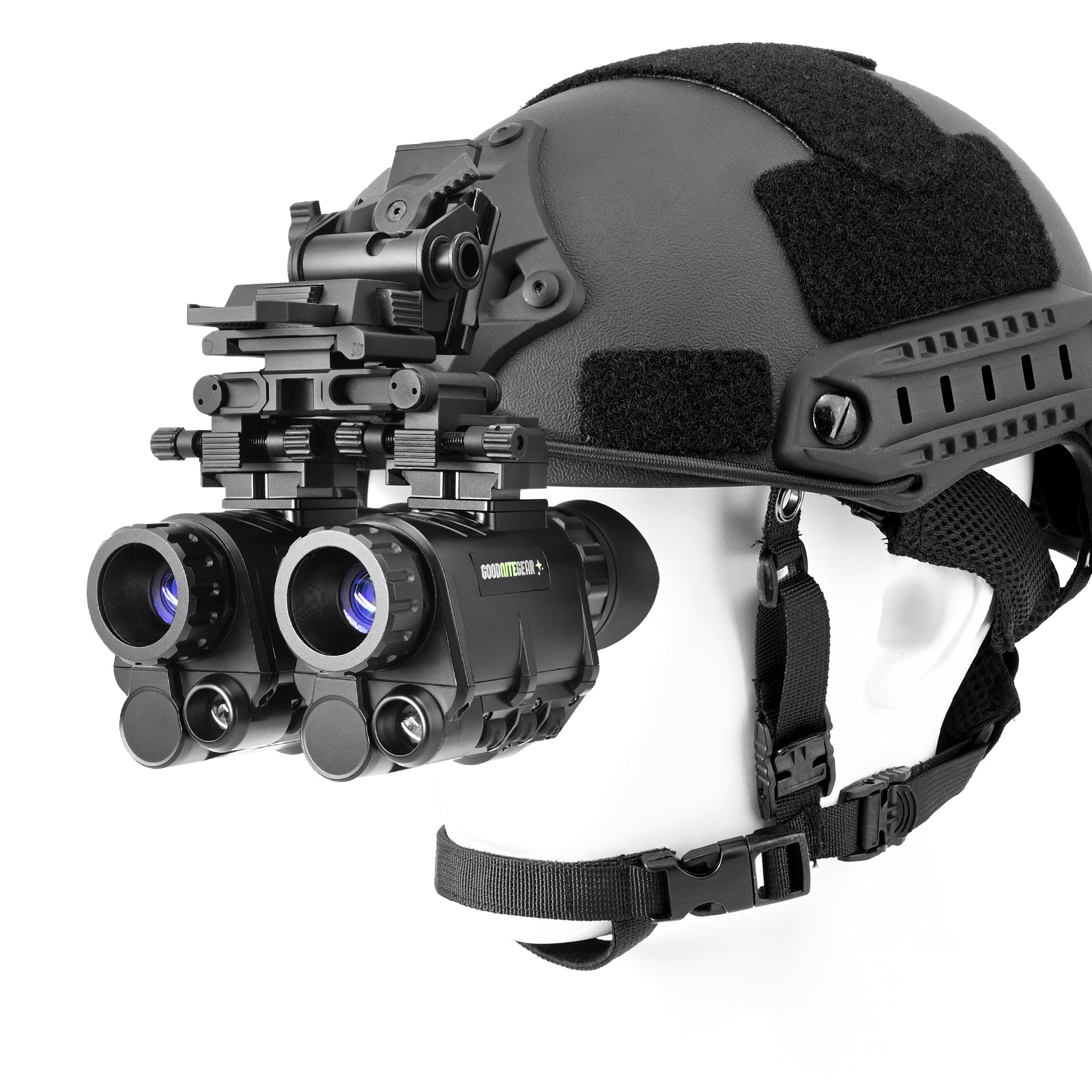
If you have $1,000 to spend, don't buy a better monocular — buy a binocular setup. The difference between single-eye and dual-eye night vision isn't just comfort, it's depth perception. Running dual eyes gives you a more immersive experience that makes movement, navigation, and distance judgment significantly more natural.
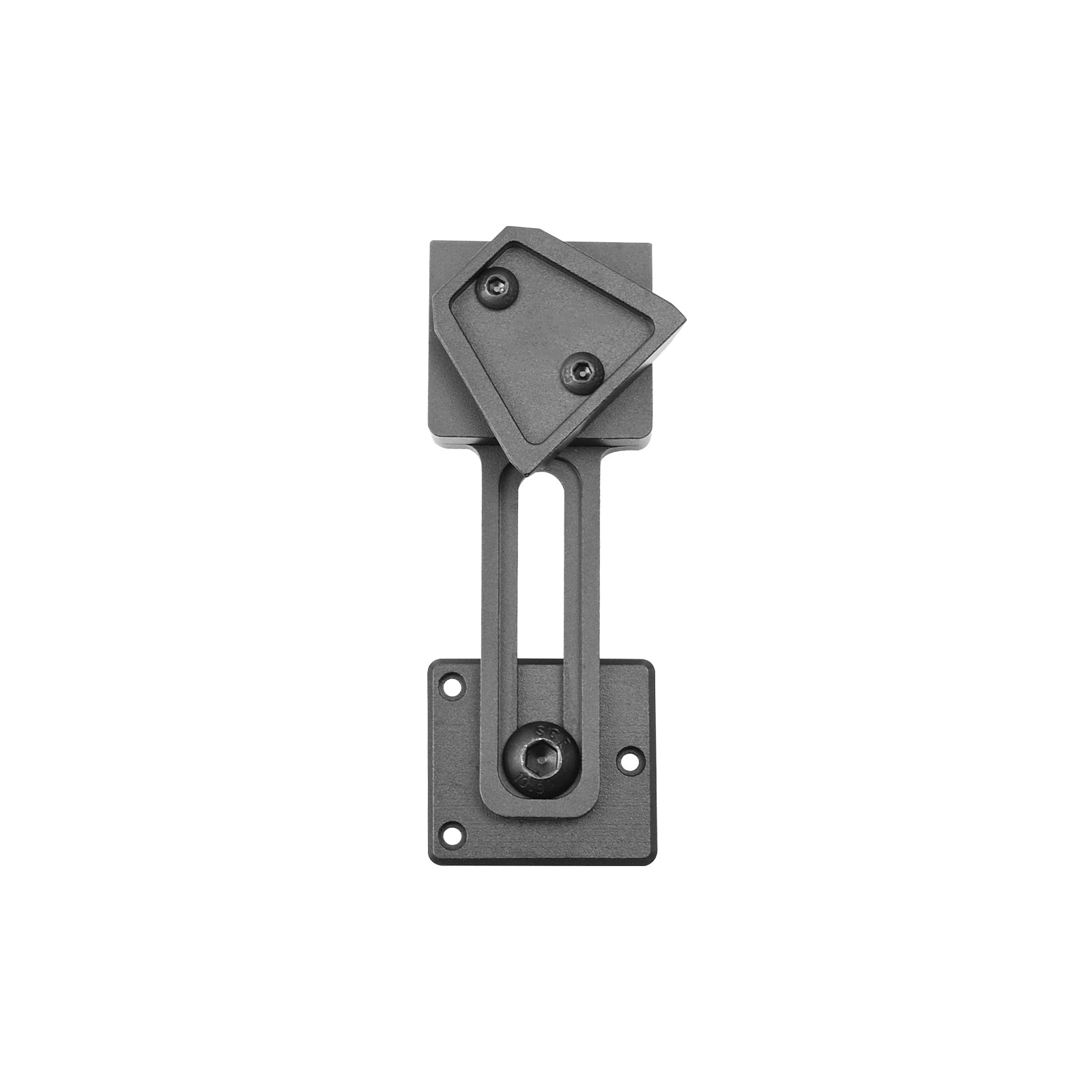
The NVG30 Binocular Kit includes a pair of NVG30 monoculars, a highly adjustable bridge, and a helmet mount — everything you need to go binocular right out of the box. It's one of our best-selling kits for good reason. This is the entry point into the kind of setup that professionals actually run.
Who it's for: Hunters doing night-time game management, tactical training, anyone who wants a professional-grade binocular setup at an accessible price.
4. NVG90 — Best Night Vision Goggles Under $1,500
Price: ~$1,250
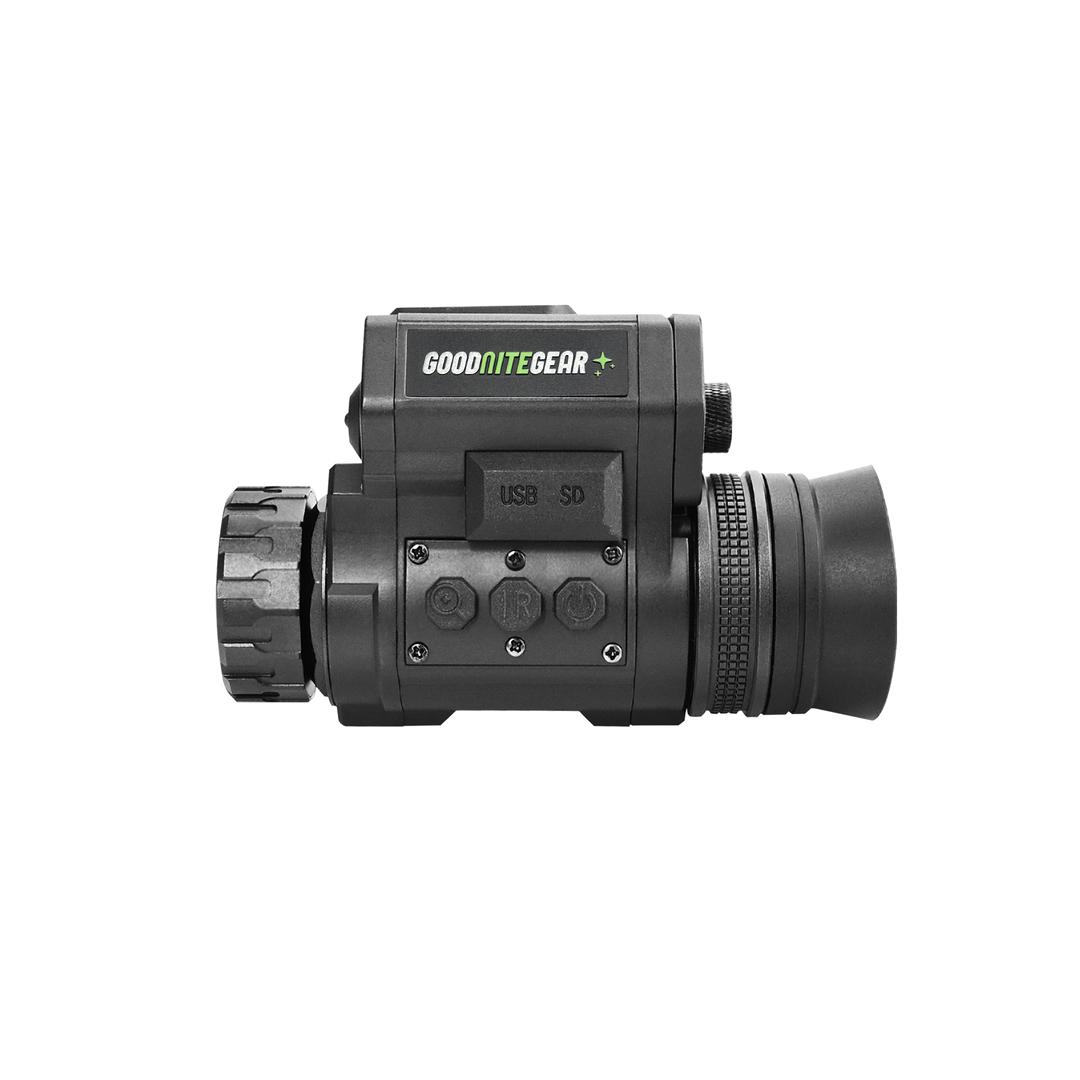
The NVG90 is the newest addition to the lineup and fills a gap that's needed filling for a while: serious performance at a mid-range price.
Built around a high-sensitivity 940nm IR system with a wide 43° field of view, the NVG90 runs at up to 100FPS — and at that frame rate, the image is genuinely smooth with no noticeable lag. It also eliminates the fisheye distortion that shows up on devices like the NVG50, making it feel like a meaningful jump in optical quality, not just a spec upgrade.
The IP54-rated polymer housing keeps it protected from dust and splash without adding excessive weight. At around 13.1 oz with the mounting arm, it's comfortable for extended wear. Five levels of brightness adjustment and support for 8 languages round out a package that punches well above its price.
Two NVG90s can also be bridged together with the G24 mount system to run as a binocular — which gives you a compelling path to a dual-eye setup without the NVG30 kit commitment.
Key specs:
- 43° field of view
- 940nm IR system
- Up to 100FPS
- IP54 weatherproofing
- ~13.1 oz with mounting arm
Who it's for: Hunters, security professionals, airsoft operators, and anyone who's outgrown the $500 range and wants a serious step up without crossing $1,500.
5. NVG90 Pro — Best High-End Digital Night Vision
Price: ~$2,795
The NVG90 Pro is where digital night vision stops being a "good enough" alternative and starts competing directly with Gen 3 analog systems.
Built on a 1" DG1802-4 second-generation sCMOS sensor with an F/1.05 aperture and a minimum illumination rating of 0.00005 lux, the NVG90 Pro delivers clean, continuous imaging under starlight — with extremely low latency. The OLED display runs at 800×600 resolution and supports 50/100Hz or 60/120Hz frame rates depending on configuration.
The 40°×30° field of view and 8mm exit pupil are dialed in for tactical use. The NVG90 Pro also includes a bridge for pairing with a G24 mount, and two units can be combined into a binocular system for operators who need full dual-eye immersion.
This is the device trusted by military training environments, law enforcement, and professional security teams who need performance they can stake their safety on — but don't need to spend $8,000 on Gen 3 analog to get it.
Key specs:
- 1" sCMOS sensor (DG1802-4)
- Minimum illumination: 0.00005 lux
- OLED 800×600 display
- 40°×30° FOV
- 50/60/100/120Hz frame rate options
- F/1.05 aperture
- Bridges to binocular configuration
Who it's for: Serious tactical operators, law enforcement, military training, professional security. Buyers who want near-Gen-3 performance in a digital package.
Bonus Pick: GNG GF31 Thermal Fusion Binocular — Beyond Night Vision
Price: ~$7,500
If the NVG90 Pro represents the ceiling of digital night vision, the GF31 represents the next category entirely: thermal fusion.
Standard night vision — analog or digital — amplifies available light. In total darkness, behind glass, through smoke, or when a target is concealed by foliage, it has limits. Thermal imaging doesn't. It detects heat signatures regardless of light conditions, making it a fundamentally different tool.
The GF31 combines both in a single helmet-mountable binocular. On one side: a 1" low-light digital sensor (the same technology as the NVG90 Pro) for navigation, observation, and situational awareness. On the other: a 640×512 12μm thermal sensor covering 8–14μm wavelengths for target detection and heat signature identification. The two feeds are fused in real time — no misalignment, no switching between modes, just one seamless composite image.
The system runs at 100Hz refresh rate with very low latency, displays on an 800×600 OLED, and offers a 50° field of view with true 1× magnification for natural depth perception. IP67 weatherproofing and a 75+ hour battery life in low-power mode make it viable for extended field use. It can be worn on a helmet or carried as a handheld unit.
There's nothing else at this price point that does what the GF31 does. For professional operators, law enforcement, or serious hunters working in environments where detection matters as much as navigation, this is the system.
Key specs:
- 640×512 thermal sensor, 12μm pixels
- 1" low-light digital sensor, 0.00005 lux minimum illumination
- 800×600 OLED display
- 50° FOV at 1× magnification
- 100Hz high refresh rate, very low latency
- IP67 weatherproof
- 75+ hour battery life (low-power mode)
- Helmet-mountable or handheld
Who it's for: Professional operators, law enforcement, elite hunters, and serious buyers who need the capability that only thermal fusion provides.
Digital vs. Analog Night Vision: Which Should You Buy?
A question we get constantly. Here's the honest answer:
Digital night vision (everything on this list) uses camera sensors similar to what's in your phone — massively improved and purpose-built for low-light performance. It's affordable, captures video, and the technology is advancing rapidly. The NVG90 Pro performs comparably to Gen 2+ analog systems at a fraction of the cost.
Analog night vision uses Image Intensifier Tubes (IITs) — the traditional military technology. Gen 2 units start around $3,000–$6,000. Gen 3 runs $7,000–$10,000+. The advantages are zero processing lag and exceptional performance in extreme low-light conditions with no IR illuminator needed. The disadvantages: no video recording, no thermal capability, far higher cost, and the technology is more fragile.
For most buyers — hunters, security professionals, tactical trainers, serious outdoor users — digital night vision in the NVG90 or NVG90 Pro range offers the better value proposition. The performance gap with analog has largely closed at the high end of digital.
For professional operators with specific mission requirements and the budget to match, Gen 3 analog or thermal fusion remains the premium choice.
Frequently Asked Questions
What's the best night vision under $500? The NVG50. It has the best combination of image quality, low latency, compact form factor, and resolution in the sub-$500 category.
Do night vision goggles need IR illuminators? Higher-end units like the NVG90, NVG90 Pro, and GF31 perform well in very low light without IR. Budget units like the NVG40 and NVG50 benefit from an IR illuminator in near-total darkness. Note that IR illuminators are visible to other night vision users — in tactical environments, this matters.
Can I legally own night vision goggles? Yes. US civilians can legally purchase night vision devices across all generations without special permits. The restriction is on export — taking or shipping night vision outside the US requires an export license under ITAR (International Traffic in Arms Regulations). Non-US citizens cannot purchase Gen 3 devices or above.
How long do night vision devices last? Quality digital night vision has no physical tube to degrade (unlike analog IIT-based units). Longevity comes down to build quality, how well you protect the optics, and battery management. Remove batteries during extended storage. Keep lenses clean with appropriate optics-safe materials and avoid exposing sensors to direct sunlight.
What's the difference between monocular and binocular night vision? Monoculars are lighter and more affordable. Binoculars provide depth perception and a more natural viewing experience that significantly improves movement and navigation. For stationary observation, a monocular is often sufficient. For active movement, running drills, or extended wear, binoculars are meaningfully better.
Questions about which system is right for you? Reach out — we're happy to help you choose the right night vision setup for your specific use case and budget.

