
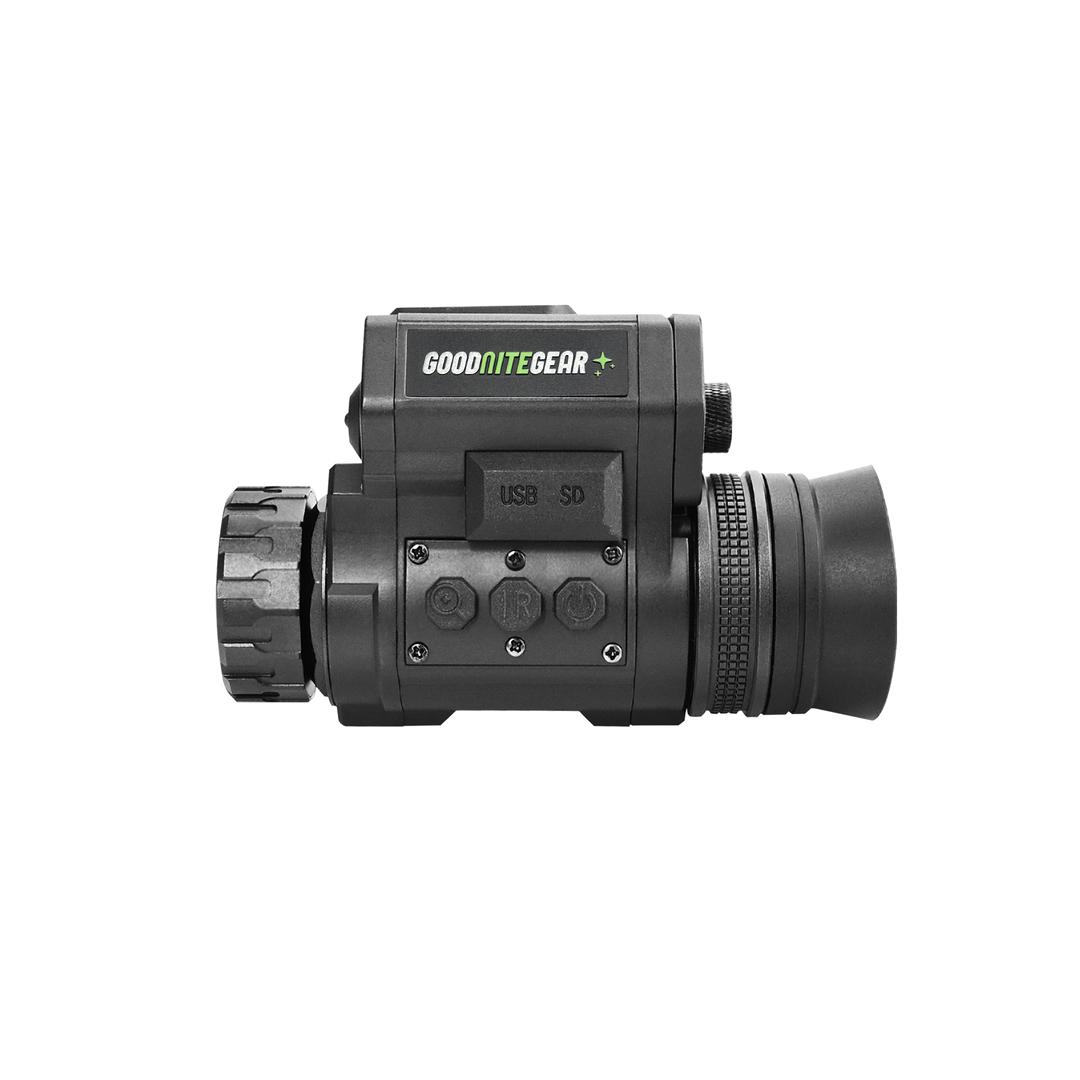

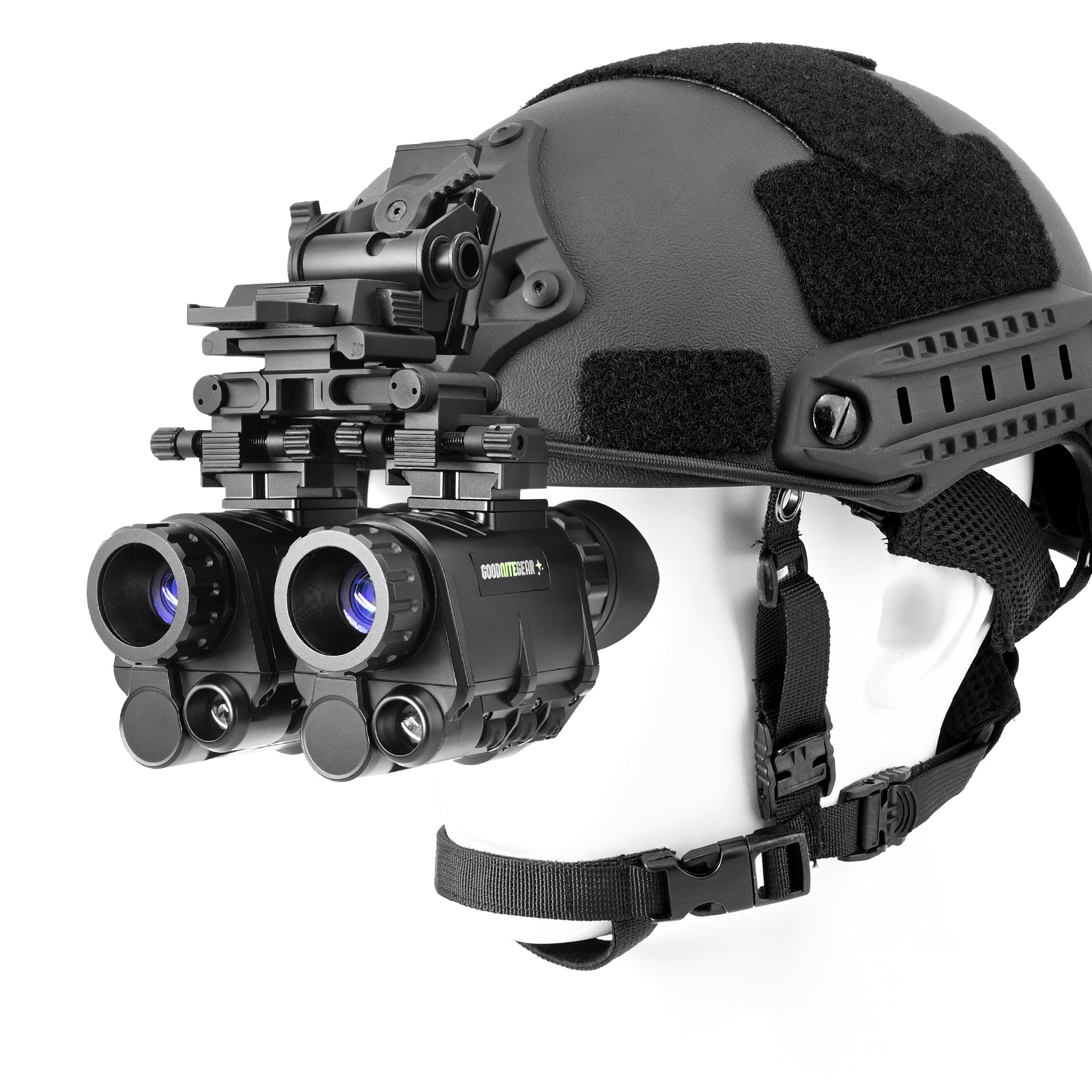


The NVG90 Night Vision series from Good Nite Gear represents some of the most capable digital night vision available at any price point right now — and choosing between the three models isn't as straightforward as just picking the most expensive one. The NVG90, NVG90 SE, and NVG90 Pro each hit a different sweet spot depending on your use case, and they each make tradeoffs worth knowing about before you spend. In this breakdown we'll walk through what separates them, show you how their low-light performance stacks up in real comparisons, and help you figure out which one actually makes sense for you.
What All Three Have in Common
Before we get into the differences, it's worth understanding what the entire NVG90 series shares — because the baseline is strong across the board.
All three devices run at either 50 or 100 FPS with ultra-low latency, which puts them in a completely different league from the digital night vision of even a few years ago. If you tried digital NV in the past and wrote it off, this lineup will change your mind. All three also use a high-quality display with a 4:3 aspect ratio — well balanced for both observation and navigation — and all three support bridging two units together for a binocular setup and connect to standard NVG mounts.
The performance gap between this lineup and older digital devices is significant. In side-by-side comparisons across four stepped brightness levels with no supplemental IR, the entire NVG90 series outperforms the Sionyx Opsin — which runs about $1,900 and was considered the gold standard for digital NV until recently. That alone tells you a lot about where this technology has landed.
NVG90 — The Versatile Entry Point ($1,250)
The NVG90 is the entry-level device in the series and it punches well above its price. At $1,250 it outperforms the Sionyx Opsin in low-light sensitivity, which costs significantly more — and that's before you drop the FPS to 50, which gives you a modest additional bump in passive sensitivity if you need it.
What makes the NVG90 stand out from its siblings is what it includes that they don't: a 1–5x digital zoom knob and built-in video recording. The zoom is sharp and genuinely useful in the field — not the soft, degraded digital zoom you've probably seen on other devices. Built-in recording means you can document what you're seeing without carrying an external recorder. For hunters, outdoorsmen, or anyone who wants a versatile all-in-one package, these are real advantages.
It runs on a single 18650 battery with a runtime of 6–8 hours — shorter than the SE and Pro, so overnight operations may require a battery swap or backup.
The tradeoff: The NVG90 has the smallest sensor of the three. In genuinely dark environments — no moon, no ambient light — you'll notice the gap compared to the SE and Pro. If passive low-light performance with no IR is your top priority, this isn't where the lineup peaks. But for most users doing navigation, observation, hunting, or general outdoor use, the NVG90 delivers at a price that's hard to argue with.
NVG90 Is the Right Pick If:
- You want the most versatile all-in-one package
- Built-in zoom and onboard recording matter to you
- $1,250 is your target budget
- You're not pushing into extreme low-light, no-IR environments regularly
NVG90 SE — The Performance Sweet Spot ($1,699)
The NVG90 SE is where the series starts to feel like a serious tool. The ⅔-inch second-generation CMOS sensor is a meaningful step up from the base NVG90, and you'll feel it most in low-light conditions where the larger sensor pulls in more before you need to reach for supplemental IR — helping you stay passive and keep your signature low.
Runtime is dramatically better here too: up to 16 hours on either a 16340 or 18650 battery, compared to 6–8 hours on the base model. For overnight operations or extended field use, that difference is substantial.
For context on the hardware: the NVG90 SE is the same device as the ADNV G14 SE. Good Nite Gear has a direct partnership with ADNV and carries these under the NVG90 branding — so you're getting the same proven platform with full US retailer support.
The tradeoff: The SE drops the built-in zoom knob and onboard recording. You'll need an external recorder (like the ADNV RS2) to capture footage. If those features were draws for you on the base NVG90, that's worth factoring in. But for buyers who want meaningfully better passive performance without jumping all the way to the Pro price point, the SE hits the sweet spot. For most users not operating in truly extreme low-light conditions, it's plenty of device.
NVG90 SE Is the Right Pick If:
- Better passive low-light performance is your priority
- You're running overnight or extended operations and need longer battery life
- You don't need built-in zoom or onboard recording
- You want a capable sensor without going to the Pro price
NVG90 Pro — The Top of the Digital NV Lineup ($2,795)
The NVG90 Pro is the flagship of the series and it earns that spot. The upgrade to a 1-inch second-generation CMOS sensor — the same platform as the ADNV G14 P2 — is the most significant hardware jump in the lineup, and in real-world low-light comparisons it starts to push into territory that challenges Gen 3 analog. That's a statement that would've been hard to make about digital night vision even two years ago.
In zero artificial light with no moon, the Pro is where you want to be in this series. The larger sensor amplifies available light more effectively, and in the stepped comparison photos it's the last device holding a clear image as conditions get darker — outperforming everything in the lineup and competing directly with analog at the bottom of the brightness range.
Runtime is the best of the three at up to 18 hours, and the form factor and mount compatibility are identical to the SE — so upgrading from SE to Pro is a clean swap.
The tradeoff: Same as the SE — no built-in zoom, no onboard recording. And at $2,795 you're also approaching the territory of the GF20 Thermal Fusion Monocular and the GF31 Thermal Fusion Binocular, which take a completely different approach to low-light detection. If range detection matters more than image clarity — spotting a heat signature at distance, for example — thermal fusion is worth a serious look at this price point. But if you want the absolute best digital night vision image quality in this lineup, the Pro is the answer.
NVG90 Pro Is the Right Pick If:
- You need the best passive low-light performance in the series
- You're operating in truly dark environments with no ambient light or moon
- Gen 3 analog-level performance from a digital device is the goal
- You want the top of the NVG90 lineup and budget isn't the limiting factor
Quick Comparison: NVG90 Series at a Glance
| NVG90 | NVG90 SE | NVG90 Pro | |
|---|---|---|---|
| Price | $1,250 | $1,699 | $2,795 |
| Sensor | Standard | ⅔" 2nd Gen CMOS | 1" 2nd Gen CMOS |
| Frame Rate | 50 / 100 FPS | 50 / 100 FPS | 50 / 100 FPS |
| Battery Runtime | 6–8 hrs | Up to 16 hrs | Up to 18 hrs |
| Digital Zoom | 1–5x | ✗ | ✗ |
| Built-in Recording | ✓ | ✗ (external) | ✗ (external) |
| Bridging Capable | ✓ | ✓ | ✓ |
| NVG Mount Compatible | ✓ | ✓ | ✓ |
Which One Should You Buy?
Here's the honest breakdown:
Get the NVG90 if you want the most versatile package at the best price. Built-in zoom and recording are real features that the other two don't offer, and the low-light performance is genuinely impressive for $1,250.
Get the NVG90 SE if passive low-light performance and battery life are your priorities and you don't need zoom or onboard recording. It's a meaningful step up from the base model at a price that's still well under the Pro.
Get the NVG90 Pro if you want the absolute best digital night vision image quality in this series — particularly for zero-light, no-IR situations — and you're ready to invest at the top of the digital NV tier.
Use code US10 at checkout to save 10% on any of them.

