



NVG90 Pro Review: How Does This Digital Night Vision Monocular Stack Up Against Gen 3 Analog?
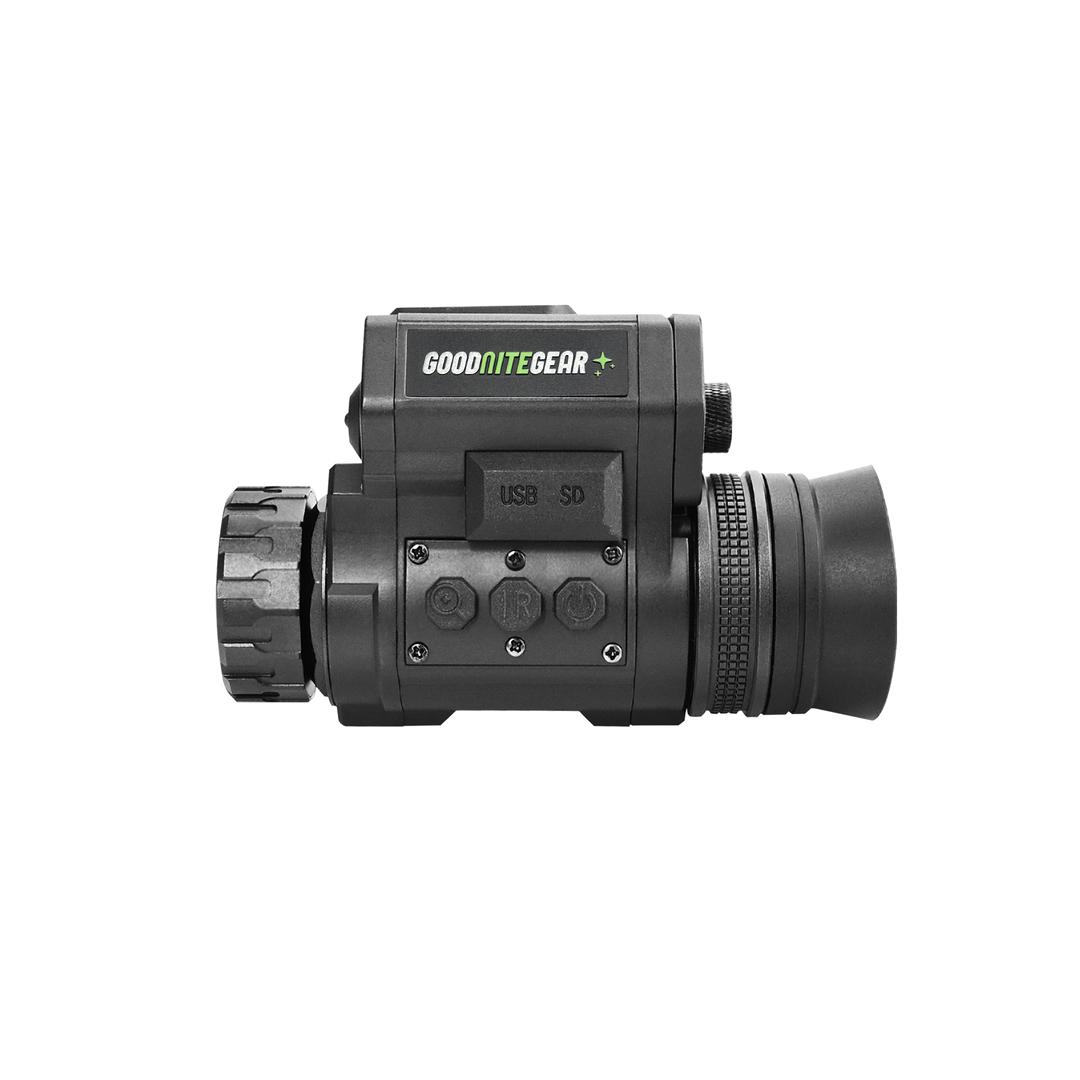
Digital night vision has come a long way — and the NVG90 Pro is one of the clearest examples of just how far. In this review, we put the NVG90 Pro through its paces across multiple real-world lighting conditions and compared it directly to a Gen 3 Elbit PVS14, the NVG90 SE, and the Sionyx Opsin. If you're trying to decide whether digital night vision is ready to compete with analog — or whether the NVG90 Pro specifically is the right buy — you're in the right place. The NVG90 Pro is a rebrand of the ADNV G14P2. Good Nite Gear a special collaboration with ADNV.
What Is the NVG90 Pro and What Does It Cost?
Right now the NVG90 Pro retails for around $2,800 on goodnitegearshop.com. Use coupon code US10 at checkout and you'll drop that down to just over $2,500 — which is a meaningful savings when you're comparing this device to a Gen 3 tube that's going to run you $3,400 or more.
For what you're getting spec-wise, that price point is hard to argue with.

NVG90 Pro Full Specs Breakdown
Let's talk about what's actually inside the device, because the specs here aren't just marketing numbers — they translate into real-world performance.
Sensor: The heart of the NVG90 Pro is a large 1-inch DG1802-4 Gen 2 Ultra Low Light sensor. That sensor size matters — bigger sensor means more light captured, which means better performance in dark environments. It's paired with an ASIC main control chip, which is responsible for the high frame rate, low latency, and surprisingly low power consumption you get out of this unit.
Display: You're looking through an 800×600 OLED display with up to 100Hz refresh rate. If you've used cheaper digital night vision, you know the image can look sluggish or smeared during movement. At 100Hz, that problem disappears — the image is smooth and real-time.
Field of View: 50 degrees at 1x magnification. That's a wide, immersive view for a monocular.
IR Illuminator: There's a built-in IR illuminator on board, though in most conditions — any environment with moonlight or ambient light — you won't need it. It's there for complete darkness situations.
External Recording: There's a 9-core aviation socket on the unit for connecting the optional RS2 external recording device (sold separately). Not included in the base package, but the capability is there if you need it.
Battery Options and Runtime
This is one area where the NVG90 Pro gives you real operational flexibility.
The standard tube accepts a CR123A or 16340 battery, giving you roughly 6 hours of runtime at 100Hz. Swap in the extended tube and you can run an 18650 battery for up to 18 hours at 100Hz. Drop the frame rate to 50Hz and you squeeze out even more runtime — plus you get a brightness boost in very low light, which we'll get into below.
For security professionals or anyone running extended operations, the 18650 setup is genuinely useful.
Mounting and Configuration Options
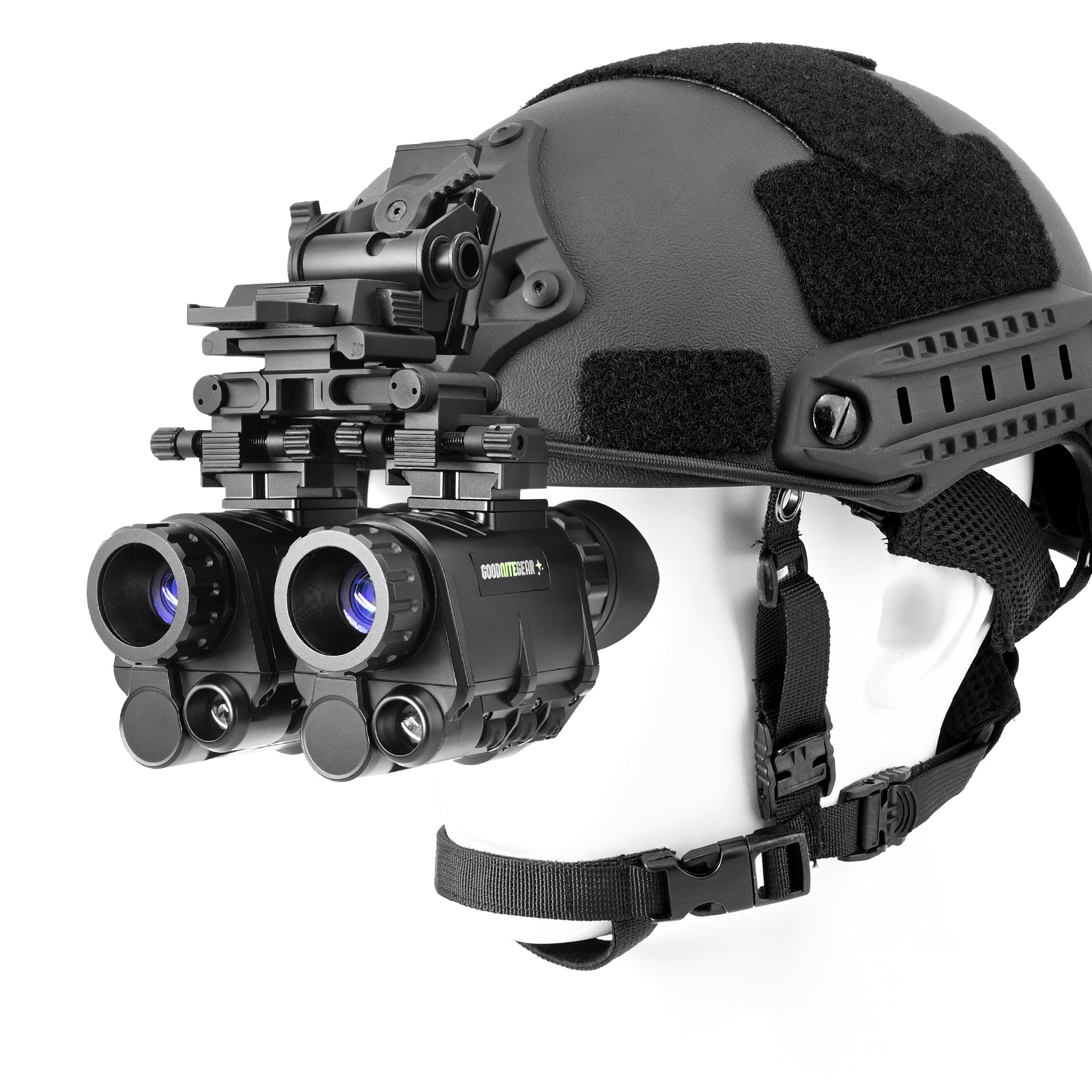
The NVG90 Pro ships with a standard G24 mount and all the hardware you need to run it over either eye. You can also bridge two units into a dual binocular configuration for better depth perception and a more immersive experience. That's a topic worth its own video, but the short version: if you can swing the cost of a dual setup, it's a significant upgrade in usability.

NVG90 Pro vs Gen 3 PVS14: The Real Comparison
This is what most people are actually here for, so let's get into it.
The comparison photos were taken through a Google Pixel 7 smartphone in a garage across four progressively dimmer lighting levels — no external IR illumination, just available ambient light. On one side, a Gen 3 Elbit White Phosphor PVS14 purchased for $3,400 plus shipping. On the other, the NVG90 Pro.

The results were genuinely close. Both devices crushed what the naked eye could see in every lighting scenario. Where you notice a difference is in contrast and fine detail — the PVS14 has a slight edge there, and that's expected for the money. But the NVG90 Pro picks up more peripheral detail and has a slightly wider field of view.
At 50Hz, the NVG90 Pro actually pulls ahead of the Gen 3 analog in raw brightness in the darkest conditions. You give up a little contrast and crispness, but you gain significant light amplification with no IR needed. For operations in low-light environments, that tradeoff can absolutely work in your favor.
The bottom line: you're giving up maybe 10–15% in image quality and getting it back almost entirely in price, field of view, and flexibility. For the majority of users, that's an excellent trade.
NVG90 Pro vs NVG90 SE vs Sionyx Opsin
For buyers deciding between digital night vision options at different price points, here's how the lineup shakes out:
The NVG90 SE (~$1,700) has a nearly identical form factor to the Pro but runs a smaller ⅔-inch sensor instead of the 1-inch sensor in the Pro. At 100Hz, the two devices perform similarly until you get into the dimmest conditions — that's where the Pro's larger sensor starts showing a clear advantage.
The Sionyx Opsin (~$2,000) runs a color XQE-1351 sensor at 90FPS and used to be considered the benchmark for digital night vision. Against the NVG90 Pro, it's simply outmatched. In the darkest lighting conditions tested, the Opsin displayed nothing — both Good Nite Gear devices still had a usable image.

Outdoor Performance
Outdoors with about 13% lunar illumination and decent cloud cover, the NVG90 Pro produced extremely bright, detailed imagery. Moving into areas with dense overhead canopy blocking moonlight — the kind of scenario that challenges a lot of night vision — the device still returned clear water and fine leaf and branch detail in the background.
Against a Gen 2+ PVS14 in similar dense canopy conditions, the NVG90 Pro held its own with crisp, clean imagery.
Who Is the NVG90 Pro Built For?
This device is a strong match for:
- Law enforcement who need a reliable, high-performance night observation tool without the procurement timeline and cost of a full Gen 3 setup
- Military personnel and veterans familiar with analog tubes like the PVS14 who want a capable digital alternative for training or personal use
- Airsoft and mil-sim players who want a realistic helmet-mounted setup with smooth, high frame-rate imagery that holds up in fast-moving scenarios
- Security professionals looking for durable, versatile night observation on extended shifts
- Outdoorsmen and preppers who want a capable all-conditions night vision solution
- Night vision enthusiasts who want to explore the digital vs. analog gap firsthand without dropping $3,400 on a tube
Final Verdict
The NVG90 Pro digital night vision monocular punches well above its price class. It delivers performance that's legitimately close to Gen 3 analog tubes costing nearly $1,000 more, with some practical advantages — wider field of view, flexible battery configurations, adjustable frame rate, and onboard recording capability — that analog can't match. The OLED display at 100Hz is smooth and clear, and the 1-inch sensor gives you real low-light capability.
If you're on the fence between the NVG90 SE and the Pro, the extra investment in the Pro is worth it if you're spending any meaningful time in truly dark environments. If you're comparing it to a Gen 3 PVS14, the question becomes: is 10% better clarity worth $1,000 more? For most buyers, the answer is no.
Ready to pick one up? Check out the NVG90 Pro on goodnitegearshop.com and use code US10 to save 10% at checkout. Want to compare it against the rest of the lineup? Browse the full digital night vision collection to find the right device for your budget and use case.

