



The 5 Best Digital Night Vision Devices Available Right Now
Digital night vision has had its critics — and for good reason. Early devices struggled with latency, short battery life, and low-light performance that couldn't hold a candle to analog tubes. That era is over. The best digital night vision devices available today don't just compete with analog — some of them flat-out beat it, at a fraction of the cost, with capabilities analog hardware can't touch. Here are the five most advanced digital NV systems on the market right now, ranked from high-performing monoculars up to the most capable systems money can buy.
What Changed: Why Digital Night Vision Is Finally Taken Seriously
The core complaints about digital NVGs — lag, poor low-light sensitivity, short runtimes — were all valid just a few years ago. What changed is sensor technology. The shift to scientific-grade CMOS sensors (sCMOS) transformed what's possible at realistic price points. These sensors capture more light, process it faster, and output a cleaner image than the digital NV hardware of even five years ago. Pair that with 100FPS frame rates and you eliminate the latency problem that made earlier digital devices feel unusable for anything beyond static observation.
The devices on this list represent where that technology has landed. Some will replace your analog setup. Others will do things analog hardware simply cannot.
1. NVG90 Pro — The Best Digital Night Vision Monocular
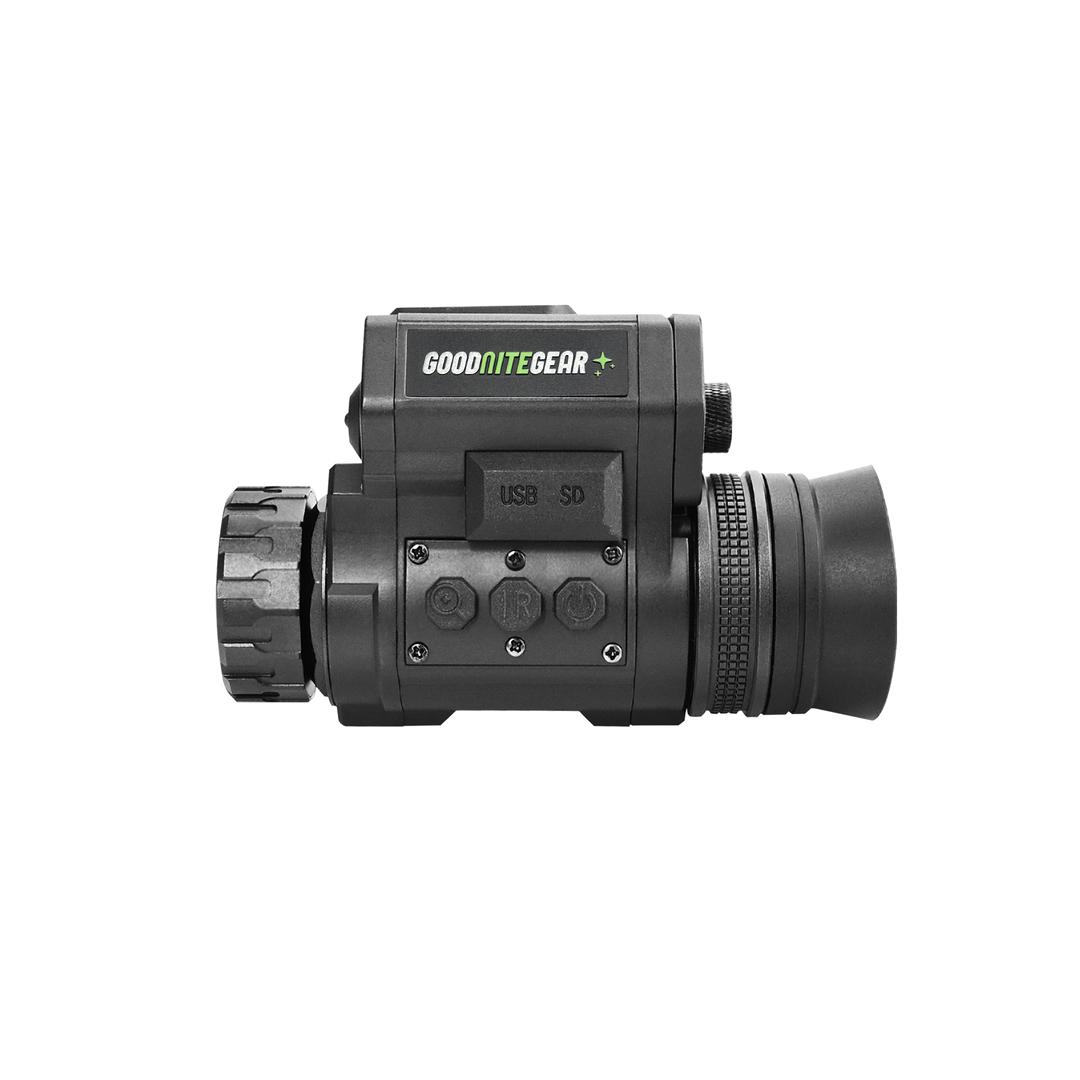
The NVG90 Pro is the benchmark for digital night vision monoculars, and it starts with the sensor: a 1-inch sCMOS chip — the same class of sensor used in professional scientific imaging equipment. In low-light testing, it genuinely rivals Gen 3 analog tube performance. That's not marketing language — it's been tested directly against Gen 3 hardware, and the results speak for themselves.
At 100 frames per second, latency is effectively zero. Running with it mounted to a helmet while moving fast — on foot, in a vehicle, working through a structure — feels completely natural. There's no motion blur, no image breakup, no lag you have to mentally compensate for.
The 40-degree field of view mirrors what you'd get from traditional NVGs, which means no adjustment period if you're transitioning from analog. For anyone coming from Gen 2 or Gen 3 tubes, the NVG90 Pro will feel immediately familiar — just sharper, more flexible, and significantly less expensive than comparable analog performance.
For buyers who want high-end performance at a more accessible entry point, the NVG90 SE uses a slightly smaller two-thirds inch sensor but still outperforms most digital options at its price tier. It's the right call if the Pro's price is a stretch but you don't want to compromise on performance.
2. G31 — Helmet-Mounted Binocular Night Vision

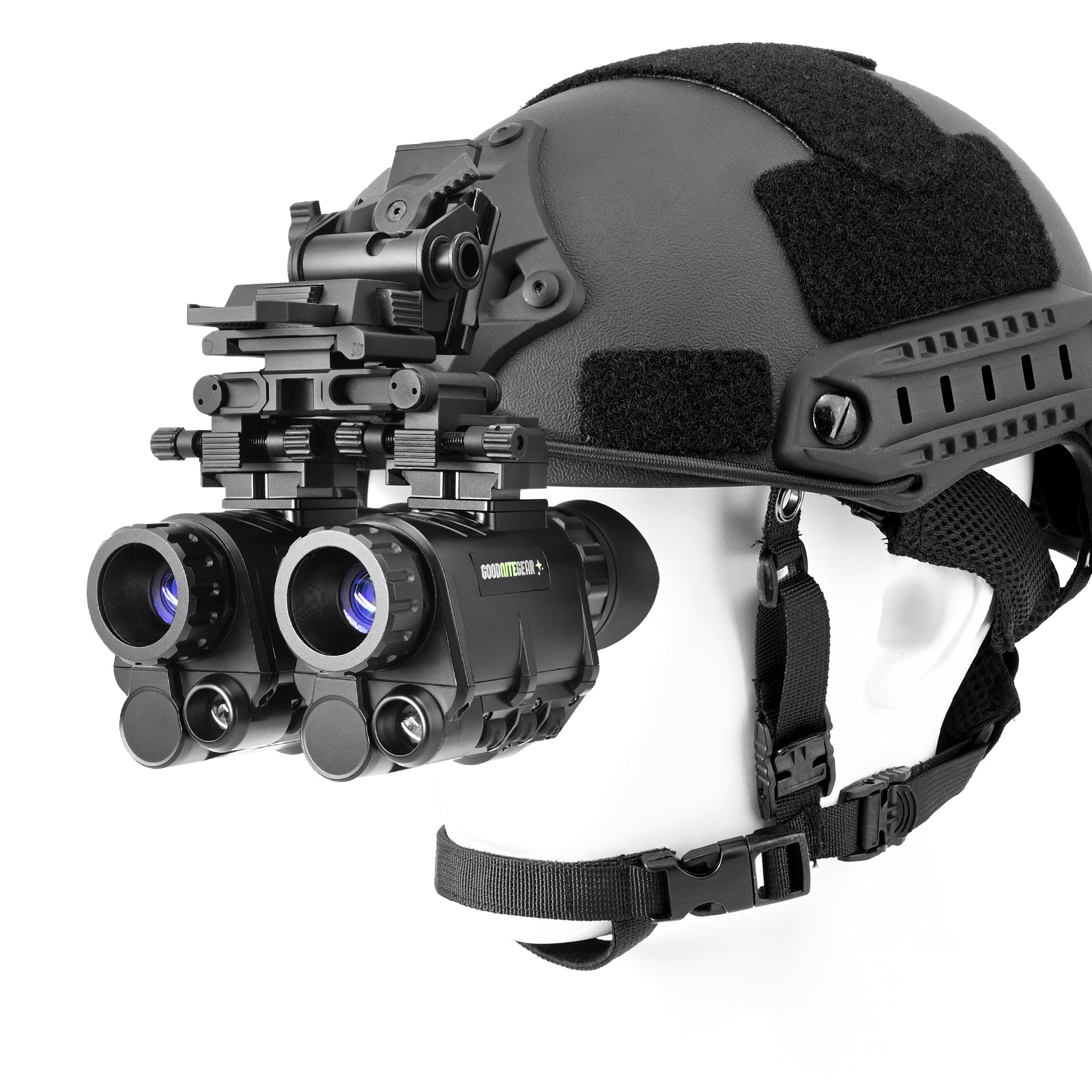
You can run two NVG90 Pros side by side in a bridge setup, and it works well. But if you want a purpose-built binocular system that integrates everything cleanly, the G31 is the step up.
The G31 uses the same 1-inch sCMOS sensors as the NVG90 Pro — one per eye — housed in a dedicated dual-tube binocular chassis designed from the ground up for helmet mounting. Power runs through a counterweight battery pack that mounts to the rear of your helmet, balancing the weight of the system and dramatically reducing neck fatigue during extended use. That counterweight also houses the onboard video recording capability — something you don't get with a monocular-only setup.
The articulating design lets you independently flip either eye up and out of the way without removing the unit from your helmet. That flexibility matters when you need one eye free for a task or want to transition between full-bino and monocular mode quickly.
If the NVG90 Pro is the right starting point, the G31 is where you go when you're ready for a true binocular system without compromise.
3. G18 Panoramic — The Most Advanced Digital Night Vision System Available
The G18 is in a category of its own. Where every other device on this list gives you 40 degrees of field of view, the G18 runs four 1-inch sCMOS sensors simultaneously to produce a 120-degree horizontal panoramic image. That's nearly three times the situational awareness of a standard night vision system — analog or digital.
In practical terms: you're not looking through a tube anymore. You're seeing the full environment around you. Movement and threats at the edges of your peripheral vision appear in your image without any head movement required. For high-risk operations where situational awareness is the difference between seeing a threat and missing it, that capability is significant.
Military-grade panoramic analog systems that deliver similar fields of view cost three to five times as much — and they don't produce the seamless, stitched image the G18 delivers. The G18's panoramic output is processed in real time with low latency, Gen 3-comparable low-light sensitivity, and the same counterweight battery system as the G31 for extended runtime and balanced helmet carry.
Independent articulation on each side of the unit gives you the same flexibility you get with the G31 — flip one side up and operate with a single eye when needed.
This is the top of the digital night vision category, full stop.

4. GF20 — Thermal Fusion Night Vision Monocular
Night vision handles observation and navigation exceptionally well. What it can't do is detect threats that are hidden, camouflaged, or in environments where visible light — even IR light — doesn't reveal them. That's where thermal imaging fills the gap, and the GF20 combines both into a single device.
The GF20 pairs a high-resolution digital night vision sensor with a 640x512 thermal sensor, fusing both feeds in real time. That 640x512 resolution puts it in the high-end tier of thermal sensors — significantly more detail than budget thermal units, and more than enough to identify heat signatures at meaningful distances.
The fusion modes give you control over how the two feeds combine:
Outline Mode runs a night vision-dominant image with a red thermal overlay tracing heat signatures at the edges of detected objects. You get full NV detail for navigation with heat detection layered on top — minimal visual disruption, maximum awareness.
Thermal Fusion Mode blends both feeds together, producing the most complete image of your environment — detail from night vision, heat signature from thermal, merged into a single view. This is the mode that makes the GF20 a fundamentally different tool than either sensor alone.
You can also run pure night vision or pure thermal independently when the situation calls for it.
The GF20 uses the same counterweight battery pack system as the G31 for extended runtime and helmet balance. If your mission demands the ability to detect what night vision alone can't see, thermal fusion is the capability you need — and the GF20 is where to start.

5. GF31 — Binocular Thermal Fusion: The Ultimate Setup

If the GF20 is the starting point for thermal fusion, the GF31 is the endgame.
The GF31 is a helmet-mounted binocular system that puts thermal fusion over your right eye and that same 1-inch digital night vision sensor over your left eye. Your brain processes both feeds simultaneously and combines them naturally — you don't have to think about switching modes or toggling between sensors. You're just seeing more than you could with either technology alone.
In thermal fusion mode, you're getting the full resolution and detail of high-grade night vision combined with real-time thermal heat signature data, across both eyes, at 100FPS, with near-zero latency. It's the most complete operational picture available in a wearable system.
Like the G31, the GF31 features independent articulation — flip the right eye or left eye up independently depending on the task. The counterweight battery pack handles extended runtime while keeping your helmet balanced for long operations.
The GF31 is the most advanced night vision system we carry, and for professionals who need the highest level of situational awareness available in a fielded system, it's the answer.
How to Choose the Right Digital Night Vision Device
| Use Case | Recommended Device |
|---|---|
| High-performance monocular, helmet or handheld | NVG90 Pro |
| Premium monocular at a lower entry price | NVG90 SE |
| True binocular NV, helmet-mounted | G31 |
| Maximum situational awareness, panoramic | G18 |
| Thermal detection + night vision, monocular | GF20 |
| Full binocular thermal fusion system | GF31 |
The right device depends on your mission profile, budget, and whether you need thermal capability alongside night vision. Every device on this list represents the current ceiling of what digital night vision can do — and any of them will outperform what digital NV hardware was capable of just a few years ago.
Ready to Upgrade?
Browse the full lineup of digital night vision devices at Good Nite Gear — including the NVG90 Pro, NVG90 SE, GF20, GF31, and more. Use code US10 at checkout to save 10% on your order. If you want to go deeper on any of these systems, full reviews are available on the channel for most devices linked above.

