
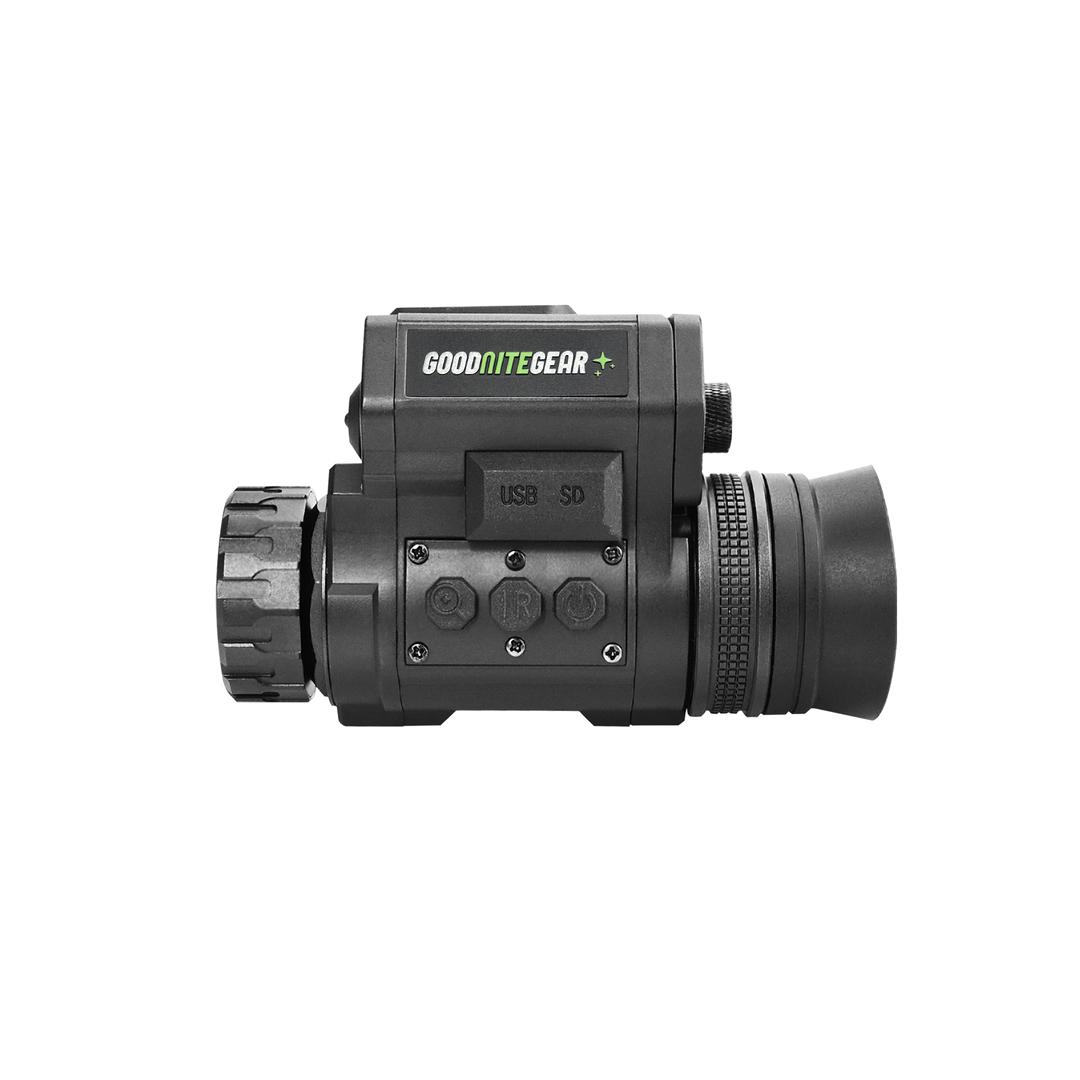

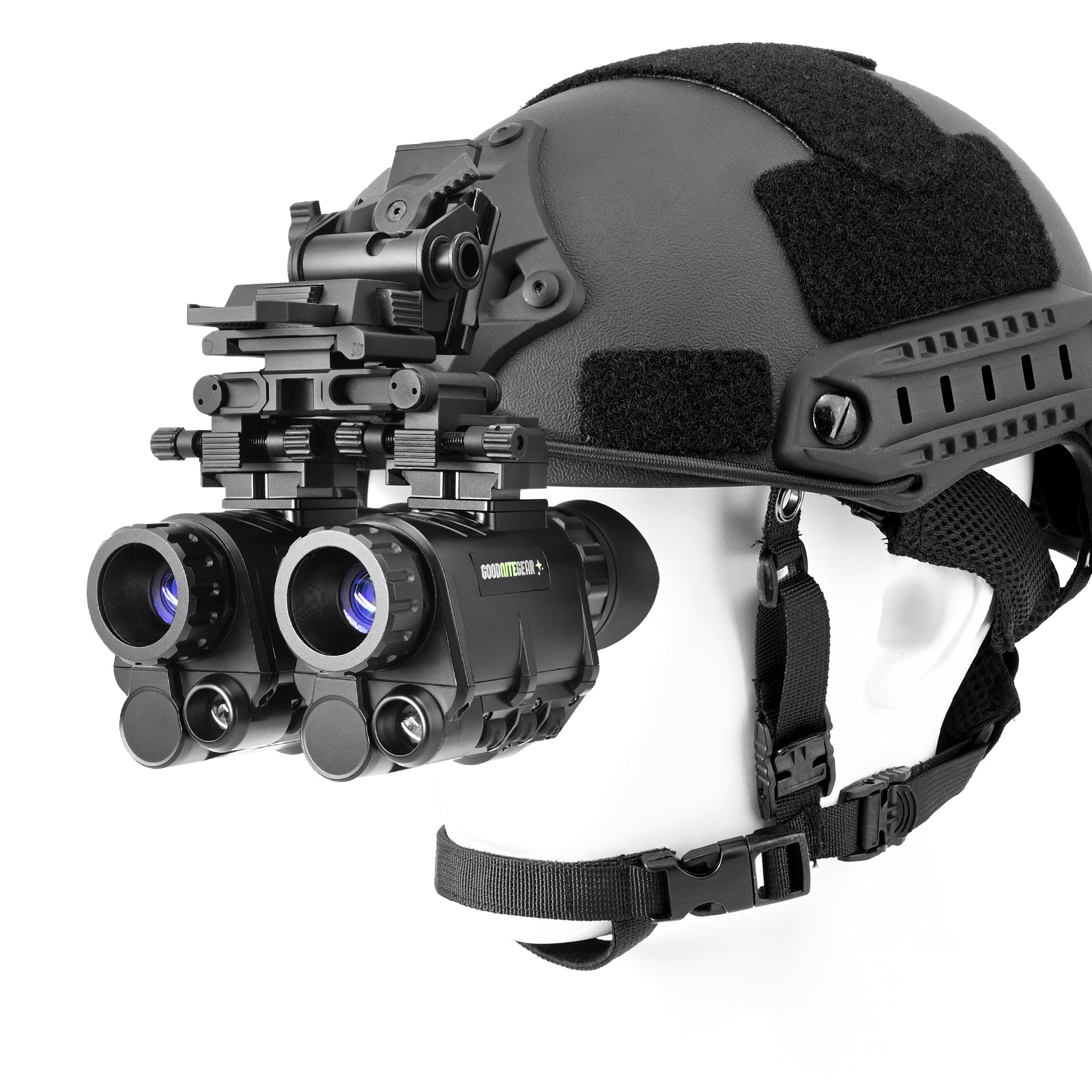


The entry level digital night vision market has changed a lot in the last two years. New devices have come in at lower price points with meaningfully better performance, and some older favorites have held their ground surprisingly well. If you're shopping for capable digital night vision under $500, the lineup right now is the strongest it's ever been — and picking the wrong one for your use case is easy to do without a proper breakdown.
This post covers five of the most popular options: the NVG40, Nightfox Prowl, Nightfox Prowl 2, NVG30, and NVG50 — with real-world low-light testing, field of view comparisons, mounting options, and a clear verdict on each. By the end you'll know exactly which one fits your needs.
The Lineup at a Glance
| Device | Price (with US10) | Best For |
|---|---|---|
| NVG40 | ~$165 | Stationary observation on a tight budget |
| Nightfox Prowl | ~$200 | Navigation, color palettes, casual use |
| Nightfox Prowl 2 | ~$250 | Best all-around under $300 |
| NVG30 | ~$400 | Binocular setups, strong low-light |
| NVG50 | ~$500 | Best performer in the sub-$500 class |
Mounting Options
All five devices are helmet-mountable, but the quality of that experience varies.
The NVG30 and NVG50 both ship with a metal mounting arm that connects directly to any FAST-compatible helmet shroud. It works well for most users, but if you need to flip the monocular up and out of the way quickly and return it to the same position — which matters in dynamic environments — the Z04 mounting arm is the better move. It connects both the NVG30 and NVG50 to a G24-style mount, which is the most stable and durable setup in the lineup.
The Nightfox Prowl and Prowl 2 both use a polymer dovetail mounting arm adapter that connects to the device's rail. Functional and straightforward, though not as rigid as the metal arm options.
The NVG40 also includes a dovetail arm for G24 compatibility — a nice touch at this price point.
Binocular Configuration Options
Running a dual-eye setup is possible on most of these, though the bridge options vary significantly in quality.
The NVG30 and the NVG50 has the best binocular solution in the lineup — a fully metal bridge that's highly adjustable, durable, and lets you flip one side up independently while leaving the other in position. That independent articulation is a practical advantage that's easy to underestimate until you actually need it in the field.
The NVG40 can technically be bridged using this same setup, but it requires securing the units to prevent them from rotating outward — it's a workaround, not a designed solution.
The Prowl and Prowl 2 bridge together using a dedicated dovetail-based bridge adapter that mirrors the same mounting interface as the single monocular setup. Both work well as a bino configuration.
Battery and Charging
All five devices support USB-C charging, which is worth noting — no proprietary cables, no hunting for adapters.
- NVG40: Built-in 3,000mAh battery — no swapping, just plug in and charge.
- Nightfox Prowl: 18650 cell, but requires a screwdriver to access. Workable but not ideal for field swaps.
- Nightfox Prowl 2 and NVG30: Both run 18650s with a similar access design — unscrew the cap beneath the viewing screen and the battery slides out. Clean, fast, and the best swap design of the bunch.
- NVG50: Runs dual 18350 batteries in a removable configuration. Slightly less common cell format than 18650s, but still widely available and easy to carry spares.
All five devices also support onboard video recording — useful for documentation, training review, or content capture in the field.
Field of View Comparison
Field of view is one of the most practically important specs in night vision and one of the most commonly overlooked. A wider FOV means better peripheral awareness, easier navigation, and less of that disorienting tunnel-vision effect. A narrow FOV limits situational awareness and makes movement significantly harder.

Here's how the five stack up:
- NVG40: ~25° — the narrowest of the group. Noticeable in use, especially when moving.
- Nightfox Prowl: Wider and taller than the NVG40, circular display with impressive coverage for the price.
- Nightfox Prowl 2: Square-format screen in picture mode that maximizes height; can be widened depending on preference. Compatible with wide-angle and fisheye lens attachments that dramatically expand the FOV.
- NVG30 and NVG50: Both sit at approximately 40° — wider than the Prowls, with more horizontal coverage. A wide-angle lens mod is also available for both if you want to push the FOV further.
For navigation and movement, more FOV is almost always better. The NVG30, NVG50, and Prowl 2 (with lens attachments) are the practical leaders here.
Low-Light / No-IR Performance
This is where the real separation happens. We tested all five devices at max frame rates across four stepped lighting levels with zero supplemental IR — plus a Gen 3 analog PVS-14 on the far end for reference.

Level 1 (moderate low light): All five digital devices produced a usable image.
Level 2: The Nightfox Prowl started losing the target. The Prowl 2 image went noticeably dark.
Level 3: Target lost on the NVG40 and Prowl 2. The NVG30 and NVG50 both held a faint but usable image — with a slight performance edge going to the NVG50.
Level 4 (near-total darkness): All five sub-$500 devices lost the target. The Gen 3 analog PVS-14 maintained a clear image.
The takeaway: the NVG50 and NVG30 are the clear low-light leaders in this lineup, and their no-IR performance is genuinely impressive for the price. The NVG40 outperforms both Prowl variants in low light, despite being the cheapest device in the group. The Prowl 2 is a significant step up from the original Prowl, but neither keeps pace with the NVG30 or NVG50 as light drops.
For context: higher-end devices like the NVG90 and NVG90 SE close the gap to analog substantially — if your use case demands the best possible no-IR performance, those are the devices to look at.
Verdict on Each Device
NVG40 (~$165)

The most budget-friendly option in the lineup and a reasonable entry point for anyone who primarily needs a stationary observation tool. Surprising low-light performance for the price. The 25° field of view is the real limiting factor — it makes navigation uncomfortable and is a meaningful disadvantage in any dynamic scenario. Best suited for fixed-position use, not movement. Check out the full review here: NVG40 Review
Nightfox Prowl (~$200)

A few years old but still competitive at its price point. Solid field of view, good color palette options, and navigable at a walking pace. Latency and low FPS make it less suited for fast movement. If you're choosing between the Prowl and the Prowl 2, spend the extra $50 and get the Prowl 2 — the upgrades are meaningful.
Nightfox Prowl 2 (~$250)

A genuine upgrade over the original in every meaningful category: screen resolution, low-light performance, build quality, and the inclusion of lens attachments that dramatically expand the FOV. Low-light falls short of the NVG30 and NVG50, and latency becomes noticeable at faster movement speeds. That said, at $250 it's the clear choice in the sub-$300 tier and a significant step up from the original Prowl. Check out the full review here: Nightfox Prowl 2 Review
NVG30 (~$400)

Remains a strong favorite — particularly for anyone building toward a binocular setup. Its dedicated metal bridge with independent articulation is the best bino solution in the sub-$500 class, and its low-light no-IR performance is often compared to analog PVS-14s at a fraction of the cost. Slightly behind the NVG50 in raw performance, but the binocular flexibility makes it the better call for users who prioritize that capability. Check out the full review here: NVG30 Review
NVG50 (~$500)

The best performer in the sub-$500 lineup. Sleekest design, best build quality, and the strongest low-light output of the five. Users consistently report getting roughly 80% of PVS-14 performance at about one-fifth of the cost — which is an extraordinary value proposition. Popular with airsofters, mil-sim players, law enforcement training programs, and shooting classes nationwide. If you want the best entry level digital night vision you can get without crossing the $500 mark, this is it. Check out the review here: NVG50 Review
Which One Should You Buy?
- Tightest budget, stationary use → NVG40
- Best under $300, versatile → Nightfox Prowl 2
- Building a bino setup → NVG30
- Best all-around performance under $500 → NVG50
Ready to Pick One Up?
All five devices are available at Good Nite Gear. Use code US10 at checkout to save 10% on the NVG30, NVG40, NVG50, and Nightfox Prowl 2.
If you're ready to step up beyond the $500 tier, check out the NVG90 — the performance jump is real and worth the look.

