
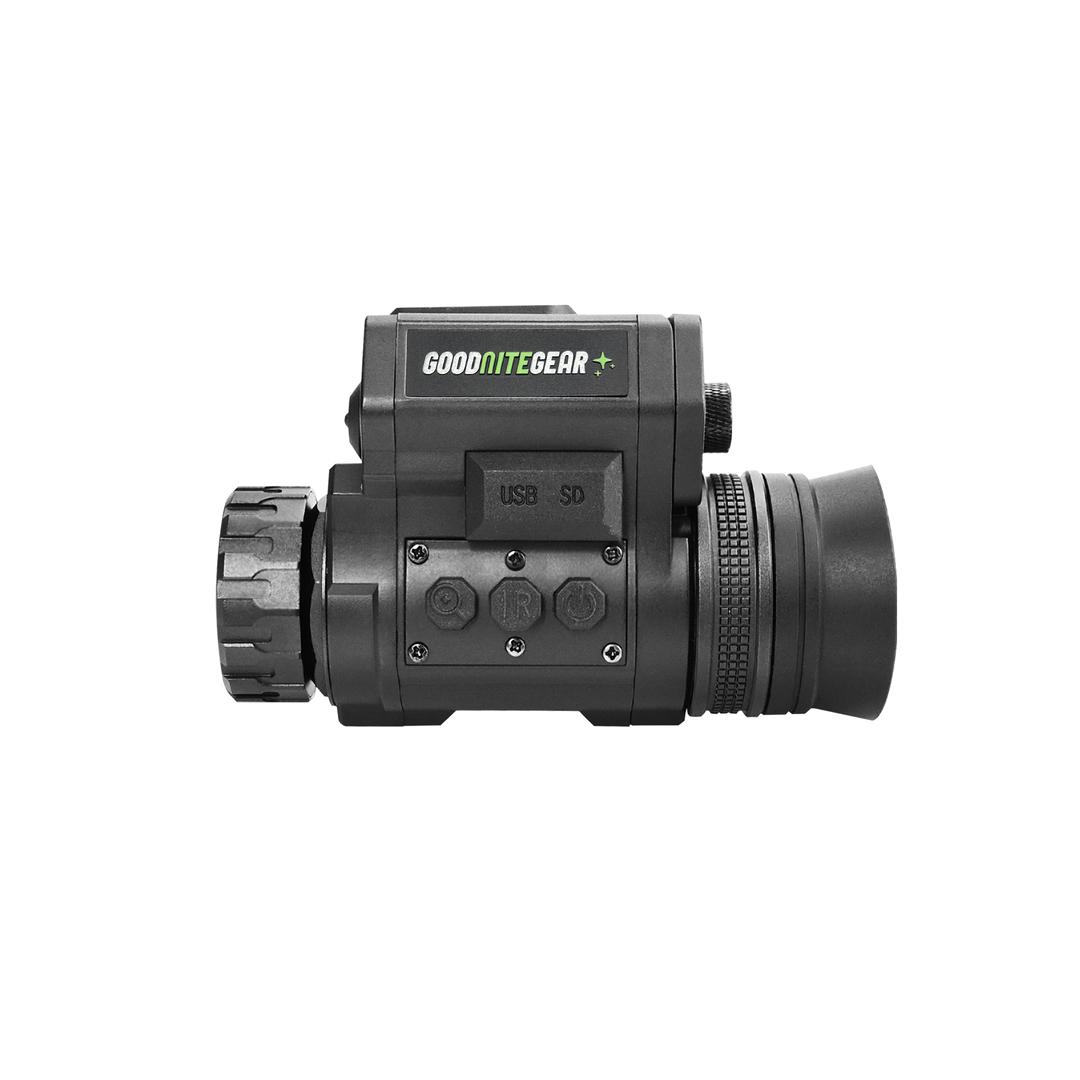

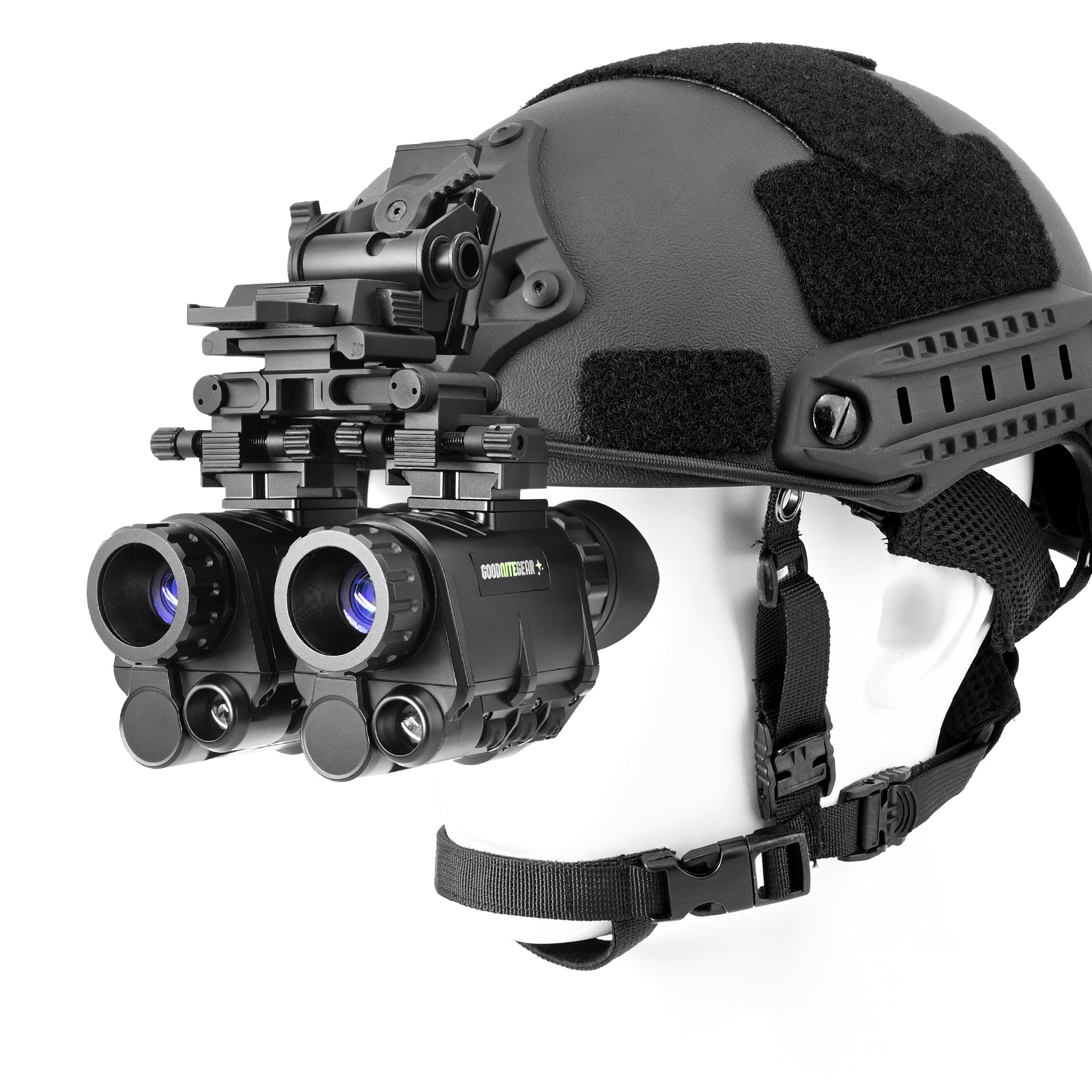


If you're looking to get into night vision monoculars and want to keep your costs down below $200, there are a few decent options — but the three main contenders are the NVG40, the Nightfox Prowl, and the Night Operators Max 2.0. Devices in this price range will have some shortcomings, but they're good entry-level options for anyone who wants to dip a toe into night vision without spending much money.
All of these devices can be helmet mounted and even bridged for a binocular setup, which makes them unique in the budget sub-$200 night vision marketplace.
Quick Comparison: Best Sub-$200 Night Vision
| Pick | Best For | Price |
|---|---|---|
| NVG40 | Best overall under $200 | ~$165 |
| Nightfox Prowl | Wide FOV, budget pick | ~$180 |
| Night Operators Max 2.0 | High frame rate | ~$190 |
| Nightfox Prowl 2 (step-up pick) | Best if you can stretch to $250 | ~$250 |
1. NVG40 — Best Overall Under $200

The NVG40 is the newest device to enter the sub-$200 night vision monocular market, and it comes in cheaper than both alternatives discussed below. This device offers better onboard video recording, a circular screen that more closely emulates an actual PVS-14, more features, and better low-light no-IR performance. It's also faster with less latency than the Nightfox Prowl and runs at a higher frame rate.
The main downside is a more constricting field of view — but its low reliance on IR lighting puts it ahead of the other devices here if you're concerned about being visible to other night vision users.
You may also want to consider the NVG40 Pro, a color version of the NVG40 — though its low-light no-IR performance isn't quite as strong as the standard NVG40.
Who it's for: First-time buyers who want the best all-around performance in this price tier, especially if staying concealed from other IR users matters.
Check out the NVG40:
2. Nightfox Prowl

The Nightfox Prowl is a nice unit for the price and was very popular for a while on YouTube, with many reviewers praising its performance for the money. Pros include a wide field of view, a nice green phosphor viewing mode, and plenty of menu options.
Downsides: the onboard viewing screen resolution is quite low, and the device suffers from tremendous lag — in many cases it was unusable during our testing and had to be reset repeatedly, even with firmware updates. It's also heavily reliant on IR lighting and is one of the lowest performers in this category, which matters if you need to keep a low IR signature and don't want to be spotted.
Worth knowing: If you can stretch your budget by about $50, the Nightfox Prowl 2 fixes almost everything wrong with the original Prowl. It's built around a newer 60FPS IMX662 sensor that addresses the lag and reliability issues above, and it ships with a quick-swap lens system (55° wide-angle standard, up to 105° with the included fisheye) instead of a fixed FOV. At $249.99 it's not a sub-$200 pick, but it's worth strong consideration before you commit to a true budget option — the gap between the original Prowl and the Prowl 2 is significant, not incremental.

Who it's for: Buyers who prioritize field of view and don't mind IR dependence; consider the Prowl 2 instead if lag/reliability is a dealbreaker.
Check out the Nightfox Prowl 2:
3. Night Operators Max 2.0

Night Operators has done an excellent job getting their name out there on YouTube and TikTok, though their marketing has been misleading at times — comparing their device to a PVS-14 with IR lighting on, and misquoting the PVS-14's price substantially.
Pros for this unit are a high frame rate, a wide field of view, and a decent-quality screen. Cons: build quality is low, menu options are limited, and low-light/no-IR performance is very poor — it's extremely reliant on running its built-in IR illuminator.
Who it's for: Buyers who prioritize frame rate and screen quality over low-light independence.
No-IR Performance: How These Devices Actually Compare
With IR lighting on, visibility is fine across all three devices. Turn it off, though, and the differences become stark: the Prowl loses image almost entirely, Night Operators offers very minimal visibility, and the NVG40 still delivers decent visibility — meaningfully ahead of the other two. If staying undetected by other night vision users matters for your use case, this gap is the single biggest factor to weigh.

Ready to Step Up?
If you can stretch your budget into the $500 range, we highly recommend the NVG30 or NVG50 for meaningfully better low-light no-IR performance than anything in this sub-$200 tier. Both also offer binocular kit options if you want to go dual-eye down the road.
For a broader breakdown across every price point — including thermal fusion — check out our Best Night Vision Goggles For The Money roundup, or watch our digital night vision tier list video to see how these devices stack up against a wider field of competitors.
Frequently Asked Questions
What's the best night vision monocular under $200? The NVG40. It offers the best combination of low-light no-IR performance, video recording, and speed in this price tier, with a screen shape that closely emulates a PVS-14.
Is the Nightfox Prowl worth buying? The original Prowl has a wide field of view and a nice green phosphor mode, but suffers from significant lag and heavy IR dependence. The Nightfox Prowl 2 (~$250) resolves most of these issues if you can stretch the budget slightly.
Do budget night vision monoculars work without an IR illuminator? Poorly, in most cases. All three devices here perform noticeably worse with IR off, though the NVG40 holds up best of the group. If no-IR performance matters for your use case, budget devices are a real compromise — the NVG30 or NVG50 close that gap substantially.
Can these budget monoculars be used as binoculars? Yes — all three can be helmet mounted and bridged into a binocular setup, which is relatively unusual at this price point.
Questions about which budget night vision device is right for you? Reach out — we're happy to help you find the right fit for your use case and budget.

