



A while back we put out a digital night vision tier list that ended up being one of the most-watched videos on this channel. A ton has changed since then — new devices have hit the market, the competitive landscape has shifted, and it's time for a full refresh to see how everything actually stacks up.
Quick disclosure up front: a lot of the devices in this lineup are sold at Good Nite Gear, and yes, I'm the founder. You'll see GNG products in this ranking, but every device here is scored and ranked the same way, using the same testing conditions. If you do end up liking one of the devices, code US10 saves you 10% site-wide.
This roundup covers a wide range of price points — several devices at $500 or less for entry-level buyers, the $1,000–$1,700 range (which is now genuinely competitive with Gen 2+ analog, a category that barely existed the last time we made this video), and a few devices in the $2,000–$3,000 range to show you how the top of the line stacks up.
Quick Comparison: 2026 Digital Night Vision Tier List
| Device | Tier | Price |
|---|---|---|
| NVG40 | C | ~$165 |
| Nightfox Prowl 2 | B | ~$250 |
| NightOperators Viper | C | ~$250 |
| NVG30 | B | ~$400 |
| NVG50 | B | ~$500 |
| SVG5 | A | ~$999 |
| NVG90 | A | ~$1,250 |
| NVG90 SE | A | ~$1,699 |
| Sionyx Opsin | A | ~$1,995 |
| NVG90 Pro | S (solo top) | ~$2,795 |
How We Tested
The most important factor in this ranking is low-light/no-IR performance. We tested every device at its maximum frame rate across four stepped lighting conditions, alongside a Gen 3 Elbit PVS-14 as an analog benchmark and photos from a Google Pixel 7 smartphone to show what the human eye would see in the same conditions.
At Level 2, budget devices like the Prowl 2 and the NightOperators Viper start to struggle noticeably — both lean heavily on IR lighting to perform. By Level 3, none of the cheapest devices can produce a usable image at all, and even the NVG50, NVG30, and Opsin are all roughly on par with each other and struggling. This is where a real gap starts to open up, with the NVG90 and SVG5 standing out — both outperforming the $1,995 Opsin despite costing significantly less. At Level 4, only the NVG90 lineup is still producing an image, with the NVG90 Pro and SE holding up remarkably well against the PVS-14 even at 100FPS.
Beyond low-light performance, we weighted field of view, latency, bridging/thermal fusion compatibility, build quality, mounting options, and price.
B Tier: The Smartest Entry Points
NVG50 — ~$500

Released as an upgrade to the NVG30, the NVG50 is widely regarded as the best-performing device in its price range. Low-light no-IR performance is solid for the price and a clear step up from the naked eye. It caps out at 40FPS, but latency remains minimal and well-suited to moderate-paced movement.
It offers high-quality video recording, a 40° field of view, and digital zoom — pairing it with a wide-angle lens is highly recommended for navigation use. The stock mounting arm is decent, with an upgrade path to a Wilcox-compatible dovetail arm. It can be bridged into a binocular setup, or paired with the Armasight SK320 thermal for a workable side-by-side thermal fusion setup.
Nightfox Prowl 2 — ~$250

Released in November 2025, the Prowl 2 is a clear upgrade over the original Prowl in nearly every way. Low-light no-IR performance still leaves something to be desired at this price point — you'll need IR lighting in a lot of situations — but it outperforms the NightOperators Viper on that front.
Its real strength is low latency paired with a huge field of view, making it genuinely good for walking around, as long as you're not moving too fast. Build quality is what you'd expect at this price, with a plastic dovetail mount, but it bridges easily into a binocular setup or pairs with the Nightfox Arctic thermal for one of the most affordable thermal fusion setups on the market at around $700 total.
NVG30 — ~$400

Until the NVG50 launched, the NVG30 held the title of best-performing sub-$500 device. Performance sits at roughly 95% of the NVG50, with a slightly larger form factor and an 18650 battery instead of the NVG50's 18350. It shares the same mounting, binocular, and thermal bridging options as the NVG50.
Low-light performance is a solid step up from the Prowl 2, with a higher-resolution screen too. If you want to save about $100 and don't mind the slightly larger size, the NVG30 remains a strong choice.
C Tier: Usable, With Real Compromises
NightOperators Viper — ~$250

Released alongside the NightOperators Viper Thermal, the Viper can run standalone or bridged with its companion thermal for a side-by-side fusion setup around $750. That fusion kit arguably edges out the Nightfox setup thanks to better thermal-to-night-vision alignment, making it a solid budget thermal fusion option.
On its own, though, low-light no-IR performance leaves a lot to be desired — this is the most IR-dependent device in the lineup. The FOV is a roughly 45° square, latency is low at 60FPS max, and build quality is solid with an included dovetail mount. No built-in video recording is the other notable gap.
NVG40 — ~$165

A genuine surprise in low-light testing, outperforming both the NightOperators Viper and the Prowl 2 despite its price. Build quality feels cheap, with a plastic dovetail mount — the weakest in the lineup on durability. It runs at 60FPS with built-in recording, but the compact ~26° field of view makes navigation genuinely difficult; this device is best suited to static observation rather than movement, unless you're on flat, obstacle-free ground.
A Tier: Where Digital Gets Serious
SVG5 — ~$999

A significant jump in low-light performance over every monocular below this price point. Build quality is noticeably more rugged, with a metal dovetail mount compatible with standard night vision mounts — though it doesn't bridge or fuse well with any thermal we've tested.
It features a Micro OLED 0.5" 800×600 display, 43° field of view, video recording, a front-mounted digital zoom knob, and runs at 50 or 100FPS with minimal, barely-noticeable latency — well suited to fast-moving tasks.
NVG90 — ~$1,250

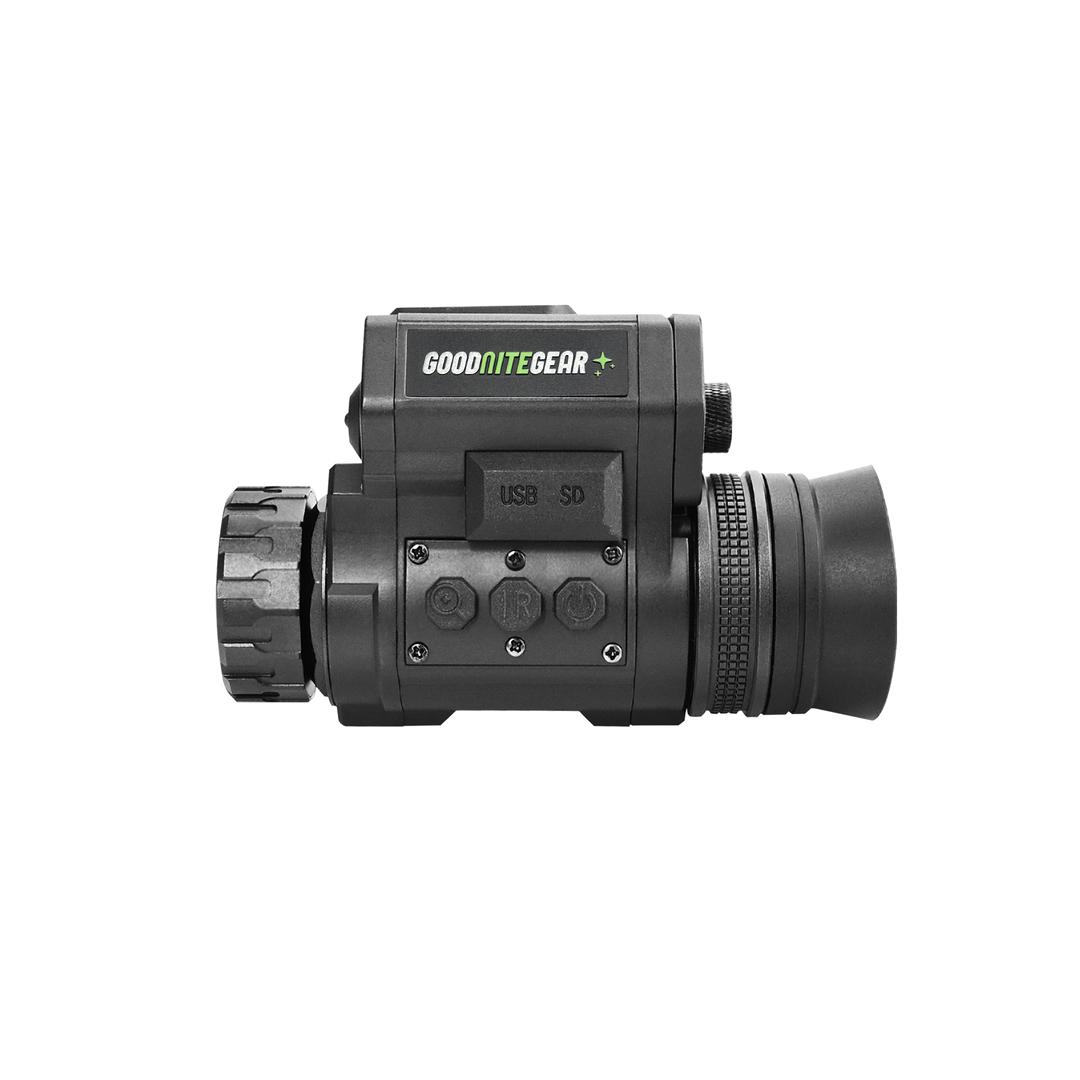
Slightly better low-light performance than the SVG5, with noticeably better build quality and ergonomics, plus a more robust mounting option. It bridges into a binocular setup or pairs with the Armasight SK320 for a genuinely solid side-by-side thermal fusion option.
It runs a 1280×960 display, 43° field of view, built-in video recording, and 50/100FPS with latency that's essentially unnoticeable at speed. If you're deciding between the SVG5 and the NVG90, the NVG90 is the better pick across nearly every category, and the price difference is well justified.
NVG90 SE — ~$1,699

Transparency note: this is a rebrand of the ADNV G14SE — Good Nite Gear has partnered with ADNV, and we want that upfront rather than buried in the comments.
A serious step up over the base NVG90 in performance, size, build quality, and ergonomics. It had the second-best low-light performance in the entire test, behind only the Pro, running a 2/3" 2nd-gen high-performance sensor at 50 or 100FPS with the lowest latency of any unit tested — genuinely excellent for fast-moving navigation. Tested side-by-side with a Gen 2+ WP PVS-14 in very dark conditions, this $1,699 digital unit goes toe-to-toe with analog.
It includes a bino bridge, runs on multiple battery types, records via the external RS2 Recorder, and gets around 16 hours on a single 18650.
Sionyx Opsin — ~$1,995

Released about four years ago, making it the oldest device in this lineup. At launch it was the gold standard, but sensor technology has moved fast enough that the Opsin is now genuinely hard to justify at this price — it's outclassed by devices costing significantly less.
Build quality is excellent and the mount is robust, but it can't bridge with any other night vision device or thermal, and the battery system is proprietary. Video recording is strong, and it has the best color night vision in the lineup. The only reason it's staying in A Tier at all is its very low latency — its low-light performance lands roughly at NVG50 territory, which is a tough pill to swallow given the price gap. For most buyers, we'd recommend skipping this one in favor of any other A-Tier device.
S Tier: Top of the Line Digital NV
NVG90 Pro — ~$2,795 — The Top Performer

Transparency note: this is a rebrand of the ADNV G14P2.
Hands down the best-performing device in this entire lineup, and it's not close. Exceptional low-light performance, effectively zero latency, excellent build quality, and remarkably compact for the capability packed in. Drop the frame rate to 50FPS and it doesn't just match analog — it clearly outperforms Gen 3, beating $4,000+ analog tubes at a fraction of the price.
It includes a bino bridge, runs multiple battery types, records via the external RS2 Recorder, and gets around 18 hours on a single 18650 — the most efficient device in the lineup. If you want the single best digital night vision experience money can buy right now, this is it.
Beyond Monoculars: Quad, Binocular, and Thermal Fusion
A few devices deserve a mention that share the same premium sensor performance as the NVG90 Pro but aren't strictly part of the monocular ranking above:
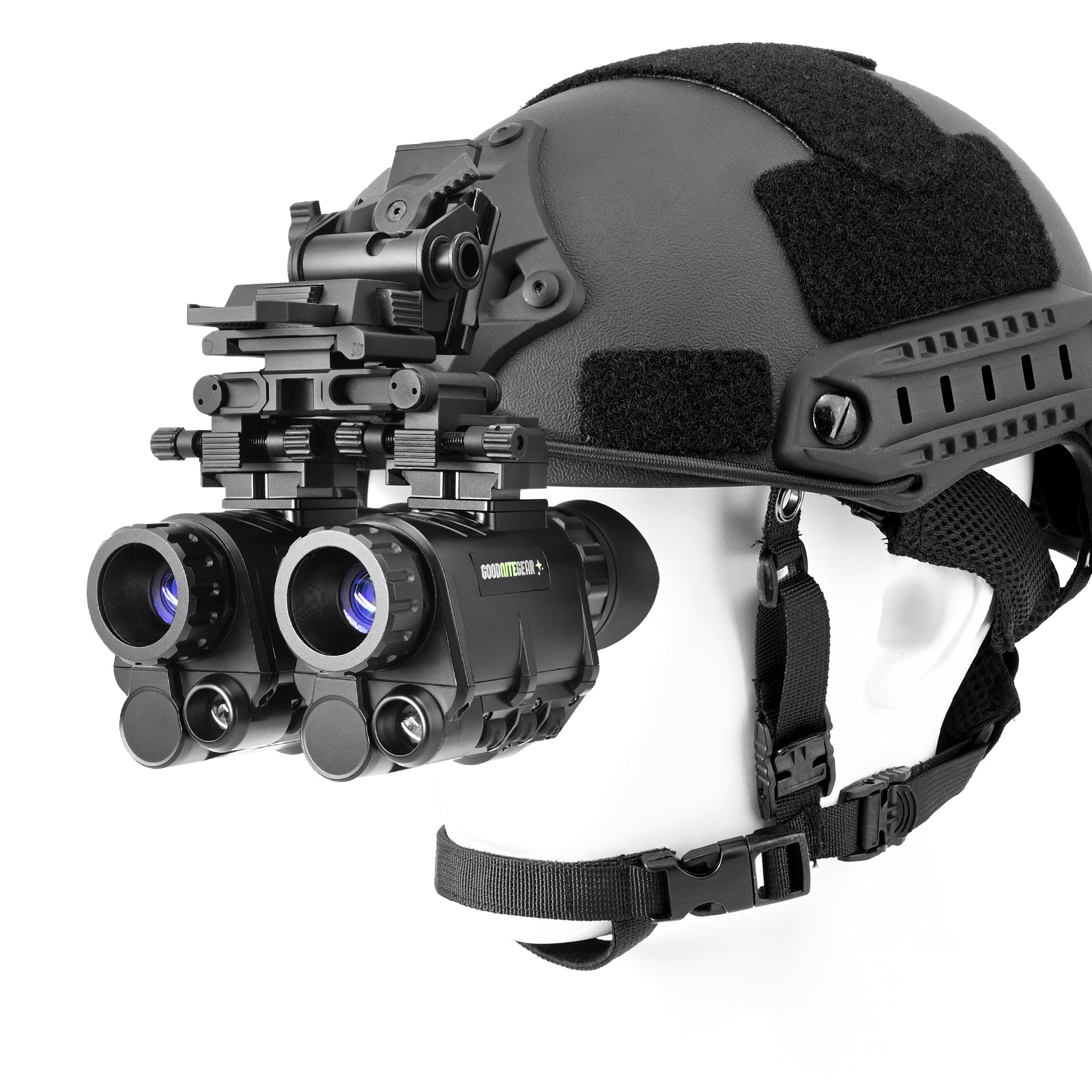
- GNG G31 — essentially the PVS-31 equivalent of the NVG90 Pro, a helmet-mounted binocular in a genuinely compact form factor.
- GNG G18 Quad Pano NVGs — 120° of panoramic field of view with that same premium performance. If you want the best possible situational awareness and ease of navigation, this is the one to know about.
- GNG GF20 and GNG GF31 — thermal fusion monocular and binocular, combining that same premium night vision sensor with a 640×512 thermal sensor, capable of running in outline mode or full fusion mode.
We've also done a deep dive comparing digital thermal fusion to analog thermal fusion, plus full standalone reviews of the G18, GF20, and GF31, if you want to go further down that road.
The Bottom Line
If you're just getting started, the NVG50, NVG30, and Nightfox Prowl 2 all land solidly in B Tier — still the smartest entry points into digital night vision without spending a fortune.
If you want to step it up, the SVG5 and NVG90 both hit A Tier and represent some of the best value in the entire lineup right now.
And if you want the absolute best digital night vision has to offer, the NVG90 SE and NVG90 Pro are the ones to look at — with the Pro standing alone as the top performer in this entire test.
Links to everything mentioned are above, and code US10 gets you 10% off site-wide at Good Nite Gear.

