



Top 5 Best Infrared Night Vision Binoculars That Dominate in Total Darkness
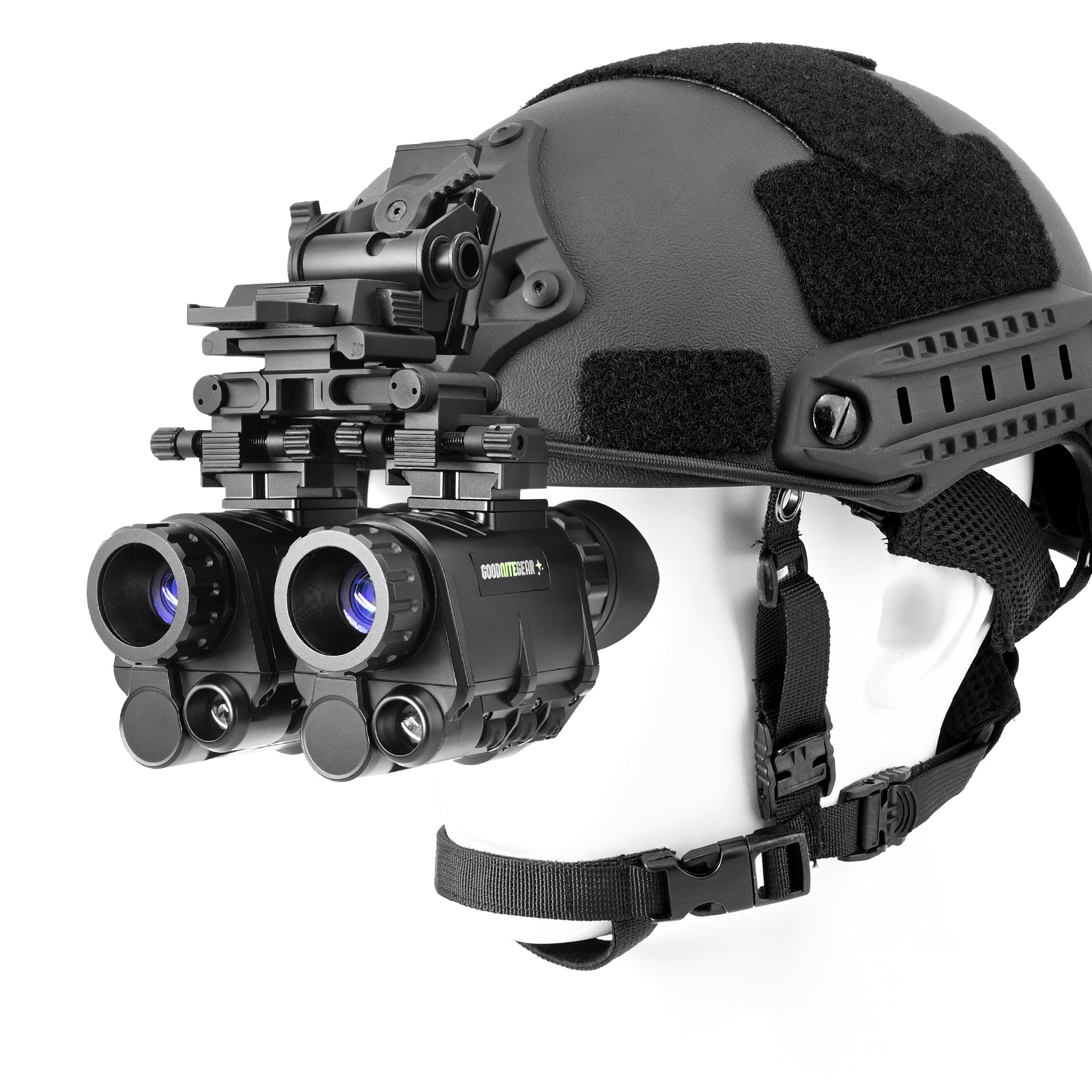
Monoculars get you seeing in the dark. Binoculars get you seeing in the dark comfortably — better depth perception, less eye strain, and a much more natural experience whether you're walking, driving, or holding steady on a target.
These setups aren't just for hunters, either. Airsoft, milsim, and competitive shooters get just as much out of dual-eye vision — target acquisition, room clearing, and movement all get noticeably easier when you're not compensating for a single-eye view.
We've built out every tier of binocular setup we sell, from budget-friendly bridge kits to a true single-body binocular, so you know exactly where your money goes furthest.
Quick Comparison: Best Night Vision Binoculars By Budget
| Pick | Best For | Price |
|---|---|---|
| Nightfox Prowl 2 ×2 + Bridge | Best budget build | ~$520 |
| NVG30 Binocular Kit | Best under $1,000 | ~$1,000 |
| NVG50 Binocular Kit | Best step-up build | ~$1,060 |
| NVG90 ×2 Bridged | Best high-end digital | ~$2,720 |
| GNG G31 | Best true single-body binocular | ~$5,250 |
1. Nightfox Prowl 2 ×2 + Bridge — Best Budget Build

Price: ~$520 (two Prowl 2s at $249.99 each + a $20 bridge adapter)
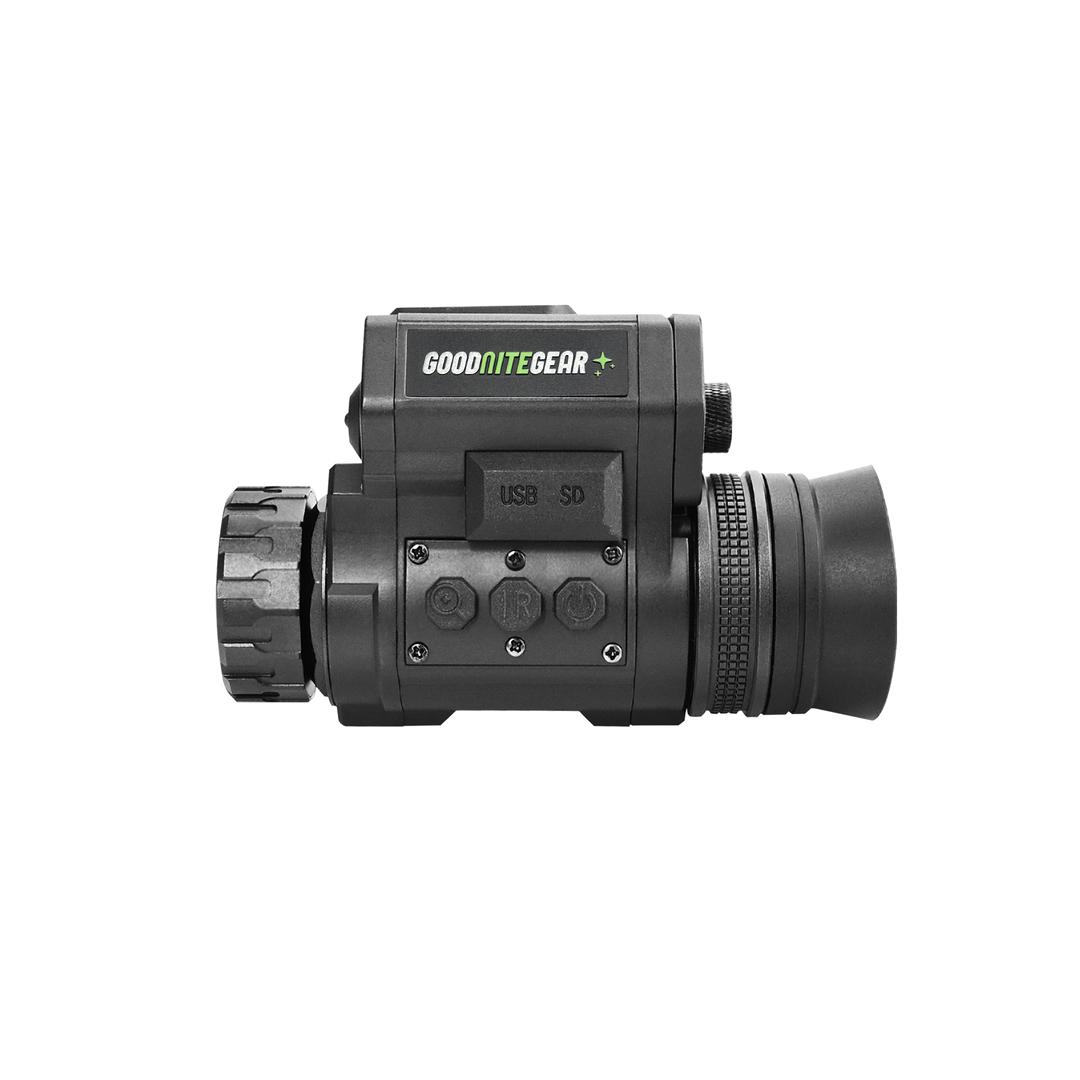
If you just want to try binocular night vision without a four-figure commitment, build your own out of two Nightfox Prowl 2 monoculars and a shared dovetail bridge adapter.
Each Prowl 2 runs a 60FPS IMX662 sensor with a quick-swap lens system — stock wide-angle at 55° FOV, or pop on the included fisheye lens for up to 105°. Since both units share the same body and dovetail design (the same setup used for the Prowl 2 + Arctic thermal fusion kit), bridging two of them into a binocular rig is straightforward and keeps the whole build around $500. You can aslo check out our thermal binoculars.
This isn't going to match the low-light ceiling of the pricier options below, but for airsoft, milsim events, walking around, casual hunting, or just seeing what binocular night vision feels like before committing more, it's the easiest entry point.
Who it's for: First-time binocular buyers, airsoft and milsim players, budget-conscious hunters, anyone who wants to test the format before upgrading.
2. NVG30 Binocular Kit — Best Under $1,000

Price: ~$1,000
The NVG30 Binocular Kit is the most complete package at this price point — two NVG30 monoculars, a bridge mount, and everything you need to run binocular right out of the box.
The NVG30 has built a reputation as one of the strongest values in digital night vision under $500 per unit, and doubling up into a bino setup is where it really shines. Depth perception changes everything for movement — navigating terrain, tracking, or just walking without constantly misjudging distance. The included bridge is FAST-compatible, so pairing it with a helmet is simple, and helmet add-ons are available if you don't already have one.
Who it's for: Hunters doing night-time game management, airsoft and milsim players, shooters, budget-conscious buyers who want a genuine dual-eye setup, first serious step up from a single monocular.
3. NVG50 Binocular Kit — Best Step-Up Build
Price: ~$1,060
The NVG50 Binocular Kit runs on the same WildGamePlus bridge mount as the NVG30 kit, but steps up to the NVG50 — a monocular known for lower latency, a more compact form factor, and a higher-resolution viewing screen than its closest budget competitors.
Those per-unit improvements compound once you're running two side by side, giving you a slight but noticeable edge over the NVG30 bino kit for roughly the same money. If you were already leaning toward the NVG50 as a single monocular, the binocular kit is a natural upgrade path rather than a separate purchase.
Who it's for: Hunters, airsoft and milsim players, and shooters who want the sharper single-unit performance of the NVG50 carried into a full binocular setup.
4. NVG90 ×2 Bridged — Best High-End Digital Binocular

Price: ~$2,720 (two NVG90s at $1,250 each + a $220 mount and bridge)
Two NVG90 units bridged together via the G24 mount system is where digital night vision binoculars start to feel genuinely professional.
Each NVG90 runs a high-sensitivity 940nm IR system with a 43° field of view at up to 100FPS, and eliminates the fisheye distortion that shows up on cheaper devices. IP54-rated housing and a Z04 mounting arm (dovetail-compatible with G24 mounts) mean the hardware is built to hold up under real use, not just look good on a spec sheet. Bridging two together delivers the full binocular experience — natural depth perception, reduced eye strain over long sessions, and a setup that holds its own against binoculars costing significantly more.
Who it's for: Serious hunters, competitive shooters, milsim operators, security professionals, and tactical users who want a true step up in optical quality and are ready to commit to a full binocular rig.
5. GNG G31 — Best True Single-Body Binocular

Price: ~$5,250
The G31 isn't a bridged pair of monoculars — it's a single, purpose-built binocular from the ground up, engineered around a 1" second-generation BSI CMOS low-light sensor rather than two separate units bolted together.
With a minimum illumination of 0.00005 lux, an F/1.05 aperture, and frame rates up to 100Hz (customizable to 120Hz), the G31 delivers smooth, low-latency imaging from starlight through daylight. IP67 weatherproofing, a standard Wilcox interface, and over 38 hours of runtime on four 18650 batteries round out a build that's meant for extended field use, whether helmet-mounted or handheld.
Because it's a single integrated unit rather than a bridged pair, there's no mismatch between eyes, no separate calibration, and less to go wrong mechanically over time. If you want the binocular experience without the compromises of bridging two monoculars, this is that setup.
Who it's for: Professional operators, elite hunters, competitive shooters, and serious buyers who want a true single-body binocular platform rather than a bridged pair.
Why Go Binocular Instead of Monocular?
Running two eyes instead of one isn't just about comfort, though that matters over long sessions. Binocular setups improve depth perception in a way a single-eye device can't — which translates directly into better judgment of distance and terrain when you're moving, not just standing still observing.
For active use — walking, running, driving, tracking, clearing rooms in airsoft or milsim scenarios — binoculars are meaningfully better. Shooters also benefit from the reduced eye strain during extended engagement, since both eyes stay open and relaxed instead of one eye straining to compensate for the other. For stationary observation, a monocular is often still perfectly sufficient, and considerably cheaper.
Frequently Asked Questions
Can I build my own binocular setup instead of buying a kit? Yes — if you already own two compatible monoculars (same dovetail mounting system), you can buy a bridge mount separately rather than a full kit. Just confirm compatibility first; not every monocular shares the same mount.
Do binocular night vision setups need an IR illuminator? Depends on the tier. Budget builds like the Prowl 2 pair benefit from supplemental IR in near-total darkness. Higher-end units like the NVG90 and G31 perform well without it, thanks to more sensitive sensors.
How much heavier is a binocular setup than a monocular? You're roughly doubling the weight of the optics themselves, though the added stability and reduced eye strain often make it feel more comfortable over extended wear, not less.
Questions about which binocular setup is right for you? Reach out — we're happy to help you choose the right system for your specific use case and budget.

