



Digital night vision has been closing the gap on analog for years — but thermal fusion is where things get genuinely interesting. The GNG GF20 doesn't just give you better night vision. It gives you night vision and thermal in a single helmet-mounted package, running simultaneously, with your brain doing the combining in real time. Here's the full breakdown.
What Is the GNG GF20 — and What's the ADNV Connection?
Before we get into the hardware, a quick note on branding. The GNG GF20 is sold through Good Nite Gear and is the same device as the ADNV GF20 — ADNV is the manufacturer, and Good Nite Gear is an authorized reseller. Same hardware, same specs, same performance. If you've seen this device referenced under the ADNV name elsewhere, you're looking at the same unit.
Build Quality and Hardware

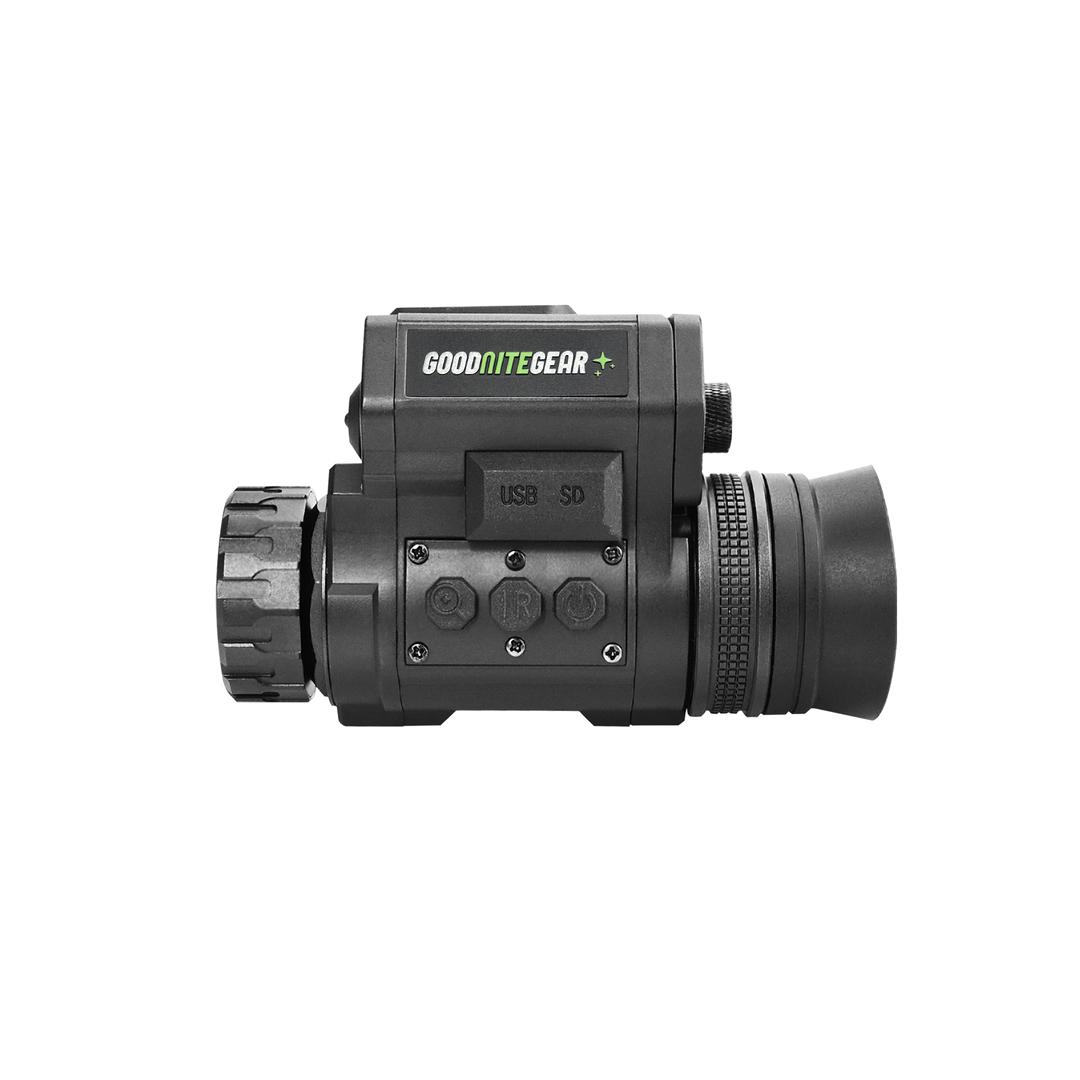
The GF20 is built for real use. Total system weight including the battery sits at around 1,000 grams, and the construction carries an IP67 rating — fully dustproof and waterproof enough to handle harsh weather without issue.
On the front is the objective lens with a rotatable focus ring, feeding into a 1-inch sCMOS sensor. That sensor is the real story here — its low-light performance is in the same territory as the Gen 3 analog devices it's competing with, and it's comparable to what you'll find in the NVG90 Pro, one of the top-performing digital monoculars on the market. Stacked on top of that is a 640x512 thermal sensor — and together, these two sensors are what make the GF20 a fundamentally different kind of device.
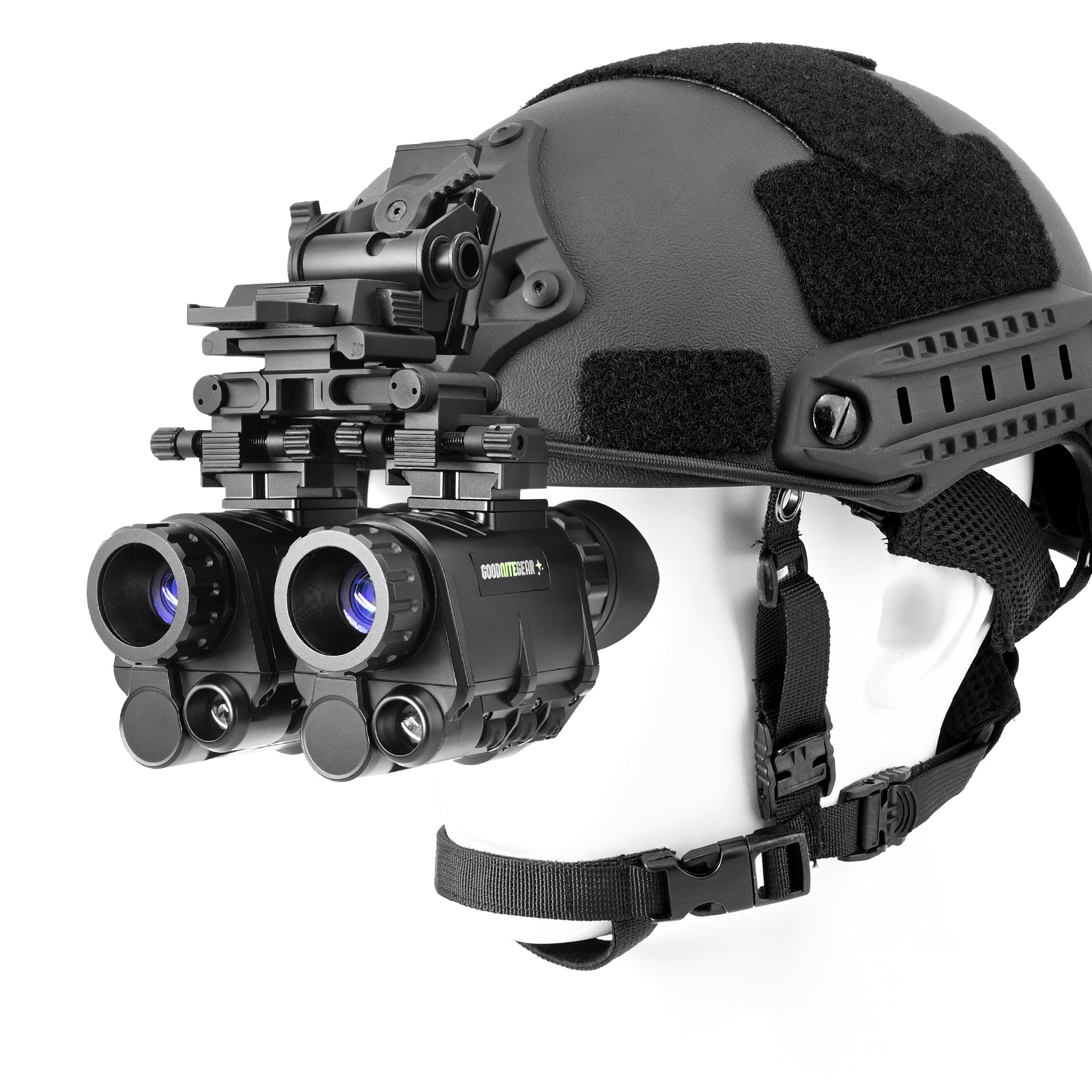
The external battery pack is well thought out — velcro-backed for direct helmet mounting, fed by four 18650 cells, and rated for up to 75 hours of runtime on low power mode. It also has built-in recording capability with USB-C connectivity for reviewing footage on your computer. The connection between the device and the battery pack uses a 9-core aviation socket that locks in securely — no wobble, no accidental disconnects.
Mounting is handled via a dovetail that connects to an included bridge compatible with G24 mounts. The bridge is highly adjustable, and either side can be lifted up and out of the way independently — useful when you only need one eye engaged.

On the display side you've got an 800x600 OLED screen that does the image quality serious justice. There's also a built-in digital compass at the top of the display giving you hands-free navigation and situational awareness without reaching for separate gear or breaking your night-adapted vision. Battery level, FPS, and current operating mode are all visible at a glance.
Operating Modes — Four Ways to Run It
This is where the GF20 separates itself. You're not locked into one mode — you can configure it four different ways depending on what the mission requires:
Night Vision Only — Run the 1-inch sCMOS sensor by itself at up to 100FPS. Clean, low-latency digital night vision with a 50-degree diagonal field of view. Handles fast movement — walking, running, driving, dirt biking — without noticeable lag.
Thermal Only — Cut the digital sensor entirely and run pure thermal. Useful for quick area scans, and essential in conditions where light-based sensors struggle: smoke, heavy fog, rain, and snow all scatter or block light, but thermal keeps working regardless. Capped at 50FPS in thermal modes.
Thermal Outline Mode — The digital night vision image stays active, and the thermal sensor draws a red border around anything with a distinct heat signature. Even in a pitch-black garage with almost no ambient light — where even a Gen 3 PVS14 is working hard to show you anything useful — thermal outline makes a stationary person immediately visible. Detection becomes instant rather than something you have to work for.

Full Thermal Fusion — Both sensors combine into a single image. You get the environmental detail and navigational clarity of digital night vision layered with the heat detection of thermal. Subjects get more visible, and the surrounding environment gets more readable — simultaneously. This mode also reduces your dependence on active IR illumination, which matters if you're concerned about projecting an IR signature.

Detection Ranges
The 640x512 thermal sensor isn't just a feature checkbox — the detection numbers are meaningful. Human detection out to approximately 750 meters. Human recognition at around 375 meters. Identification at roughly 188 meters. Vehicles are detectable well beyond 1,200 meters. For context, those ranges are well beyond what you'd achieve with digital night vision alone, and they hold up regardless of lighting conditions.
Thermal also works through camouflage and dense vegetation — things that would be completely invisible to the naked eye or a standard NV device can still produce a heat signature that the GF20 will pick up.
How It Compares to Gen 3 Analog
The honest comparison: the GF20's digital night vision sensor operates in the same performance class as Gen 3 analog. In true darkness the gap between digital and analog has nearly closed, and when you layer in thermal fusion capability — something no analog tube can do — the calculus shifts. Analog clip-on thermals are also completely useless in daylight and can be damaged by it. The GF20's thermal modes work 24/7, in full daylight or complete darkness, without swapping optics.
At 50 or 100Hz with virtually zero latency, it handles the same fast-movement tasks analog handles well. The 50-degree field of view is wider than a standard PVS14's 40-degree FOV, giving you more peripheral coverage.
Other Thermal Fusion Options
If the GF20 isn't the right fit for your setup, it's worth knowing there are related options in the same family. The GF31 Thermal Fusion Bino is a helmet-mounted binocular version for those who want the full immersive experience. There's also the TF213 handheld thermal binocular and the DF218 thermal fusion driving assistance system. You can also check out our night vision with thermal collection.
Final Verdict
The GNG GF20 is a legitimate alternative to Gen 3 analog — not just a marketing claim. The 1-inch sCMOS sensor delivers the low-light performance, the thermal fusion modes add capabilities that analog simply can't offer, and the 75-hour battery life with built-in recording makes it a practical long-duration tool. If you're evaluating whether to invest in analog or go the thermal fusion route, the GF20 makes that decision harder than it's ever been.
Ready to take a closer look? Check out the GNG GF20 and the full thermal fusion collection at Good Nite Gear, and use code US10 at checkout to save 10% on your order.

