
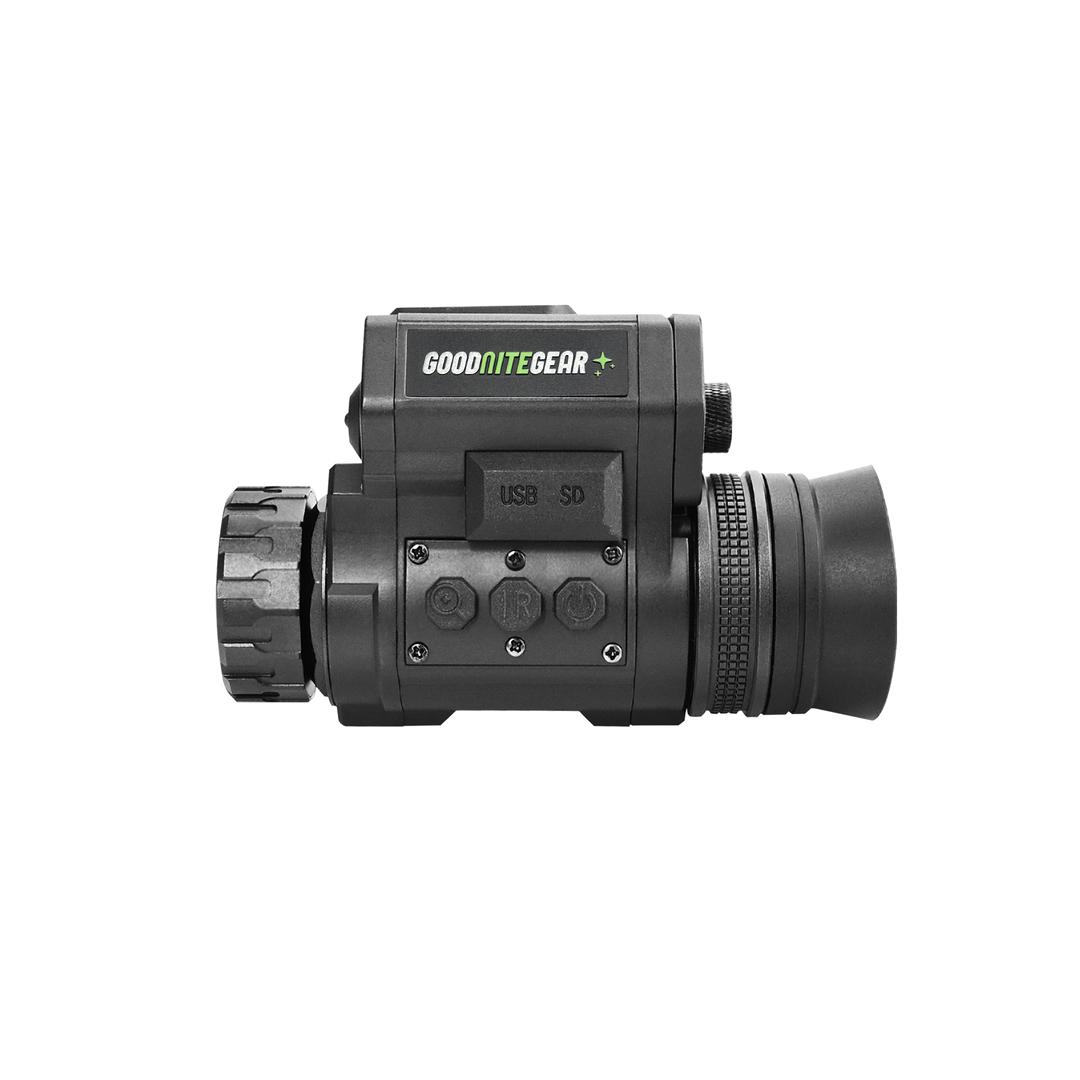

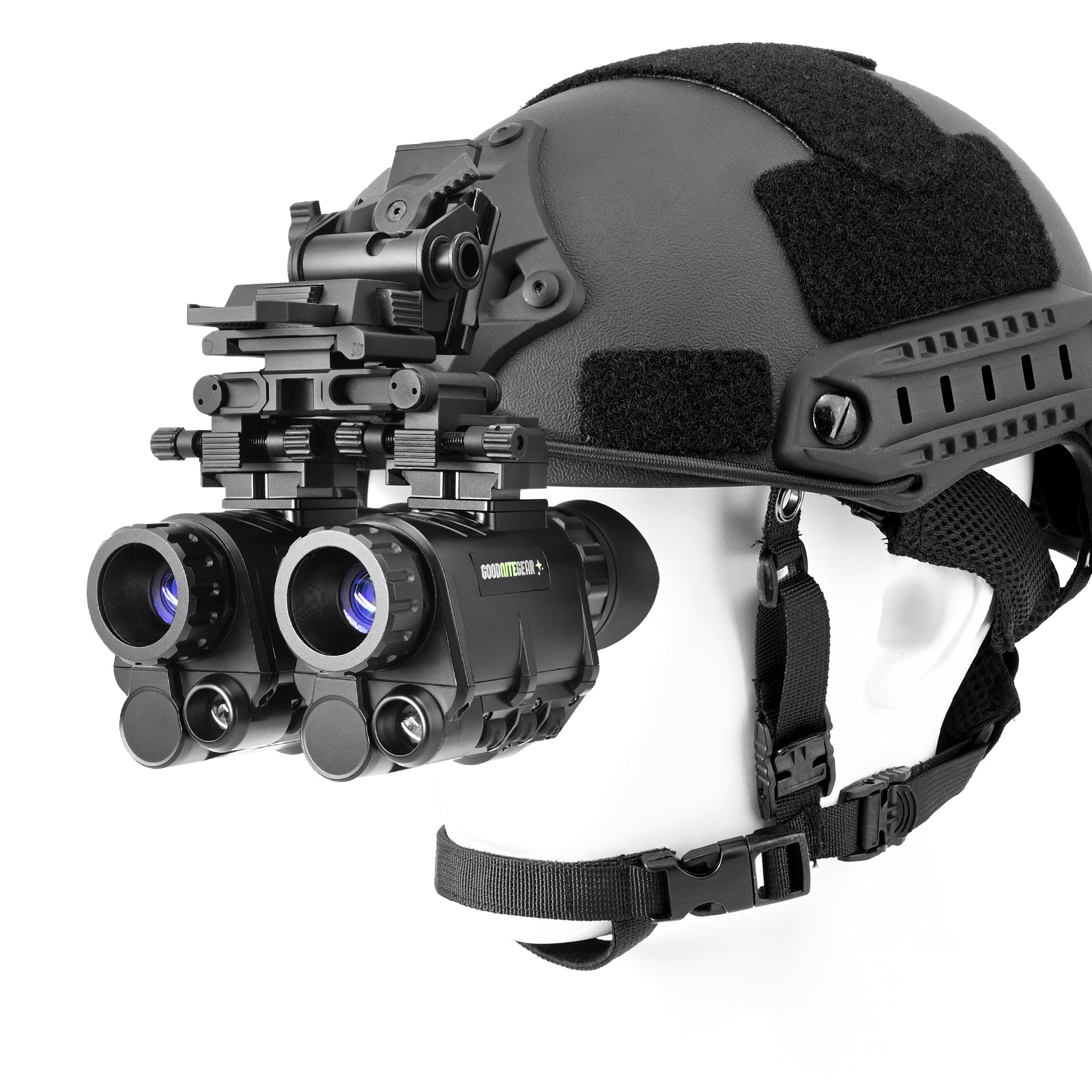


Thermal monoculars are in demand mainly among professional and recreational outdoor users. These devices let you identify heat signatures through dense vegetation, fog, or total darkness — but with the market flooded with options, knowing what actually matters makes your shopping experience (and investment) far more worthwhile.
Good Nite Gear breaks down the top features to look for when buying a thermal monocular.
Want to see how these features actually play out in real devices? Check out our comparison of 3 different thermal monoculars side by side:
Sensor Resolution and Image Quality
Resolution directly impacts image clarity — a higher-resolution thermal sensor produces more precise, detailed imagery.
Resolution requirements really come down to your use case and budget:
- 256×192 — a genuinely capable entry point for casual use, walking, or general observation. Our Nightfox Arctic runs this resolution at a budget-friendly price and still delivers real thermal detection capability.
- 384×288 — a solid mid-tier resolution offering noticeably sharper detail for general field use.
-
640×512 or higher — the standard where picture accuracy really matters, essential for:
- Search and rescue work
- Professional surveillance
There's no single "correct" resolution — it's a genuine tradeoff between image detail and price, so match it to how demanding your actual use case is.
Detection Range and Field of View (FOV)
Detection range determines how far out the device can identify a heat source. A longer detection range matters most when you're scanning wide areas or looking for distant targets.
Field of view (FOV) determines how much area you can monitor at once. A narrower FOV suits long-distance identification, while a wider FOV is better for close-range tracking. Which matters more depends entirely on your specific use case.
Refresh Rate
A higher refresh rate means smoother imaging, measured in Hertz (Hz). For tracking moving targets, a 50Hz or 60Hz refresh rate gives you genuinely real-time vision. Lower refresh rates introduce image lag that can become a real problem in fast-moving situations.
Battery Life and Power Options
Battery life matters a lot for extended outdoor use. Look for a device that runs continuously for at least four to nine hours, depending on the model — our Nightfox Arctic gets about 9 hours per charge on a single 18650 battery. Some devices also support external power sources, which is genuinely useful for extended trips or remote locations without reliable charging access.
Durability and Weather Resistance
A thermal monocular needs to hold up to real field conditions. Look for devices with:
- A wide operating temperature range
- Water resistance (an IP rating is a good indicator)
- Sturdy, impact-resistant construction
This is what actually guarantees reliability in rain, snow, or extreme heat — not just marketing language.
Want Detection and Navigation in One Device? Consider Thermal Fusion
A standalone thermal monocular is excellent at detection, but it doesn't give you the same navigation-quality image you'd get from digital night vision. If you find yourself wanting both — heat-signature detection through brush and darkness, plus a clear, detailed image for actually moving around — thermal fusion is worth a look instead of a pure thermal device.
Thermal fusion combines a thermal sensor with a low-light digital sensor in a single unit, letting you switch between or blend both feeds:
- GNG GF20 — a helmet-mountable thermal fusion monocular, the more accessible entry point into fusion capability
- GNG GF31 — the binocular version, adding true stereoscopic depth perception alongside the same thermal detection
- Nightfox Prowl 2 + Arctic Thermal Kit — a budget-friendly side-by-side fusion setup if you want to try the format without the premium price tag
It's not necessary for every use case, but if detection and navigation both matter to you, thermal fusion covers both in a single device rather than requiring you to carry — and choose between — two separate pieces of gear.
The Bottom Line
Understanding these features — resolution, detection range, FOV, refresh rate, battery life, and durability — puts you in a much better position to invest in a thermal monocular that genuinely fits your specific use case and budget, rather than chasing specs you don't actually need.

