



Analog thermal fusion vs. digital thermal fusion — it's one of the most common debates in the night vision community, and for good reason. Old-school glass and phosphor versus modern digital sensors is a real, meaningful choice, not just a matter of taste. So we ran the two side by side, same location, same targets, same conditions, to see where each one actually holds up.
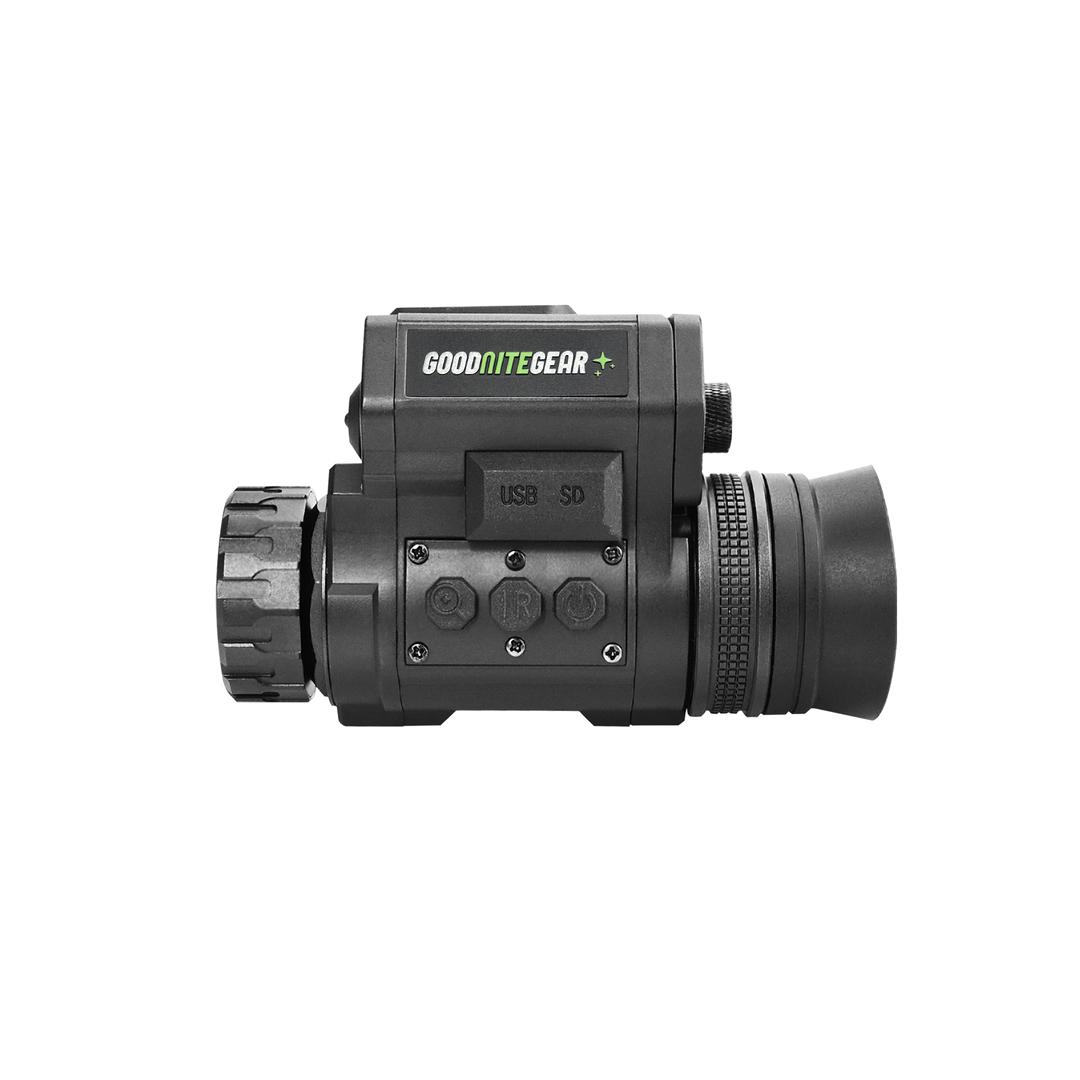
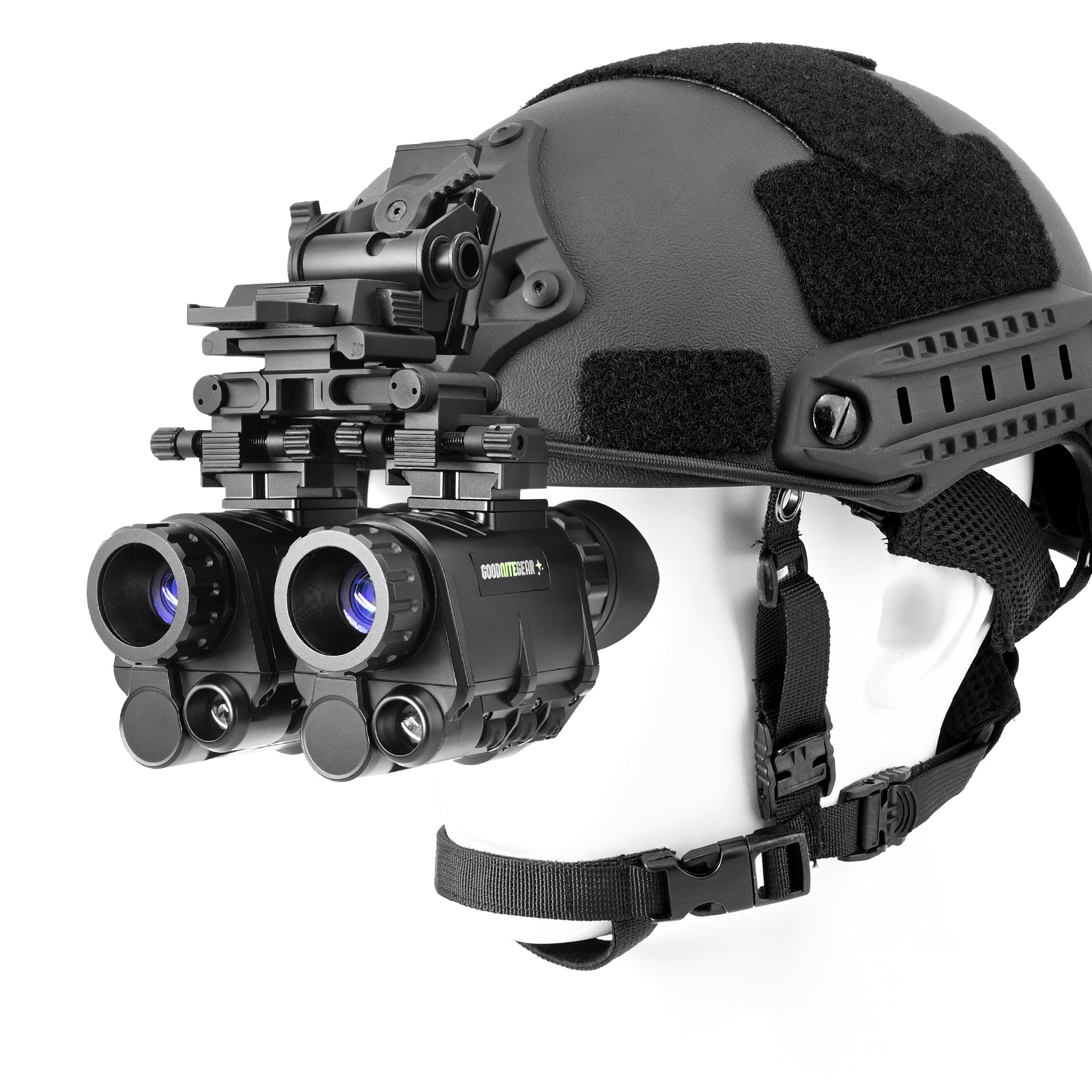
On one side: a Gen 3 Elbit PVS-14 with a COTI clip-on thermal imager. On the other: our GF20 thermal fusion monocular — the same sensor also available in binocular form as the GF31.
Why Thermal Fusion Beats Night Vision Alone
Before getting into digital vs. analog, it's worth covering why thermal fusion is worth having at all. A person can blend into their backdrop shockingly easily — foliage, buildings, just about any kind of terrain. Straight night vision is looking for shapes, and shapes hide.

That's the clearest way to put it in one frame: there's a person right there, waving. On analog, they're completely missed — just the building and ambient light. Switch to thermal fusion, same scene, same person — impossible to miss. That's the entire case for fusion in a single comparison.
The Gear: GF20/GF31 vs. Gen 3 Elbit PVS-14 + COTI
On the digital side, the GF20 thermal fusion monocular is our top-of-the-line thermal fusion unit. The same sensor stack is also available as the GF31 binocular, for anyone who wants a more immersive experience with added depth perception.

The GF20 runs in several modes:
-
Outline mode — a heavy night-vision presence with heat signatures outlined in a color of your choosing
-
True thermal fusion — blends thermal and night vision across the whole screen, with color palettes suited to different environments
-
Pure thermal or night vision alone, if you just want one or the other
On the analog side: a Gen 3 Elbit PVS-14, thin-filmed white phosphor tube, Figure of Merit 1987.2 (LP 72, SNR 27.6, EBI 0.65, Halo 0.96) — a solid, commercial-grade tube. Paired with a COTI clip-on thermal imager that mounts directly on the front of the PVS-14, running a 640x512 thermal sensor across three modes:
-
White Hot — heat shows up bright against a cooler scene, the classic thermal fusion look
-
Outline — traces just the edge of the heat signature for a clean silhouette with less clutter
-
Highlight — blends the heat signature in as a soft glow, keeping more natural scene detail while still flagging a warm body
[IMAGE/CLIP: Digital thermal fusion walking through the woods — full color gradient, no illuminator] [IMAGE/CLIP: Analog thermal fusion walking the same trail — COTI on the PVS-14]
Color and Contrast
The first real difference is color. Analog gives you one channel — you're locked into whatever monochromatic tint your tube produces. Digital gives you true heat gradients, and you can swap color palettes on the fly. That's more than a cosmetic difference — different palettes make it noticeably easier to tell surfaces apart while moving through terrain at night, not just spot a heat source.

Long Range and Mixed Lighting
Here's where the gap gets real. With a person walking about 100 meters out and ambient lights in the background, analog's thermal overlay gets completely overpowered by those lights — you can't pick the person out at all. Switch to digital fusion, same distance, same lights, and the background glare gets muted while the person stays clearly detectable. In a mixed-lighting environment — which is most environments — that's a meaningful gap.

Bright Light and Glare
Push it further with a flashlight or headlights pointed straight at both units, and the difference is even more obvious. Analog blooms out almost entirely — the thermal overlay washes out and you're basically fighting glare. Digital fusion, same light, same intensity, keeps the overlay visible and keeps tracking the target. That's a real dynamic-range advantage, and there's no concern about the unit taking damage from the exposure either.

Field of View
COTI's thermal overlay sits in a circle in the center of your view. Digital fusion's overlay extends edge to edge across the whole frame — meaning significantly more usable thermal real estate, not just a spotlight in the middle.
In practice, that translates to detecting movement sooner: something entering the edge of the frame shows up on digital before it would ever cross into that narrow analog circle. With COTI, if a target isn't dead center, it's possible to miss it entirely.

IR Detection and Spectral Sensitivity
We tested with an IR illuminator in frame — specifically the SMS Laser HFXC, running both a laser and a flood — and honestly, both units did a solid job picking it up. You could make out the beam and the flood pattern on either side. It's one of the more even matchups in this whole comparison, which says something about how far tube-based IR detection has come.

The gap shows up in a smaller, more relatable test: an iPhone's Face ID sensor firing infrared. Gen 3 analog doesn't catch that flash at all. Digital does — because digital NV can pick up active infrared emitters that a Gen 3 tube simply misses, whether that's an IR illuminator, laser, or beacon putting light out in that upper near-IR band. The iPhone's just the easiest way to demonstrate it live.

Beyond the flash, digital pulls more overall detail out of a low-light scene — more texture in foliage, cleaner separation between trees and sky, more visible ground detail — especially in ambient starlight with no illuminator running.
Quick spec reference:
-
Elbit PVS-14 tube: LP 72 / SNR 27.6 / EBI 0.65 / Halo 0.96 / FOM 1987.2
-
GF20/GF31 Human DRI: 935m detection / 468m recognition / 234m identification (digital channel) — Thermal DRI: 751m / 375m / 188m
Daylight Use and Frame Rate
One thing analog can't touch at all: daylight. Digital fusion stays fully usable in broad daylight — in one shot we detected human heat signatures crossing a street at about 190 meters with light still out, conditions where an analog thermal fusion setup would be completely useless. That's more use cases covered by a single device.

Frame rate has also come a long way. The GF20 runs its digital feed at 100Hz with the thermal overlay at 50Hz — fast enough for running, driving, or anything quick-moving, with no noticeable lag.
Low Light Performance
To be fair, in pure low light both units see exceptionally well. That's not where digital pulls ahead — score one for parity.
The Old Knocks on Digital — Still True?
For years, digital had two real weaknesses: latency and low-light performance without an IR illuminator running.
Latency used to be a visible lag between what your eye sees and what the sensor displays. Modern sensors have closed that gap — running at 100Hz digital / 50Hz thermal, it's simply not noticeable anymore during fast-moving tasks like running or driving.

Low-light performance without an illuminator used to be a genuine disadvantage for digital. That gap has closed significantly too — digital is now nearly on par with a good analog tube in ambient starlight, no illuminator, no IR assist. Not identical, but no longer the deciding factor it used to be.
Cost is still worth being straightforward about. A COTI clip-on alone runs $2,500 — on top of whatever you paid for the PVS-14 itself. The GF20 monocular is $5,500, all-in, as one integrated device. Digital is the bigger single purchase, but you're not stacking two separate units to get there.
Where They're Both Genuinely Good
Credit where it's due: at close range, with decent ambient light and a clean target in the open, both units perform genuinely well. Analog has a warm, familiar look a lot of people still prefer, and it picks up a heat signature just as confidently as digital at that distance. This is the range and setup where the gap we've spent this whole comparison talking about basically disappears.
So the honest takeaway isn't "analog is bad" — it's that digital pulls ahead specifically in the harder conditions: long range, mixed lighting, glare, daylight, and edge-of-frame detection. If you're mostly working close and controlled, that gap matters a lot less.

The Bottom Line
Digital thermal fusion wins on range, dynamic range, color contrast, field of view, and daylight usability. Analog holds its own at close range and in pure low light, and it does it at a lower up-front cost per unit — though COTI plus a PVS-14 adds up fast. The old knocks against digital (latency, low-light performance) genuinely aren't what they used to be.
If you want to run a setup like the one in this comparison, the GF20 monocular and GF31 binocular are both linked in our shop — same sensor, your choice of form factor. Use code US10 for 10% off.

