



Night Vision vs. Thermal vs. Thermal Fusion vs. Thermal Outline
If you've ever stood in front of a wall of night vision and thermal devices trying to figure out which viewing mode actually fits what you're doing, you're not alone. Night vision, thermal, thermal outline, and thermal fusion each solve a different problem — and none of them is universally "better." They're different tools for different situations.
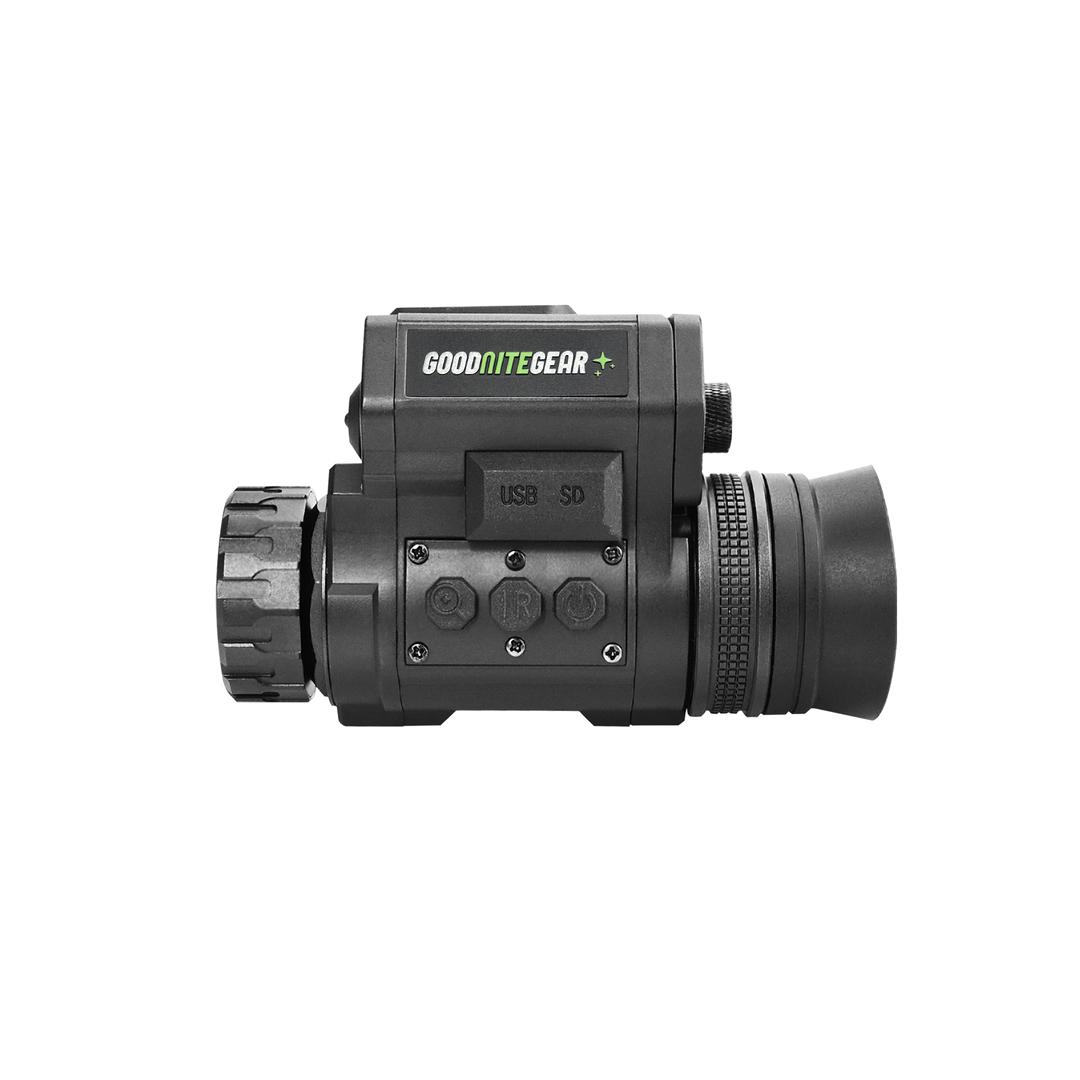
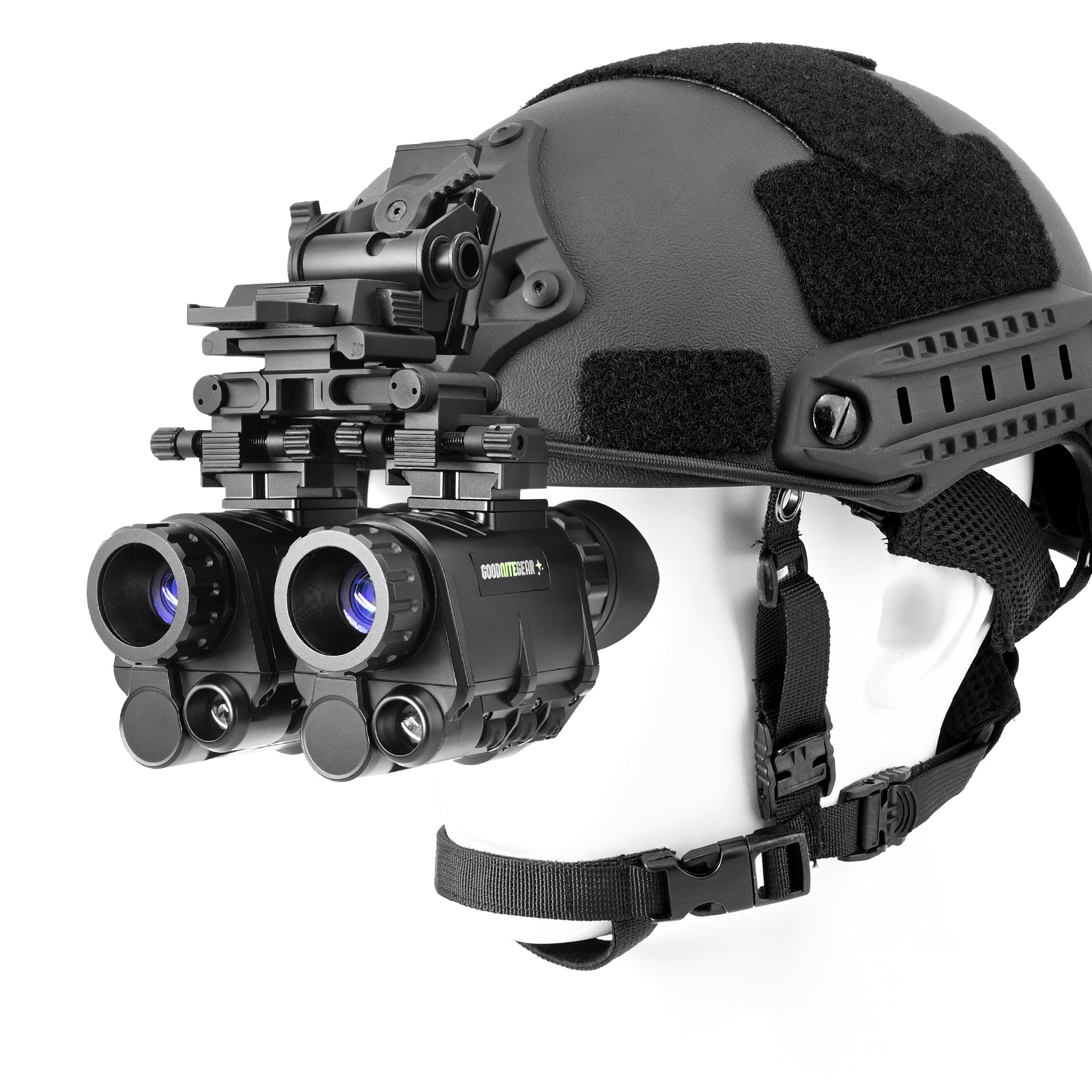
We ran all four modes on the GNG GF31 through a series of real-world tests — windows, drones, fog, long range, IR illuminators, and more — to show exactly where each mode wins and where it falls short. Here's the full breakdown.
Quick Overview: What Each Mode Actually Does
- Night Vision amplifies available ambient light. On a 1" sensor digital device like the GF31, this feels similar to an analog PVS-14 in low light — you get the most environmental detail of any mode, running at a fast 100FPS.
- Thermal detects heat directly, regardless of light. You lose environmental detail, but it's the most reliable mode for pure detection — runs at 50Hz on the GF31.
- Thermal Outline is built on the night vision image, with heat-based edge detection layered on top to highlight people and warm objects in bright green. Fast, and great for movement.
- Thermal Fusion blends the night vision and thermal feeds into a single full-frame image — the goal is detail and detection at the same time.
Test 1: Looking Through Windows
Windows have always been a tough environment for thermal-based imaging. Glass blocks most of the heat signal, so any mode relying on thermal data takes a hit.

Result: Night vision and thermal outline hold up best — outline's edge detection doesn't render through glass, but the underlying night vision image is unaffected. Thermal fusion is partially blocked, making the person noticeably fainter. Thermal alone is blocked almost entirely.

Takeaway: If you're working through glass, skip thermal and fusion — night vision or outline are your best options.
Test 2: Drone Detection
Drones are an increasingly common detection use case, and each mode handles them differently depending on range.

Result: At close range, all four modes pick up the drone, and the flashing safety lights and IR landing light are visible on night vision, outline, and fusion — but not on thermal. At longer range, night vision loses contrast fast, outline does a bit better, and thermal fusion and thermal are the strongest performers, with fusion edging out thermal thanks to richer contrast and visible lighting.
Takeaway: For long-range drone detection, thermal fusion is the strongest all-around choice.
Test 3: Urban / Mixed Lighting & Glare
Urban environments come with unpredictable direct light sources — headlights, streetlights, and everything in between.


Result: With ambient lighting only, all four modes track the bike reasonably well, with night vision having the shortest usable range. Once the headlight is aimed directly at the device, night vision gets overpowered by glare and loses the bike. Outline keeps the bike visible but loses background detail. Fusion handles the glare best overall — strong detail, no blinding effect, and the light source is still faintly visible. Thermal gives you the cleanest detail with zero glare, but the light itself disappears entirely.
Takeaway: For scenes with direct light sources pointed at your device, thermal or fusion avoid the glare problem that affects night vision and outline.
Test 4: Dark Hallway (~12 Meters)
A very dark, enclosed environment — a strong test of low-light and detection performance in tight quarters.

Result: Night vision gives good environmental detail but makes the person hard to distinguish. Outline makes the person pop instantly in green. Fusion delivers the best combination of strong detection and strong surrounding detail. Thermal offers the fastest detection but the least environmental context.
Test 5: Fog Machine Test
One of the clearest demonstrations of the gap between these technologies.

Result: Night vision is nearly blind in heavy fog — almost nothing is visible. Outline does slightly better, offering a rough silhouette but little background. Thermal and fusion both cut through the fog cleanly, keeping full detail on both the subject and surrounding space.
Takeaway: If you regularly deal with fog, smoke, or other obscurants, thermal or fusion are the only modes that reliably perform.
Test 6: Long Range — 75m and 120m
Range testing on a bridge, with a person visible at increasing distances.


Result: At 75 meters, night vision is nearly impossible to use unless you already know exactly where to look. All three thermal-based modes offer a major advantage — outline preserves good terrain detail, fusion adds extra contrast and detection with no ambient-light glare, and thermal detects the person clearly but with less terrain detail than outline or fusion. At 120 meters, all three thermal-based modes are still performing while night vision offers essentially nothing.
Test 7: IR Illuminator & Laser Visibility
Testing detection of an SMS Laser HFXC IR illuminator/laser combo.

Result: Night vision and outline show the illuminator's flood the most clearly, making them the most IR-friendly modes. Fusion still picks it up, but more faintly. Thermal doesn't show the illuminator at all.
Takeaway: If you're pairing your device with an IR illuminator or laser, night vision or thermal fusion are your best bets — not thermal alone.
Test 8: Behind Trees & Tall Grass (~50 Meters)
Same location as the illuminator test, now tracking a person walking through foliage.

Result: Night vision struggles significantly in this scenario. Outline gives an instant, obvious green pop on the person. Thermal offers the most contrast of any mode but the least detail. Fusion delivers the most balanced blend of terrain visibility and detection.
Final Verdict: Which Mode Should You Use?
There's no single "best" mode — the right choice depends entirely on your scenario:
- Working through glass? Night vision or outline.
- Need fast detection with speed? Outline or night vision, thanks to the 100FPS rate.
- Dealing with fog, smoke, or heavy obscurants? Thermal or fusion.
- Want maximum detail plus detection, especially at range? Thermal fusion.
- Need raw detection with the least complexity? Thermal alone still gets the job done.
The real advantage of a device like the GF31 isn't that one mode outperforms the rest — it's that you're never locked into just one. You pick the right tool for the moment, not the moment for the tool.
Watch the full video comparison here:
Frequently Asked Questions
What's the difference between thermal fusion and thermal outline?
Thermal outline is built on the night vision image with heat-based edge detection layered on top to highlight people and warm objects in green — it's fast and great for movement. Thermal fusion is a true blend of the night vision and thermal feeds into one full-frame image, giving you more environmental detail at the cost of running at thermal's slower frame rate.
Can thermal see through glass?
No. Thermal and thermal fusion are both significantly blocked by glass, since windows block most of the heat signal thermal sensors rely on. Night vision and thermal outline are unaffected and are the better choice if you're working through a window or windshield.
Which night vision mode works best in fog?
Thermal and thermal fusion both cut through fog and smoke cleanly. Night vision is nearly unusable in heavy fog, and thermal outline only offers a rough silhouette with almost no background detail.
Does thermal show IR illuminators or lasers?
No. Thermal alone does not display IR illuminator floods or lasers at all. Night vision and thermal outline show them most clearly, and thermal fusion picks them up but more faintly.
What's the best mode for long-range detection?
Thermal-based modes — thermal, thermal outline, and thermal fusion — all significantly outperform night vision at range. Thermal fusion tends to offer the best balance of detection and terrain detail, particularly past 75 meters.
Is thermal fusion better than plain thermal?
It depends on the scenario. Fusion gives you more environmental detail and generally better drone/long-range detection since it retains contrast and visible light sources. Plain thermal is still useful when you want the fastest, simplest detection without needing scene context.

