



If the GF20 Thermal Fusion monocular represents a serious step forward in night vision technology, the GF31 Thermal Fusion Bino is what happens when you take that same thermal fusion platform and build it into a full dual-tube binocular system. Two 1-inch sCMOS sensors, a 640x512 thermal imager, 38 hours of runtime, and an immersive binocular viewing experience that analog simply can't replicate. Here's everything you need to know.
The ADNV Connection
Same note here as with the GF20: the GNG GF31 is sold through Good Nite Gear and is the same device as the ADNV GF31 — ADNV is the manufacturer, Good Nite Gear is an authorized reseller. Identical hardware, identical specs. If you've come across this unit under the ADNV name while researching, you're looking at the same system.
Build Quality and Hardware
The GF31 is built for professional use in demanding environments. Total system weight including the battery is approximately 1,076 grams, and the IP67 rating means it's fully sealed against dust and water — take it out in rain, mud, or rough weather without concern.

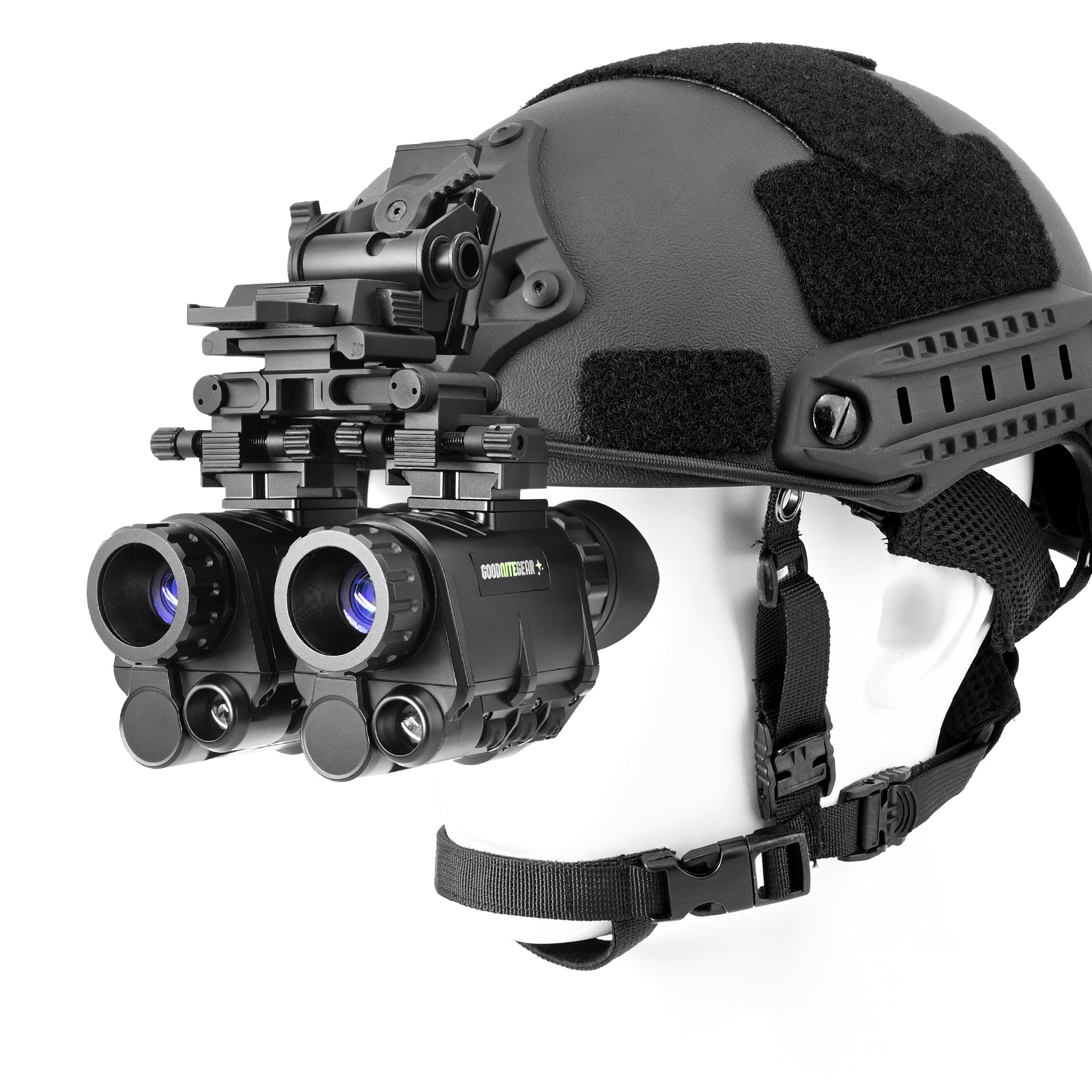
On the front you've got dual objective lenses, each rotatable for independent focus adjustment, feeding into dual 1-inch sCMOS sensors. These sensors perform in the same low-light class as Gen 3 analog technology — comparable to what you'll find in the NVG90 Pro, which is one of the strongest performing digital monoculars on the market. Stacked above both tubes is a single 640x512 thermal sensor that fuses with the right eye's image. When you're looking through both tubes simultaneously, your brain naturally merges the thermal and digital images together — the left eye sees pure digital night vision, the right eye sees the thermal fusion output, and your visual system does the rest.

The external battery pack velcros directly to the back of the helmet for balanced weight distribution. It runs on four 18650 cells and delivers up to 38 hours of runtime on low power mode. Built-in recording is included, with USB-C connectivity to review photos and video on your computer. The 9-core aviation socket connecting the device to the battery pack locks in firmly and stays put under movement.
Mounting is via a dovetail that slots into G24 mounts. The bridge is highly adjustable — either side or both can be flipped up and out of the way independently, which is useful when you need to transition between environments quickly.

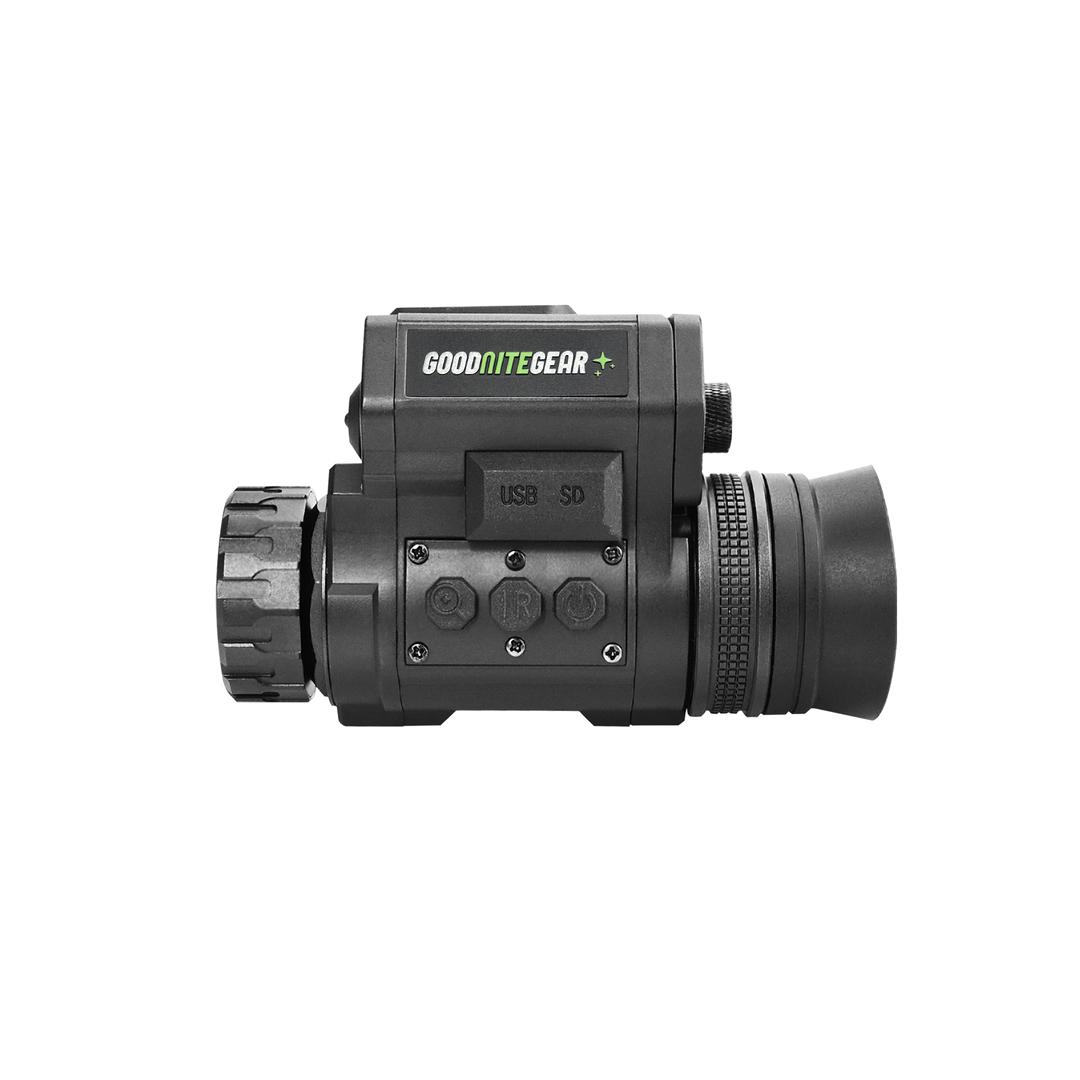
The display is an 800x600 OLED screen that renders an image quality the smartphone recording in the video honestly doesn't do justice. A built-in digital compass sits at the top of the display, giving you continuous heading information without breaking your night-adapted vision or reaching for separate equipment. Battery level, FPS, and active mode are all visible at a glance.
Four Operating Modes
The GF31 gives you four distinct ways to run the system depending on conditions and what the situation demands:
Night Vision Only — Both tubes running the 1-inch sCMOS sensors at up to 100FPS. Smooth, low-latency digital night vision with a 50-degree diagonal field of view — wider than a standard PVS14's 40-degree FOV. Handles fast movement and high-speed tasks like driving or riding without noticeable lag.
Thermal Only — Drop the digital sensors entirely and run pure thermal. Ideal for area scans when navigation isn't the priority, and the go-to mode in conditions where light-based sensors fall short: smoke, fog, heavy rain, and snow all scatter or block visible light while thermal keeps working uninterrupted. Capped at 50FPS in all thermal modes.
Thermal Outline Mode — The digital night vision image stays active and the thermal sensor overlays a red border around anything with a distinct heat signature. In a pitch-black environment where even a Gen 3 PVS14 is working to show you anything useful, thermal outline makes a stationary person instantly visible. Detection stops being a task and becomes automatic.
Full Thermal Fusion — Both sensors combine into a single image on the right eye, with your brain fusing it together with the left eye's digital feed. Subjects become more visible, and the surrounding environment gains significant detail — making navigation and observation easier in the darkest conditions you'll encounter. This mode also reduces reliance on active IR illumination, which matters if minimizing your IR signature is a concern.

Detection Ranges
The 640x512 thermal sensor delivers meaningful real-world detection capability. Human detection out to approximately 750 meters. Recognition at around 375 meters. Identification at roughly 188 meters. Vehicles detectable well beyond 1,200 meters. These numbers hold regardless of lighting conditions, and they extend far beyond what digital night vision alone can achieve.
Thermal also cuts through camouflage and dense vegetation — targets that would be completely invisible to the naked eye or a standard NV device can still produce a heat signature the GF31 will detect. You'll consistently pick up threats at greater distances and in more concealed positions than any traditional night vision system allows.
Why Binocular Over Monocular?
The GF31 gives you something the GF20 monocular can't — a truly immersive, full-field binocular viewing experience. With both eyes engaged, depth perception is natural, eye fatigue over extended use is significantly reduced, and situational awareness is wider and more intuitive. For users running this system for prolonged periods in high-demand environments, the binocular format isn't just a preference — it's a meaningful operational advantage.
How It Stacks Up Against Gen 3 Analog
The dual 1-inch sCMOS sensors put the GF31 in the same performance category as Gen 3 analog in low-light sensitivity. When you add thermal fusion on top of that — four operating modes, 24/7 capability including full daylight use, detection ranges that extend far beyond what analog can see, and the ability to see through camouflage and vegetation — the GF31 does things a Gen 3 binocular setup simply cannot. Analog clip-on thermals are useless in daylight and risk damage from light exposure. The GF31's thermal modes work around the clock without touching the optics.
Watch this video to see how the GF31 compares to a Gen 3 Analog PVS14 with a COTI clip on thermal imager:
Other Digital Thermal Fusion Options
If a binocular system is more than you need right now, the same thermal fusion technology is available in the GF20 monocular at a lower price point, or the TF213 handheld binocular for a non-helmet-mounted option. There's also the DF218 thermal fusion driving assistance system. All of them are available on the site. You can also check out our night vision with thermal collection.
Final Verdict
The GNG GF31 is a professional-grade thermal fusion binocular that competes directly with high-end analog setups while offering capabilities analog can't match. Dual Gen 3-class sensors, full thermal fusion across four operating modes, a 50-degree field of view, 38 hours of runtime, IP67 durability, and 24/7 operability in any lighting condition — this is a purpose-built system for users who need maximum situational awareness and aren't willing to compromise. If you're serious about night vision and ready to move beyond single-tube monoculars, the GF31 is the standard to measure against.

